
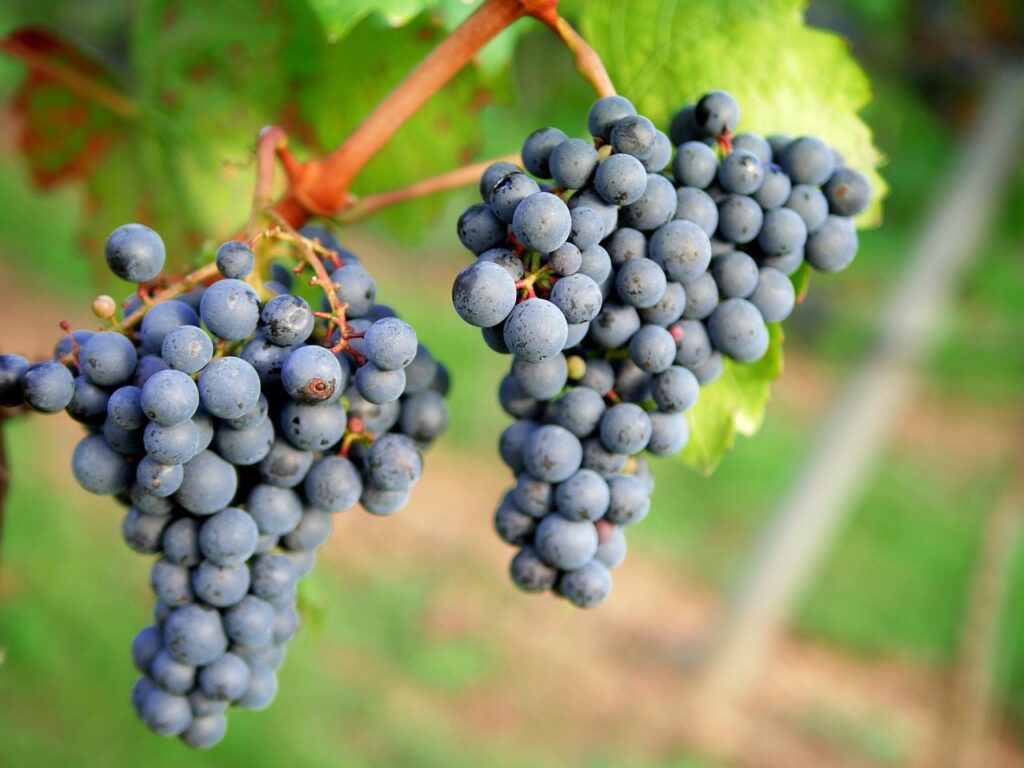
Nero d’Avola is Sicily’s best-known red grape for a reason. It combines sun-ripened fruit, dark color, soft structure, and enough savory depth to make the wines feel generous without becoming too heavy. At its best, Nero d’Avola manages something many warm-climate reds struggle with: it feels rich and approachable, but it can still carry freshness, spice, and real personality.
That balance is a big part of the grape’s success. Nero d’Avola can be easy to enjoy young, yet it is not a one-note grape. Depending on where it is grown and how it is made, it can lean juicy and fruit-forward, or more structured and complex with darker spice, herbs, and earthy detail. It is one of the clearest examples of how Sicily can produce wines that feel both Mediterranean and serious.
Key takeaways
- Nero d’Avola is Sicily’s signature red grape and one of Italy’s most important native red varieties.
- It is usually known for dark fruit, deep color, smooth tannins, spice, and a warm but balanced profile.
- The grape was once heavily used in blends but is now widely respected as a standalone varietal wine.
- Climate, soil, altitude, and cellar choices all shape whether Nero d’Avola tastes broader and riper or fresher and more refined.
- It is one of Italy’s most flexible food reds, especially with grilled meat, tomato-based dishes, and aged cheeses.
Table of contents
- Origins and history
- How Nero d’Avola tastes
- Terroir and growing conditions
- Winemaking techniques
- Styles and regional expressions
- Food pairing and serving Nero d’Avola
- Why Nero d’Avola matters
Origins and history
Nero d’Avola is deeply tied to Sicily and has long been regarded as one of the island’s defining red grapes. The name means “black of Avola,” referring to the town of Avola in southeastern Sicily, a historic area linked to the grape’s identity and development. Today, though, Nero d’Avola is grown more widely across Sicily and appears in a range of styles, from simple everyday reds to more ambitious, terroir-driven bottlings.
For much of its modern history, Nero d’Avola was used as a blending grape. That role made sense. It brings color, body, ripe fruit, and warmth very easily, so it was useful for strengthening lighter or less concentrated wines. But that old supporting role also meant the grape was underestimated for a long time. It was seen as useful, but not always as noble.
That changed in the late twentieth century, when producers began taking Sicilian native grapes more seriously and making cleaner, better-defined varietal wines. Once winemakers started focusing on site, yield, temperature control, and more careful aging choices, Nero d’Avola’s real strengths became much more obvious. It could do more than add weight. It could produce distinctive, expressive wines with a real Sicilian identity.
That shift matters, because it explains why the grape is now so visible. Nero d’Avola did not suddenly become good. It was finally given the attention needed to show what it had been capable of all along.
How Nero d’Avola tastes
Nero d’Avola usually tastes like a warm-climate grape that still knows how to keep itself in check. The wines often show black cherry, dark plum, blackberry, and sometimes red cherry or raspberry underneath. Alongside the fruit, there is often black pepper, licorice, dried herbs, earth, or a slightly smoky and savory note. Depending on the producer, the wine can feel plush and ripe or more restrained and spicy.
Deep color
This is one of the grape’s most obvious signatures. Nero d’Avola tends to produce deeply colored wines, often ruby to dark purple in youth. That visual depth fits the style well. These are usually not pale or delicate reds. Even simpler examples tend to look full of concentration.
Dark fruit with warmth
The fruit profile usually leans dark and ripe. Black cherry, plum, and blackberry are the classic notes, often supported by hints of dried fig or blackcurrant depending on ripeness and winemaking. In warmer expressions, the fruit can feel more generous and almost jammy. In fresher expressions, it may stay more precise and lifted.
Soft, rounded tannins
One of the reasons Nero d’Avola is so approachable is its tannin profile. It usually has enough structure to feel like a proper red wine, but the tannins are often smoother and rounder than in more severe varieties. That makes it a good bridge between easy-drinking reds and more serious structured wines.
Spice and herbal detail
Good Nero d’Avola often has more than just fruit. Pepper, licorice, Mediterranean herbs, and sometimes earthy or leathery notes give it a more grounded character. This is what keeps it from feeling too simple. The grape can be generous, but it is rarely just soft fruit if it is grown and made well.
Balanced acidity
Nero d’Avola usually carries enough acidity to stay useful at the table. It is not a razor-sharp red, but it often has the freshness needed to stop all that ripe fruit from becoming too broad or heavy. This is especially important in Sicily, where heat is not in short supply.
If you want the wider context of how it compares with other major grapes, our guide to the world’s most important grape varieties is the best next read.
Terroir and growing conditions
Nero d’Avola is strongly shaped by Sicily’s climate and soils, but the island is not one single terroir. That matters because the grape can shift noticeably depending on whether it is grown in hotter lowland sites or in cooler, elevated areas with stronger day-to-night temperature swings.
Mediterranean climate
Sicily’s warm, sunny climate helps Nero d’Avola ripen fully and develop the dark fruit and body it is known for. Long dry summers are a natural fit for the grape, which is one reason it became so important on the island in the first place. It is comfortable with heat, and it can keep producing wines with concentration and character in warm conditions.
Sea influence and freshness
Even in a warm region, sea breezes matter. In coastal and near-coastal areas, maritime influence can help moderate temperatures and preserve some freshness in the grapes. That helps keep the wines more balanced and can make the fruit feel brighter and more defined.
Soil diversity
Sicily offers a wide mix of soils, including limestone, clay, sand, and volcanic influences in some areas. These differences help explain why Nero d’Avola can vary so much in style. Some sites give broader, softer wines with plush fruit. Others give more tension, earthy depth, or mineral detail. This is one of the reasons the grape has become more interesting as producers have focused more on site expression.
Altitude and slower ripening
Higher-elevation vineyards can bring more freshness and structure to Nero d’Avola. In these sites, the grape may ripen more slowly and retain more acidity, which can result in wines that feel more refined and less overtly ripe. That does not erase the grape’s Sicilian warmth, but it can shape it into something more nuanced.
This is exactly why terroir matters so much with Nero d’Avola. The grape has a clear personality, but site changes how that personality shows itself. Our article on how terroir shapes wine goes deeper into that relationship.
Winemaking techniques
Nero d’Avola responds strongly to cellar choices. Because the grape already brings color, fruit, and body, the winemaker’s main challenge is usually finding the right balance between expression and restraint.
Harvest timing
Picking decisions matter a lot. If the grape is picked too early, the wine can feel harder and less complete. If it is picked too late, the result can become heavy, overly ripe, or lacking in lift. Good Nero d’Avola often depends on preserving freshness without sacrificing the depth that makes the grape appealing.
Fermentation and extraction
The grape’s dark skins make extraction important. Extended skin contact can deepen color, flavour, and structure, but there is no need to force what is already there naturally. Better producers usually focus on controlled extraction so the wine keeps fruit and smoothness instead of becoming too rough.
If you want the broader cellar background behind this, our guide to how red wine is made fits perfectly here.
Stainless steel versus oak
Many fresher Nero d’Avola wines are aged in stainless steel to preserve fruit purity and directness. These wines tend to show juicy dark fruit, spice, and a more straightforward Sicilian warmth. More ambitious versions may see time in oak, which can add vanilla, smoke, cocoa, and more textural depth. Oak can work very well with the grape, but it needs to support rather than cover the fruit.
For the bigger picture on that, our article on oak in winemaking is worth reading too.
Modern cleaner style
A big part of Nero d’Avola’s rise has come from cleaner, more precise winemaking. Better temperature control, healthier fruit, lower yields, and more careful oak use have all helped the grape move beyond rusticity. That does not mean every wine should taste polished or international. It just means the grape no longer has to hide behind rough edges.
Styles and regional expressions
One reason Nero d’Avola has become more respected is that it now appears in several convincing styles rather than one fixed mold.
Everyday fruit-driven Nero d’Avola
This is the style many drinkers encounter first. It is often juicy, dark-fruited, smooth, and generously Sicilian in feel. These wines can offer very good value and are often best enjoyed young.
Structured single-vineyard or premium bottlings
More serious examples can be deeper, spicier, and more age-worthy. They often show better balance, more detailed tannin, and a clearer sense of place. This is where Nero d’Avola moves beyond “easy Sicilian red” and starts to feel genuinely fine.
Blends
Although Nero d’Avola now stands strongly on its own, it still appears in blends, especially where producers want to combine its fruit and color with the freshness or perfume of other local grapes. That older blending role has not disappeared entirely, but today it is more often a stylistic choice than a necessity.
Southeastern Sicily and beyond
The area around Avola remains symbolically important, but the grape’s modern success is tied to a much broader Sicilian landscape. Different parts of the island can give notably different expressions, which is one reason the grape continues to become more interesting as producers focus more sharply on terroir.
Food pairing and serving Nero d’Avola
Nero d’Avola is one of the most useful food reds in southern Italy because it has enough fruit to be generous, enough acidity to handle tomato, and enough structure to work with meat. That makes it a natural fit for grilled lamb, sausage, burgers, roast pork, pasta with tomato-based sauces, lasagna, pizza, and aged cheeses.
The grape’s herb and spice side also makes it a good match for Mediterranean dishes built around olive oil, aubergine, rosemary, oregano, and slow-cooked vegetables. It does not need overly complicated pairings. In many cases, it just works naturally with the kind of food people actually want to eat.
Serving temperature matters, though. If served too warm, Nero d’Avola can feel broader and more alcoholic than it should. Slightly cooler service usually keeps the fruit fresher and the whole wine more focused. Our guide to wine serving temperatures is useful here.
For broader pairing rules, our article on food and wine pairing basics is the most useful follow-up.
Why Nero d’Avola matters
Nero d’Avola matters because it gives Sicily a clear red wine identity. It is warm, dark, generous, and recognisably Mediterranean, but it can also be much more nuanced than people expect. That mix of accessibility and seriousness is hard to get right, and the grape does it better than many people realise.
It also matters because it shows how much indigenous grapes benefit when they stop being treated as anonymous workhorses. Once producers focused on site, yields, and cleaner cellar work, Nero d’Avola became a grape that could compete not just on value, but on character. That is a very different position from the one it occupied a few decades ago.
For drinkers, that means Nero d’Avola is now more than just a bold Sicilian red. It is one of Italy’s most convincing examples of a native grape that can be both widely enjoyable and genuinely distinctive.
Read next
- The World’s Most Important Wine Grape Varieties: Red and White Grapes Explained
- How Red Wine Is Made: Fermentation, Extraction, Aging, and the Key Choices That Shape Style
- How Terroir Shapes Wine: Soil, Climate, Elevation, Exposure, and Human Influence Explained
Last updated:
