Serving wine at the right temperature can make a bigger difference than many people realise. A white wine that is too cold can feel muted and almost anonymous. A red wine that is too warm can taste heavy, alcoholic, and slightly sloppy. Even a very good bottle can seem disappointing if it is served badly. That is why wine serving temperature matters so much. It does not change the wine itself, but it changes how clearly you experience what is already there.
The good news is that this is one of the easiest wine problems to fix. You do not need a cellar, expensive gadgets, or a sommelier standing beside you. You just need a practical sense of which wines should be properly chilled, which reds benefit from a short spell in the fridge, and why “room temperature” is often the wrong idea in a modern home. Once you get that right, wines taste fresher, more balanced, and much closer to what the producer intended.
Key takeaways
- Serving temperature shapes how you perceive aroma, acidity, sweetness, tannin, and alcohol.
- Most white, rosé, sparkling, and dessert wines benefit from being served cooler than many people expect.
- Many red wines are best served slightly cooler than normal indoor room temperature.
- Over-chilling can mute aroma and flavour, while over-warming can exaggerate alcohol and flatten freshness.
- Small temperature adjustments often improve a wine more than people expect.
Table of contents
- Why wine serving temperature matters
- Best temperature for sparkling wine and Champagne
- Best temperature for white wine
- Best temperature for rosé wine
- Best temperature for red wine
- Best temperature for fortified wine
- Best temperature for dessert wine
- How to chill wine to the right temperature
- Common wine temperature mistakes
- Quick wine temperature guide
Why wine serving temperature matters
Temperature changes how wine behaves in the glass. Colder temperatures suppress aroma and sharpen the impression of acidity. Warmer temperatures release aroma more quickly, but they can also make alcohol stand out too much and make the wine feel softer or looser than it should. That is why the same wine can seem crisp and focused at one temperature, then dull or clumsy just a few degrees away.
This matters for every style. Sparkling wine needs enough chill to stay refreshing and precise. White wine needs coolness, but not so much that all the character disappears. Rosé works best when it feels lively rather than icy. Red wine often needs less warmth than people think. If it gets too warm, the fruit can feel jammy, the alcohol can feel hot, and the structure can lose shape.
Serving temperature also affects food pairing. A wine that is served too cold or too warm can become much harder to match well with a meal. If you want the broader pairing side too, our guide to basic food and wine pairing concepts is a strong companion article.
Best temperature for sparkling wine and Champagne
Sparkling wine is usually best served cold, but not aggressively frozen. A good range is around 6 to 8°C for most styles, and sometimes slightly colder for very simple, refreshing sparkling wines. This helps preserve the bubbles, keeps the wine feeling clean and focused, and stops sweetness from becoming too obvious.
If sparkling wine is too warm, the mousse can feel softer and less refreshing, and the wine may seem broader and heavier than intended. If it is too cold, the bubbles may still look lively, but the aroma and flavour can become muted. That is especially frustrating with better sparkling wines that have more complexity to offer.
Brut Champagne, Cava, and many dry sparkling wines benefit from being properly chilled but allowed a few minutes in the glass. That small rise in temperature can help the aroma open without losing the freshness that makes sparkling wine so appealing.
For more on how sparkling wine is made in the first place, see our guide to sparkling wine production.
Best temperature for white wine
White wine often gets thrown into one big “serve cold” category, but that is too simplistic. Different white wines show best at different temperatures depending on body, sweetness, oak influence, and aromatic intensity.
Light-bodied, crisp white wines
Light whites like Sauvignon Blanc, Pinot Grigio, Albariño, and many dry Rieslings usually work best around 7 to 10°C. That range keeps them fresh, lively, and sharp enough to feel refreshing without burying their aroma completely.
If these wines are too warm, they can lose their snap and start feeling softer than they should. If they are too cold, you may miss the floral, citrus, or mineral detail that makes them interesting in the first place.
Fuller-bodied white wines
Richer whites such as oaked Chardonnay, Viognier, or fuller Rhône-style blends usually show better a bit warmer, around 10 to 13°C. That extra warmth helps the texture, oak, and more layered aromatics come through.
This is a category where over-chilling happens all the time. A big Chardonnay straight from the fridge can taste oddly blank. Let it warm slightly and it often becomes much more expressive.
If you want the production side behind those richer styles, our article on white wine production techniques is useful background.
Best temperature for rosé wine
Rosé generally works best around 8 to 12°C depending on the style. Pale, crisp, delicate rosés are often nicest closer to the cooler end. Fuller, darker, more structured rosés can handle a bit more warmth and may actually need it to show their flavour properly.
The common mistake with rosé is serving it ice-cold because it is seen as a casual summer drink. That can make it refreshing, but it can also flatten the wine completely. A good rosé should still smell and taste like something. It should not feel like pink cold water.
Rosé is often at its best when it feels bright and clean but still expressive enough to work at the table. For more on how style affects rosé, see our guide to rosé wine production.
Best temperature for red wine
This is where the biggest myths usually sit. “Serve red wine at room temperature” sounds simple, but it came from an older world where room temperature was much cooler than many modern homes. In a warm living room, a red wine can easily become too warm and lose its balance.
Light-bodied reds
Pinot Noir, Gamay, lighter Grenache-based reds, and similar wines often show best around 13 to 16°C. That slight coolness keeps the fruit lively and the wine feeling fresh rather than soft. Many lighter reds actually improve with 15 to 20 minutes in the fridge before serving.
If you enjoy lighter reds, our article on the Beaujolais wine region is worth a look.
Medium-bodied reds
Merlot, Sangiovese, Tempranillo, Barbera, and many classic food-friendly reds usually sit comfortably around 15 to 18°C. That range lets the fruit, acidity, and tannin work together without the alcohol dominating.
Full-bodied reds
Cabernet Sauvignon, Syrah, Malbec, bigger Bordeaux blends, and other structured reds generally work best around 17 to 19°C. Even here, “warm” is not the goal. You want enough temperature for complexity to come through, but not so much that the wine feels heavy or alcoholic.
This is also where decanting can help if the wine is still tight or young. Our guide on how to decant wine explains when that helps and when it does not.
Best temperature for fortified wine
Fortified wines cover a broad range, so one temperature does not fit all. Dry styles like Fino Sherry and Manzanilla are usually best properly chilled, around 7 to 10°C, because that keeps them crisp, salty, and refreshing. Richer styles like Oloroso, Tawny Port, and some Madeiras often show better a bit warmer, around 12 to 16°C depending on the bottle and how you are serving it.
The general rule is simple enough: lighter, drier fortified wines want more chill, while richer and darker styles want a bit more space to open up. If served too warm, they can feel heavy very quickly. If served too cold, the complexity can disappear.
Best temperature for dessert wine
Dessert wines are usually best served chilled, but again, not frozen. Around 7 to 10°C works well for many sweet wines, because it keeps the sweetness in check and lets the acidity feel more refreshing. This is especially important with wines like Sauternes, Tokaji, late-harvest Riesling, and ice wine.
If dessert wine is served too warm, the sweetness can feel tiring. If it is served too cold, it may lose too much aroma and texture. You want it cool enough to stay elegant, but warm enough to remain expressive.
How to chill wine to the right temperature
You do not need a perfect temperature-controlled setup to serve wine well. A few practical habits solve most of it.
Use the fridge properly
Most white, rosé, sparkling, and dessert wines can start in the fridge. Just remember that different wines may need to come out at different moments. Richer whites and some rosés often improve after a short rest out of the fridge.
Do not be afraid to chill red wine slightly
A short spell in the fridge is often exactly what a red needs, especially lighter reds or bottles sitting in a warm room. Ten to twenty minutes can make a surprisingly big difference.
Use an ice bucket for speed
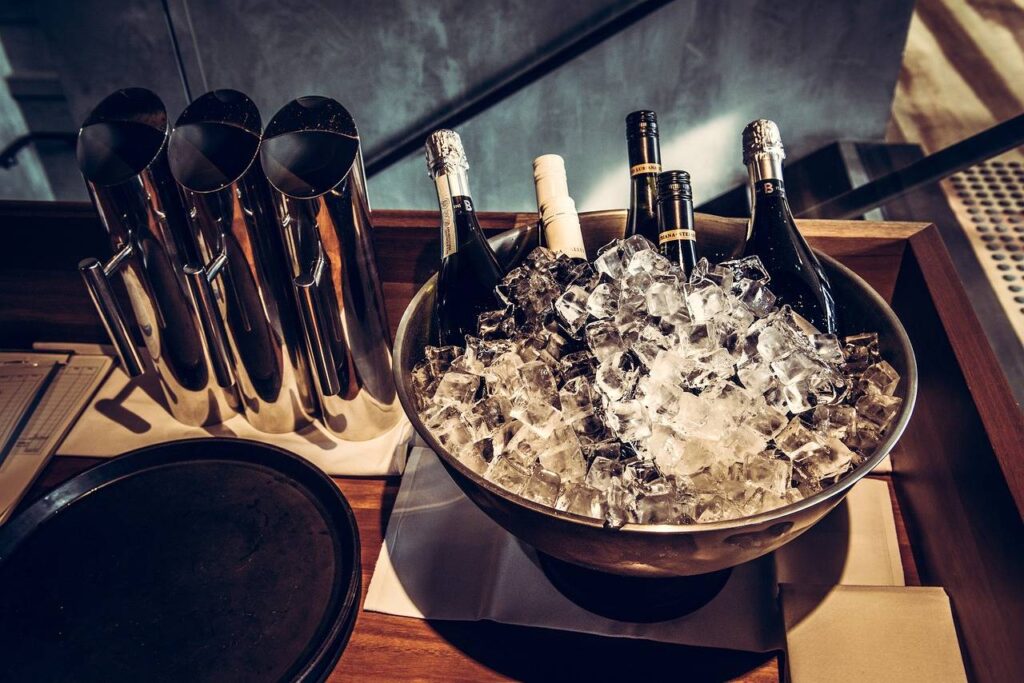
An ice bucket with water and ice chills wine much faster than dry ice alone. This is especially helpful when guests are arriving and the bottle is warmer than it should be.
For that exact situation, our quick guide on how to chill wine fast is useful.
Let the wine evolve in the glass
The bottle does not need to do all the work. A wine that starts a little cool will often open up naturally after a few minutes in the glass. That is often better than serving it too warm from the start.
Common wine temperature mistakes
Serving red wine too warm
This is probably the most common mistake. It makes reds feel more alcoholic, less fresh, and often less precise.
Serving white wine too cold
This kills aroma and can make a good wine seem basic or blank. It is especially common with fuller white wines.
Treating all wines in one category the same
Not all whites want the same chill, and not all reds want the same warmth. Body, sweetness, structure, and style all matter.
Ignoring the room
A warm dining room, summer terrace, or heated living room changes everything. Wine warms up quickly once poured.
Quick wine temperature guide
- Sparkling wine: 6 to 8°C
- Light white wine: 7 to 10°C
- Full-bodied white wine: 10 to 13°C
- Rosé wine: 8 to 12°C
- Light-bodied red wine: 13 to 16°C
- Medium-bodied red wine: 15 to 18°C
- Full-bodied red wine: 17 to 19°C
- Dry fortified wine: 7 to 10°C
- Richer fortified wine: 12 to 16°C
- Dessert wine: 7 to 10°C
Good serving temperature makes good wine taste better
Wine serving temperature is one of the easiest ways to improve how a bottle tastes without spending more money. It affects aroma, balance, texture, freshness, and how clearly the wine shows what it is meant to show. A small temperature adjustment can make a bigger difference than many people expect.
You do not need to chase laboratory precision. You just need to stop serving wines by habit and start serving them in a way that suits the style. Once you do that, whites become more expressive, rosés become more elegant, sparkling wines stay sharper, and reds feel much more balanced. It is one of the simplest upgrades in wine, and one of the most worthwhile.
Read next
- How to Chill Wine Fast: Quick Tips for Reaching Serving Temperature
- Wine Storage and Aging: The Important Steps
- How to Decant Wine
Last updated: