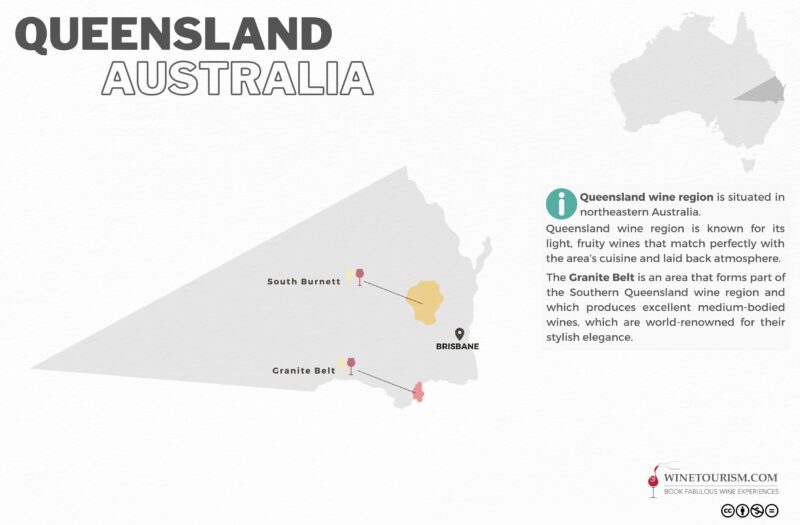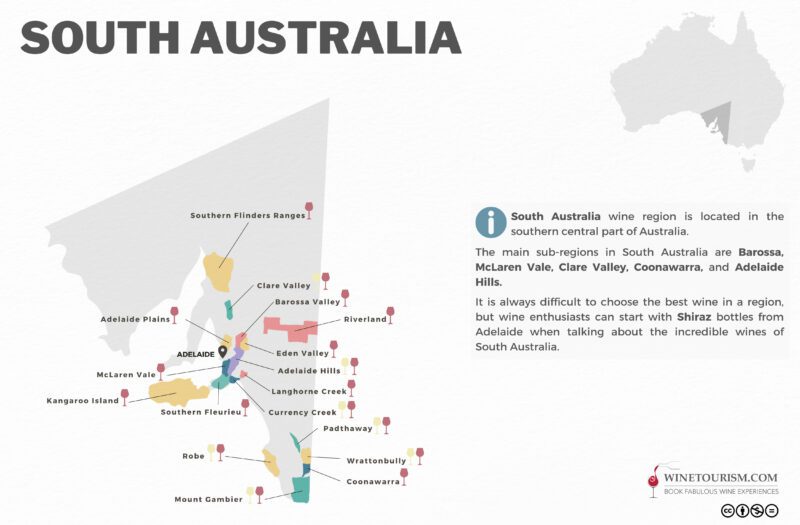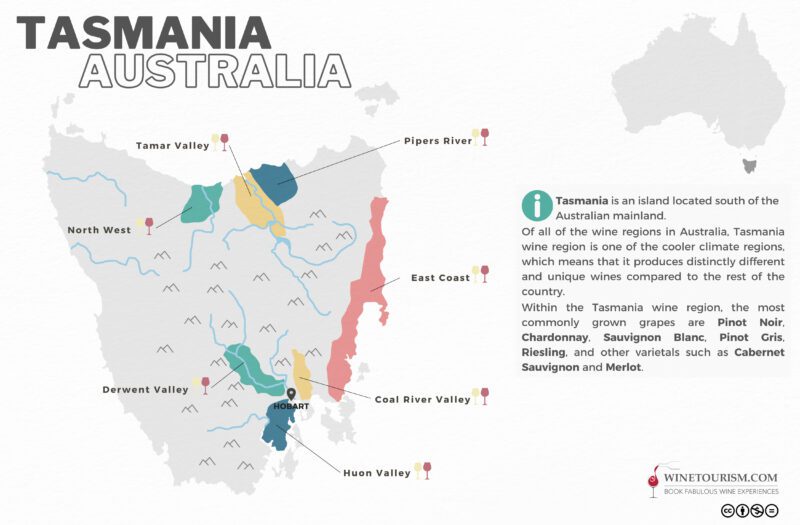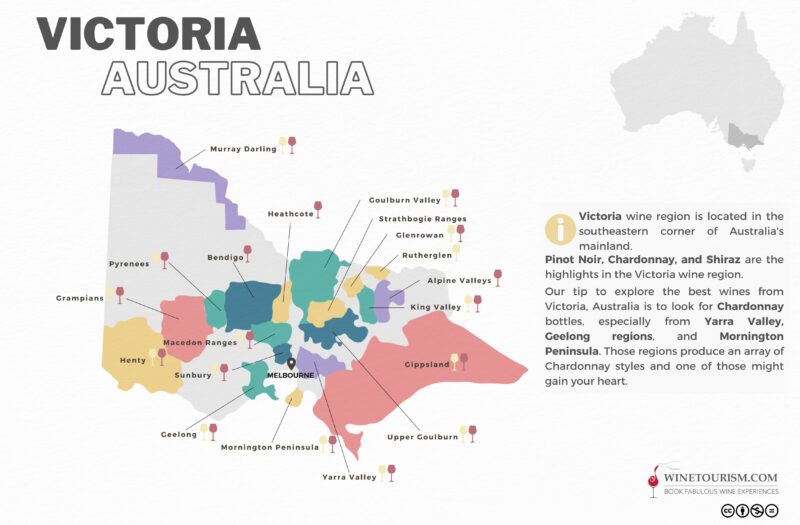
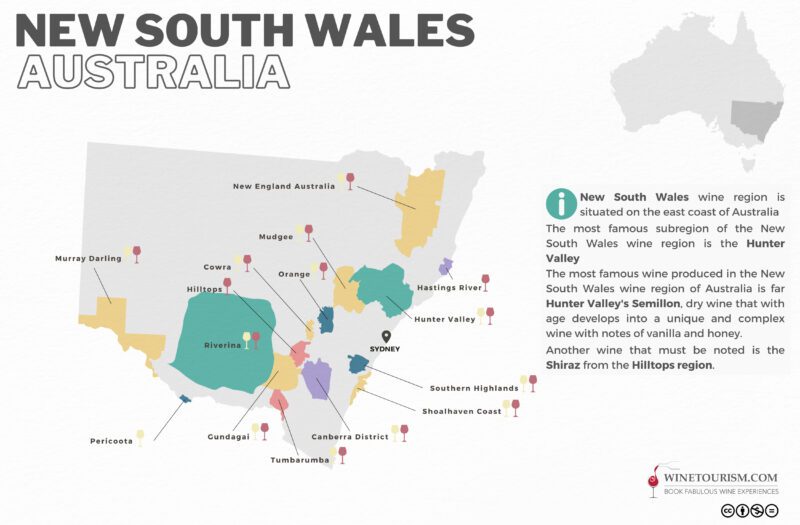
If you are looking for a free, high-resolution New South Wales wine map, you can download it here: Download the full-size New South Wales wine map. This map is useful if you want a clearer overview of one of Australia’s most varied wine states, from the historic Hunter Valley to cooler inland areas like Orange and established names such as Mudgee and Riverina.
New South Wales matters because it does not reduce easily to one single wine style. Some parts are warm and historic, some are higher and cooler, and some are large-volume inland regions that still matter hugely to the broader Australian wine picture. That mix is exactly what makes a New South Wales wine map useful. It helps you place the big names, understand how spread out these regions are, and get a better sense of why the wines coming out of this state can taste so different from one area to the next.
If you want to browse more downloadable Australian wine maps after this one, see our Australia wine maps collection.
Key takeaways
- This free map gives you a clearer overview of the major wine areas across New South Wales.
- New South Wales is one of Australia’s most diverse wine states, with both historic and cool-climate regions.
- Hunter Valley, Orange, Mudgee, and Riverina are among the most important names to know on the map.
- The state is associated with styles ranging from Semillon and Shiraz to Chardonnay and Cabernet Sauvignon.
- This map is useful for trip planning, wine study, and getting your bearings before diving into specific regions.
Table of contents
- Why this map is useful
- Why New South Wales matters in Australian wine
- Key regions to notice on the map
- Main grapes and wine styles
- How to use this map
Why this New South Wales wine map is worth downloading
A good wine map does more than show you where vineyards happen to sit. It gives structure to a region that can otherwise feel abstract, especially in a place as geographically broad and stylistically mixed as New South Wales. On paper, names like Hunter Valley, Orange, Mudgee, and Riverina may sound familiar. On a map, they become easier to understand in relation to Sydney, the coast, inland New South Wales, and the state’s changing climate patterns.
That matters because wine regions are easier to remember when you can place them visually. A map helps you understand why one area is known for long-lived whites while another leans more toward fuller reds, or why one region feels cooler and more elevated while another is warmer and larger-scale. If you are planning a trip, studying Australian wine, or simply trying to connect names on labels to actual places, this kind of map is much more useful than a vague mental list of region names.
Why New South Wales matters in Australian wine
New South Wales is one of the key states in Australian wine, both historically and stylistically. It includes the Hunter Valley, which is widely recognised as Australia’s oldest wine region, but it also stretches into very different winegrowing environments that produce a much wider range of styles than many people expect. That mix of history and diversity is the real reason the state matters.
For many wine drinkers, New South Wales begins with Hunter Valley Semillon and Shiraz. That is a fair starting point, but it is only part of the story. Further inland, regions such as Orange and Mudgee bring different elevations, different temperature patterns, and different strengths. Riverina adds another important layer as a major producing area within the state. Altogether, New South Wales shows that Australian wine is not just about one climate, one grape, or one style.
If you are also exploring other parts of the country, you may want to compare this map with our South Australia wine map, Tasmania wine map, and Victoria wine map.
Key regions to notice on the map
Hunter Valley
Hunter Valley is the name many wine lovers know first, and for good reason. It is one of Australia’s most historic wine regions and still one of the country’s most distinctive. It is especially famous for Semillon and Shiraz, and it has a long reputation that gives it a different kind of weight from many newer regions. If you are using this map as a starting point, Hunter Valley is the obvious anchor.
It is also one of the best examples of why New South Wales is interesting. Hunter Valley has a warm and humid climate, yet it is capable of producing white wines that age in a remarkably distinctive way. That alone makes it stand out in the wider Australian context.
Orange
Orange adds a very different side of New South Wales wine. It is a higher-altitude region west of Sydney, and that elevation is a big part of why the wines can show a cooler-climate feel despite the broader Australian setting. Orange is especially associated with varieties such as Chardonnay, Sauvignon Blanc, Shiraz, and Cabernet Sauvignon, and it tends to draw attention from drinkers looking for fresher, more lifted styles.
On the map, Orange helps explain the state’s diversity at a glance. It shows that New South Wales is not just about warm historic vineyards. It also includes elevated, cooler areas that produce quite different wines.
Mudgee
Mudgee is another important name on the New South Wales map and one that often appeals to drinkers looking for a classic inland Australian mix of red and white varieties. It is associated with Shiraz, Chardonnay, Cabernet Sauvignon, and Merlot, and it helps round out the state’s image as more than just one flagship region and one flagship grape. Mudgee brings depth to the story because it is established, recognisable, and broad in the range of styles it can support.
Riverina
Riverina deserves attention for a different reason. It is the largest wine-producing region in New South Wales, which makes it important even for drinkers who are more focused on boutique or premium regions. A map helps put that scale into perspective. Riverina is a reminder that wine geography is not only about prestige and cellar-door tourism. It is also about where a major share of production actually happens.
Together, these regions help explain why New South Wales is best understood as a diverse wine state rather than a single-style destination.
Main grapes and wine styles to connect with the map
One of the most useful ways to read a wine map is to connect places with grape styles. New South Wales gives you several easy starting points.
Semillon is one of the clearest examples, especially through Hunter Valley. Even if you do not go deep into producer names right away, it is worth remembering that New South Wales has helped define what Australian Semillon can look like.
Shiraz is another major part of the picture. In New South Wales, it appears in more than one region and helps tie the state into the broader story of Australian red wine. If you want a quick refresher on the grape itself, read our guide to Syrah/Shiraz.
Chardonnay is especially relevant when looking at areas such as Orange and Riverina, though the styles naturally vary depending on climate and winemaking choices. Our in-depth Chardonnay guide is a useful next step if that is the grape drawing you into Australian wine.
Cabernet Sauvignon also matters in parts of New South Wales, especially in regions like Orange, Mudgee, and Riverina. If you want more context on that variety, here is our Cabernet Sauvignon guide.
If you are still building your broader grape knowledge, our overview of wine grape varieties of the world is also helpful.
How to use this map if you are planning a trip, tasting, or study session
If you are planning a wine trip, this map helps you see immediately that New South Wales is not one compact destination. Some of the state’s best-known wine areas are spread out, and understanding that geography helps with expectations. A map gives you a much more realistic sense of whether you are looking at a focused regional visit or a broader New South Wales wine journey.
If you are studying wine, use the map to connect region names with likely styles. Hunter Valley should trigger thoughts of Semillon and Shiraz. Orange should make you think about elevation and cooler-climate influence. Mudgee and Riverina should remind you that New South Wales includes both established regional character and large-scale production importance.
If you are tasting at home, the map can also help structure a mini line-up. You could try a Hunter Valley Semillon, a cooler-style Chardonnay from Orange, and a fuller red from Mudgee or Riverina and suddenly the geography starts to mean something in the glass. That is where wine maps become genuinely useful rather than just decorative.
Map credit
Wine map kindly provided by WineTourism.com.
Read next
- Australia Wine Maps
- South Australia Wine Region Free Wine Map
- Tasmania Wine Region Australia Free Wine Map
Last updated: