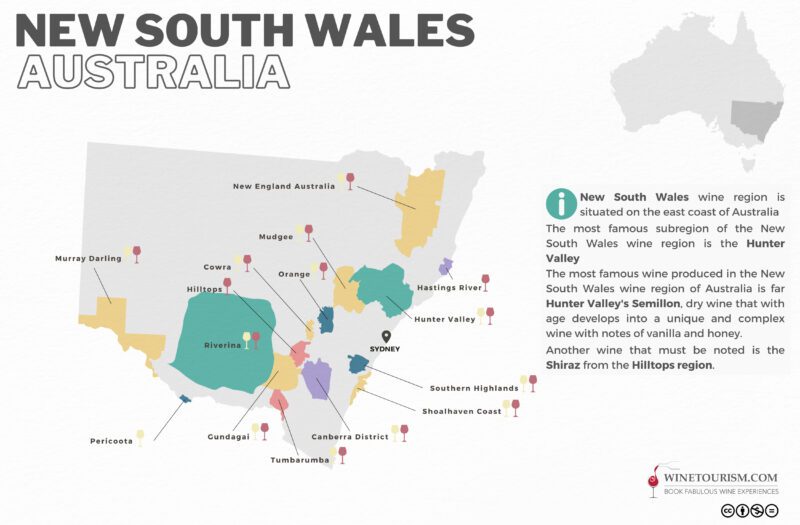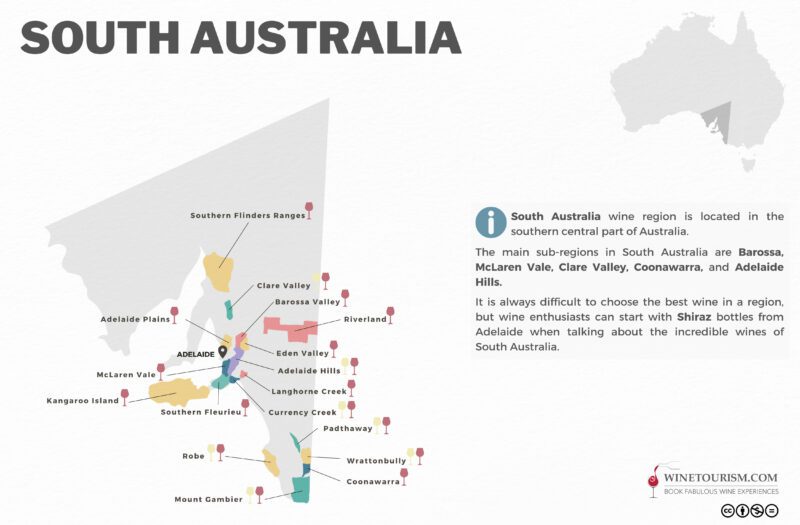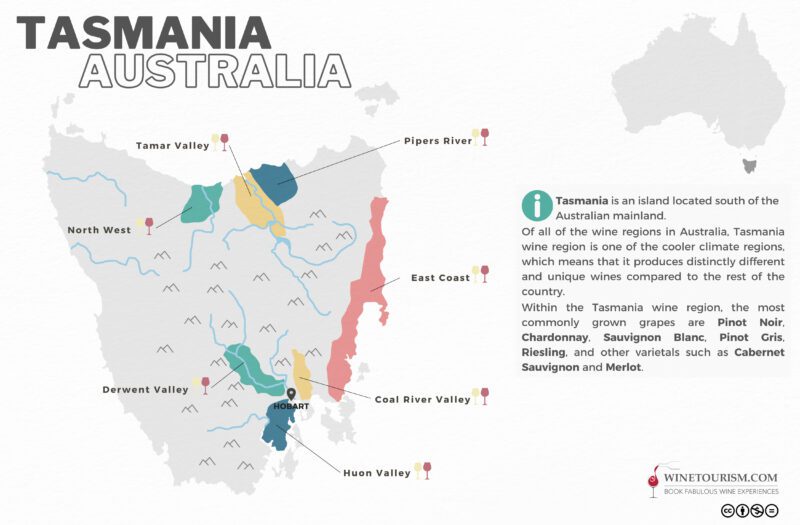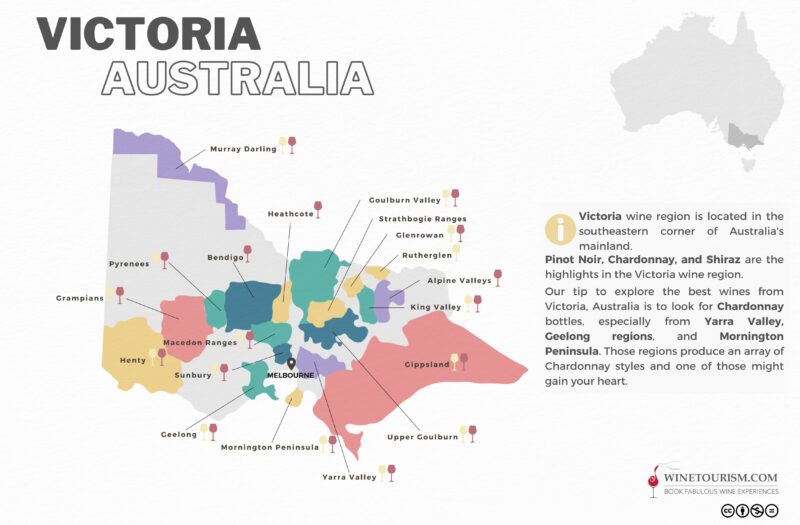
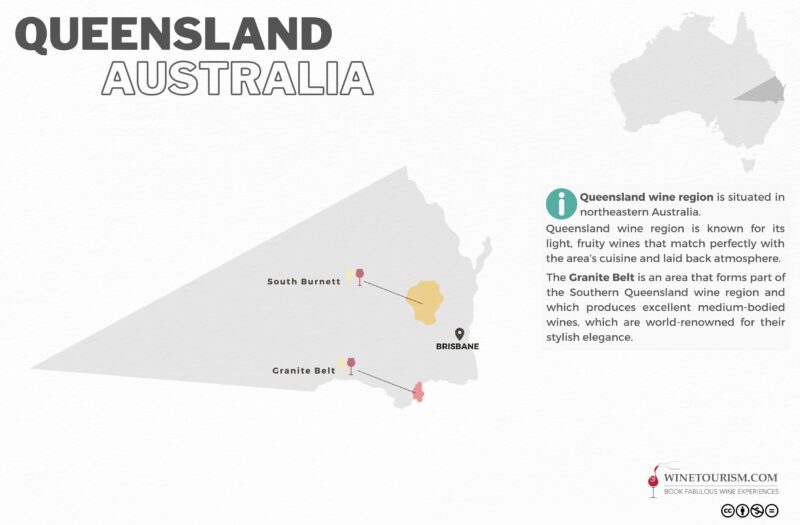
If you are looking for a free, high-resolution Queensland wine map, you can download it here: Download the full-size Queensland wine map. This map gives you a clearer overview of one of Australia’s lesser-known but genuinely interesting wine states, where altitude, inland conditions, and regional variation matter more than many people expect.
Queensland is not usually the first name people mention when talking about Australian wine, but that is part of what makes it worth exploring. It is a smaller and less internationally famous wine state than South Australia or Victoria, yet it has a distinct identity built around elevated vineyards, boutique producers, and a wine scene that feels more personal and less industrial. A map helps make sense of that quickly, especially if you are trying to place regions like Granite Belt and South Burnett in a broader Australian wine context.
If you want to browse more downloadable maps after this one, see our Australia wine maps collection.
Key takeaways
- This free map helps you place the main Queensland wine areas more clearly.
- Queensland wine is shaped less by one dominant style and more by smaller, region-specific identities.
- Granite Belt is the best-known Queensland wine region and the state’s main reference point for quality wine tourism.
- South Burnett adds another useful layer to the state’s wine story and shows that Queensland is not just one-region wine country.
- This map is useful for travel planning, wine study, and understanding where Queensland fits within Australian wine.
Table of contents
- Why this map is useful
- Why Queensland matters in Australian wine
- Key regions to notice on the map
- Main grapes and wine styles
- How to use this map
Why this Queensland wine map is worth downloading
A wine map is most useful when it turns scattered region names into something visual and memorable. That matters even more in Queensland because the wine story here is not as widely known as it is in some other Australian states. Most readers may recognise the name Granite Belt, but fewer can place it confidently, and even fewer will know how it relates to other Queensland wine areas. A map fixes that quickly.
It also helps you understand that Queensland wine is not built around one giant, uniform zone. The state’s wine identity is more regional and more boutique. Seeing that on a map makes it easier to understand why Queensland can feel quite different from the classic image many people have of Australian wine. Instead of one broad stereotype, you get a better sense of smaller areas with their own climate influence, elevation, and local character.
Why Queensland matters in Australian wine
Queensland matters because it offers a different angle on Australian wine. It is not the biggest state in terms of wine reputation, and it does not dominate export conversations the way some southern regions do, but that is exactly why it is interesting. Queensland is one of those places where wine feels more regional, more discovery-driven, and often more closely tied to local tourism and cellar-door culture.
The state’s wine identity is shaped above all by two recognised wine regions: Granite Belt and South Burnett. Together, they show that Queensland wine is not simply “too hot for fine wine,” which is the kind of lazy assumption people sometimes make when they think about the state. In reality, site choice, altitude, and regional conditions make a huge difference, and that is the story a good map helps tell.
If you are comparing Queensland to the rest of Australia, it is also worth looking at our New South Wales wine map, South Australia wine map, Tasmania wine map, and Victoria wine map.
Key regions to notice on the map
Granite Belt
Granite Belt is the main name to know in Queensland wine. It is centered around Stanthorpe and is widely seen as the state’s flagship wine region. It is also notable for elevation, which is one of the key reasons it stands apart. That higher vineyard altitude gives the region a very different identity from the tropical stereotype some people attach to Queensland too broadly.
For readers using this map as a starting point, Granite Belt is the anchor. It gives the state its strongest wine profile and is usually the first region wine travellers, students, and curious drinkers should place in their minds. Once you see where it sits, the rest of Queensland’s wine geography starts making more sense.
South Burnett
South Burnett is the other major region to pay attention to. It adds an important second dimension to Queensland wine because it reminds you that the state is not just Granite Belt and nothing else. South Burnett sits north-west of Brisbane and brings its own subtropical regional identity, which makes it useful both on the map and in the broader story of Queensland wine.
Even if Granite Belt gets more attention, South Burnett matters because it shows that Queensland wine has more range than many people assume. It helps turn the state from a one-region curiosity into a more complete wine destination.
Main grapes and wine styles to connect with the map
Queensland is not defined by just one grape in the way some wine regions are. That makes the map more useful, because you are not only learning one name tied to one flagship variety. You are learning a wine landscape that is more mixed and more exploratory.
In practical terms, Queensland wine often overlaps with the broader Australian grape picture, which means varieties such as Shiraz, Chardonnay, Cabernet Sauvignon, and Verdelho regularly come into the conversation. If you are using the map as a way into grape study as well, our guides to Syrah/Shiraz, Chardonnay, and Cabernet Sauvignon are good next steps.
If you want the bigger picture beyond a few famous names, our overview of wine grape varieties of the world is useful too.
How to use this map for travel, tasting, or wine study
If you are planning a trip, this map helps you understand that Queensland wine travel is not about ticking off a huge list of famous regions in a tight cluster. It is more about getting your bearings, understanding where the main wine areas are, and planning around a smaller number of more distinctive destinations. That is often a better fit for travellers who prefer a slower, more local wine experience.
If you are studying wine, use the map to fix the two key names in place first. Granite Belt should be your main reference point, with South Burnett as the important second region to remember. That alone already puts you ahead of many casual drinkers, because Queensland wine is not always covered in detail compared with the better-known southern states.
If you are tasting at home, the map can help by giving context to bottles that might otherwise feel geographically vague. Once you know where Queensland’s main wine areas sit and why they matter, labels from the state become easier to place in your head. That is exactly what a useful wine map should do.
Map credit
Wine map kindly provided by WineTourism.com.
Read next
- Australia Wine Maps
- New South Wales Wine Region Australia Free Wine Map
- Victoria Wine Region Australia Free Wine Map
Last updated: