Wine tasting is not about sounding clever or inventing dramatic descriptions. It is about paying closer attention to what is in the glass, so you can understand why a wine tastes the way it does and whether it is actually good. Once you know what to look for, smell for, and notice on the palate, wine becomes far less mysterious and far more enjoyable.
That is why tasting matters. It helps you move beyond “I like this” or “I don’t like this” and toward something more useful: understanding what you like, what you do not, and why. Whether you are brand new to wine or trying to sharpen your palate, a structured tasting approach makes every bottle more interesting.
Key takeaways
- Wine tasting is a skill, not a talent you are simply born with.
- A simple structure helps: look, smell, taste, assess texture and balance, then judge the finish.
- Appearance, aroma, acidity, tannin, body, alcohol, and length all tell you something important about a wine.
- Comparative tasting is one of the fastest ways to improve.
- You do not need expensive bottles to become better at tasting wine.
Table of contents
- What wine tasting really is
- What to do before you taste
- Step 1: Look at the wine
- Step 2: Smell the wine properly
- Step 3: Taste structure, not just flavour
- Step 4: Judge the finish and overall balance
- How to describe wine without sounding forced
- Common beginner mistakes
- How to train your palate
- Why blind tasting helps
What wine tasting really is
Wine tasting is the process of evaluating a wine through sight, smell, taste, and texture. That sounds technical, but in practice it is very straightforward. You are asking a few simple questions. What does the wine look like? What does it smell like? How does it feel in the mouth? Is it fresh, heavy, sharp, soft, simple, layered, short, or persistent?
The goal is not to perform. It is to pay attention. When people feel intimidated by wine tasting, it is usually because they think there is one correct answer hidden inside the glass. There is not. There are better and worse observations, and there are more or less useful tasting notes, but wine tasting is ultimately about building sensory awareness and using clear language.
It also helps to remember that tasting is closely linked to how wine is made. If you want the production side explained more clearly, see our guide to how wine is made.
What to do before you taste
A good tasting starts before the first sip. Use a clean glass, ideally with enough room to swirl. Do not wear strong perfume or sit next to scented candles or heavy food, because those smells will interfere with the wine. If possible, taste in good natural light or under neutral lighting, especially when you are trying to judge colour.
Temperature matters too. A white wine served too cold can smell muted and bland. A red wine served too warm can feel alcoholic and loose. You do not need to obsess, but serving temperature affects what you smell and taste.
Your mindset matters as well. Taste when you can focus. If you are distracted, rushing, or eating strongly flavoured food at the same time, your impressions will be less useful. Wine tasting does not need ceremony, but it does reward attention.
Step 1: Look at the wine
The visual part is easy to underestimate, but it gives you useful clues. Hold the glass against a white background and look at the wine before swirling it. Notice its colour, depth, and clarity.
Colour
With white wines, colour can range from very pale lemon to deep gold or even amber. With red wines, you might see ruby, garnet, purple, or brick-like tones. Rosé can range from barely-there salmon to vivid pink.
Colour alone does not tell you everything, but it can hint at age, grape variety, style, and winemaking choices. A deep, youthful purple red often suggests a young wine with lots of pigment. A paler red might suggest a lighter-bodied grape or a more delicate extraction. Older reds often shift toward garnet or brick tones, while older whites can deepen toward gold or amber.
Clarity
Most wines today are clear, but not all. A slightly hazy wine can be a sign of minimal filtration rather than poor quality. Sediment in an older red is also not unusual. Clarity is simply one of several observations, not a verdict.
Viscosity and legs
After swirling the wine, you may notice streaks or droplets running down the inside of the glass. These are often called legs or tears. People sometimes overstate their importance, but they can hint at higher alcohol or residual sugar. They are interesting, just not decisive.
Glassware influences how you experience wine too. If you want to go deeper into that side of tasting, read our guide to wine glasses and how shape affects tasting.
Step 2: Smell the wine properly
Smell is where wine really opens up. A large part of what people call taste is actually aroma. If you skip this step or rush it, you miss most of the story.
Start by smelling the wine before swirling. Then swirl the glass gently and smell again. Swirling helps release aromatic compounds, which makes the wine easier to read. Take a few short sniffs rather than one huge inhale. That usually works better.
Primary aromas
These come mainly from the grape itself. Think citrus, apple, peach, blackcurrant, cherry, plum, violet, herbs, pepper, or floral notes. Primary aromas often help you start identifying grape family and style.
Secondary aromas
These come from fermentation and winemaking. Yeast, bread dough, butter, cream, nuttiness, or lactic notes often fall into this category. This is where production decisions begin to show themselves in the glass.
Tertiary aromas
These develop with age, either in oak or in bottle. Notes like tobacco, leather, mushroom, dried fruit, cedar, forest floor, toast, and spice often emerge here. These aromas are especially important in more mature wines.
Oak can shape both aroma and flavour in a major way, especially in Chardonnay, Rioja, Cabernet Sauvignon, and many other styles. If you want that broken down in plain language, read our article on oak in winemaking.
Aroma is also where beginners often freeze because they think they need to name something bizarre and hyper-specific. You do not. “Fresh red berries,” “ripe stone fruit,” “dried herbs,” or “subtle vanilla” is far more useful than trying too hard to invent poetic nonsense.
Step 3: Taste structure, not just flavour
Once you sip the wine, do not focus only on whether it tastes of cherry, lemon, plum, or peach. That matters, but structure matters just as much. A wine’s structure is what makes it feel bright, heavy, lean, round, strict, rich, or refreshing.
Sweetness
Is the wine dry, off-dry, medium-sweet, or fully sweet? Many beginners confuse fruitiness with sweetness, but they are not the same thing. A wine can smell very fruity and still be dry.
Acidity
Acidity is what makes your mouth water and keeps wine lively. High-acid wines feel sharper, fresher, and more energetic. Low-acid wines feel softer and broader. Acidity is one of the main reasons some wines work brilliantly with food.
If food pairing interests you, our guide to food and wine pairing basics is a useful follow-up.
Tannin
Tannin is mainly relevant in red wines, though some orange wines and a few whites can show it too. It creates a drying, slightly gripping sensation in your mouth. Tannin comes from grape skins, seeds, stems, and sometimes oak influence. Strong tannin is not a flaw. It is part of structure.
Body
Body is the wine’s weight on the palate. Light-bodied wines feel more delicate and agile. Full-bodied wines feel broader, richer, and heavier. Alcohol, fruit concentration, sugar, and winemaking all affect body.
Alcohol
Alcohol contributes warmth and texture. In balance, it supports the wine. Out of balance, it can feel hot, especially at the back of the throat. This is easier to notice in wines served too warm.
Flavour intensity and development
Now come back to flavour. Is the wine delicate or bold? Simple or layered? Does it stay the same from front palate to finish, or does it evolve? Good wines often reveal more than one thing over time. They do not have to be massive or dramatic, but they usually hold your attention.
Step 4: Judge the finish and overall balance
The finish is what remains after you swallow or spit. A short finish drops away quickly. A long finish lingers, sometimes with fruit, spice, mineral notes, tannin, or savoury character still unfolding. Length is not everything, but it often separates ordinary wines from more serious ones.
Then ask the most important question of all: is the wine balanced? A balanced wine does not mean every component is equal. It means the parts work together. Fruit, acidity, tannin, alcohol, oak, sweetness, and texture should feel integrated rather than awkward or disconnected.
A wine can be intense and still balanced. It can also be subtle and balanced. The point is harmony, not size.
How to describe wine without sounding forced
A lot of people want better tasting notes but get stuck because wine language can sound ridiculous when overdone. The easiest fix is to keep your descriptions grounded.
Start with broad categories before getting specific. Instead of jumping straight to “wild strawberry leaf and pink peppercorn,” begin with questions like these:
- Is the fruit red, black, citrus, orchard, tropical, or stone fruit?
- Are the aromas fresh, ripe, cooked, dried, or jammy?
- Is there floral, herbal, earthy, spicy, oaky, or savoury character?
- Does the wine feel lean, crisp, juicy, creamy, grippy, or powerful?
That is already enough to describe a wine properly. Precision is useful, but clarity matters more.
If you want help with wine terms that appear in tasting notes, our wine glossary is worth bookmarking.
Common beginner mistakes
Focusing too much on flavour and not enough on structure
Beginners often fixate on whether they can smell blackberry or vanilla but ignore acidity, tannin, body, and finish. Structure is what gives wine shape. Without noticing it, your tasting notes stay shallow.
Trying too hard to be correct
Wine tasting is not a school exam where one secret answer is hidden in the glass. If you smell black fruit and someone else says dark cherry, that is not necessarily a contradiction. Often you are both circling the same idea.
Tasting random bottles without comparison
You will learn faster if you compare wines side by side. Try two Sauvignon Blancs from different countries, or two red wines with different tannin levels. Contrast teaches quickly.
Ignoring grape variety and region
If you do not learn the basic grapes and styles, every tasting note floats in isolation. Understanding grapes gives context. That is why our guide to the world’s most important grape varieties is such a useful starting point.
Thinking expensive wine automatically tastes better
Price can reflect many things, including scarcity, land value, prestige, and age-worthiness. It does not guarantee personal enjoyment. Plenty of modestly priced wines teach more in a tasting context than one expensive bottle you feel afraid to judge honestly.
How to train your palate
The best way to improve is simple: taste regularly and pay attention. You do not need grand crus every weekend. You need repetition, comparison, and note-taking.
Keep a tasting journal
Write down the producer, grape, region, vintage, alcohol if listed, and your observations. Over time, patterns emerge. You may realise you consistently prefer higher-acid whites, lighter reds, or less oaky Chardonnay.
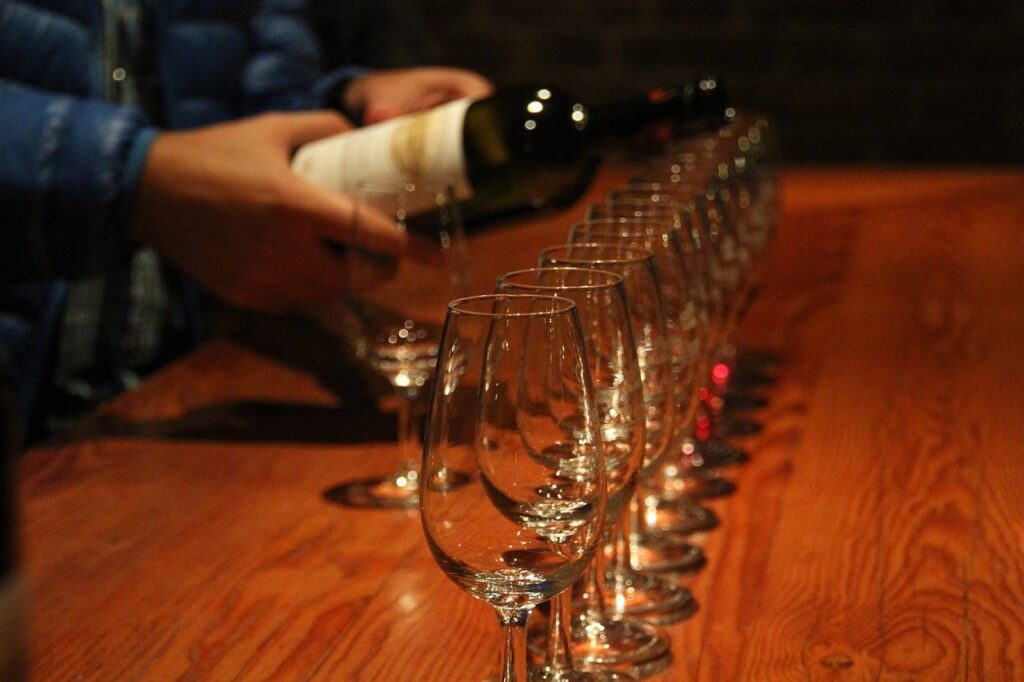
Taste in flights
Taste two to four wines at a time with a theme. Compare Chardonnay from Chablis and California. Compare young Rioja and oakier Reserva. Compare dry Riesling and off-dry Riesling. This is one of the fastest ways to build memory.
Build your aroma memory outside wine
Smell fruit, herbs, spices, coffee, flowers, mushrooms, citrus peel, vanilla pods, fresh-cut herbs, tobacco, and tea. The more sensory references you already know, the easier it is to recognise them in wine.
Revisit the same wine over time
A wine can change in the glass over 20 to 60 minutes. Tasting it right after opening and then again later teaches patience and shows how oxygen affects aroma and texture.
Study alongside tasting
Reading works better when paired with practical tasting. If you want a more structured learning path, our guide to prestigious wine courses is a good next read.
Why blind tasting helps
Blind tasting means tasting a wine without knowing what it is beforehand. This removes expectation and forces you to pay attention to what the wine actually shows. It is one of the best ways to improve because it exposes your assumptions.
When labels, price, producer, and reputation disappear, you stop leaning on memory and start trusting sensory evidence. That can be humbling, but it is extremely useful. It also makes tasting more fun.
Blind tasting does not need to be formal. Even covering the bottle with a cloth or having a friend pour for you is enough. The point is to focus on clues in the glass rather than clues on the label.
Where wine tasting can take you
For some people, wine tasting remains a personal hobby. For others, it becomes the first step toward serious study, hospitality work, retail, writing, or sommelier training. Once you learn how to taste methodically, many other parts of wine start falling into place.
If that side of the wine world appeals to you, our article on how to become a sommelier is the natural next stop.
A better way to enjoy every bottle
Mastering wine tasting does not mean turning every glass into homework. It means getting more out of the wines you already drink. You start noticing freshness, texture, oak, ripeness, structure, and balance. You start choosing bottles with more confidence. You stop feeling that wine knowledge belongs only to experts.
The best tasters are usually not the loudest people at the table. They are the ones who keep tasting, keep comparing, and keep refining how they observe. That is what makes wine tasting a skill worth learning. The more you practice, the more each glass has to say.
Read next
- How Wine Is Made: A Clear Guide to Vineyard, Fermentation, Aging, and Bottling
- The World’s Most Important Wine Grape Varieties: Red and White Grapes Explained
- Exploring the World’s Most Prestigious Wine Courses
Last updated: