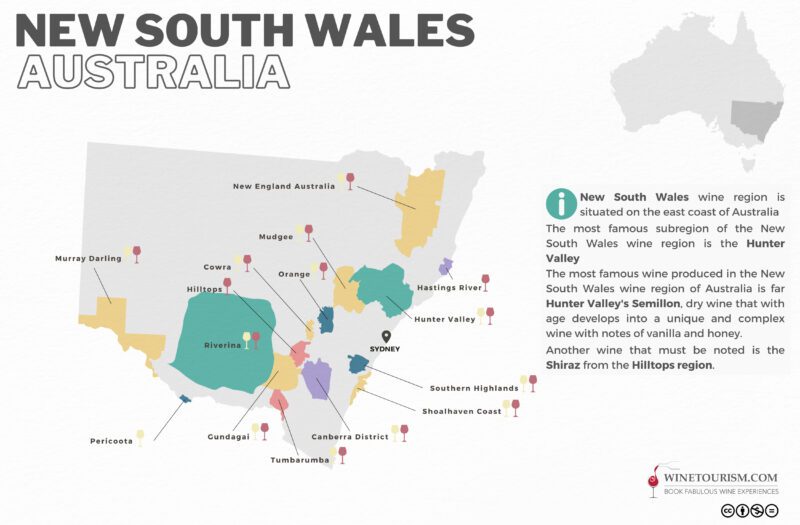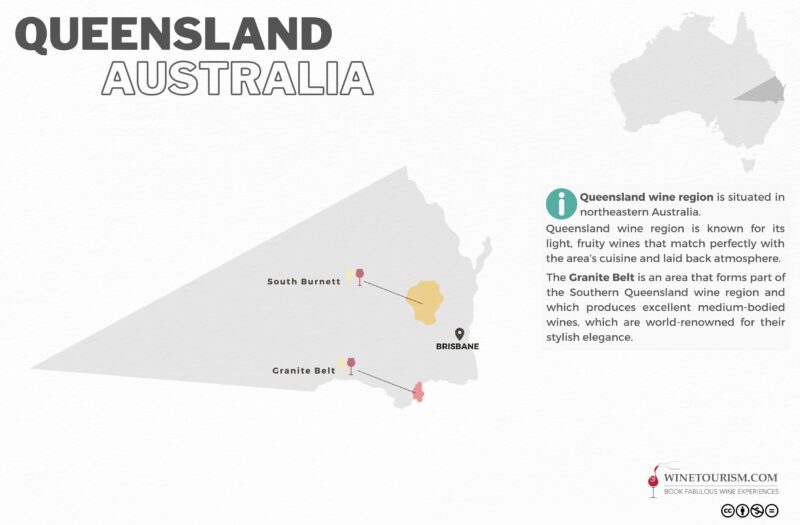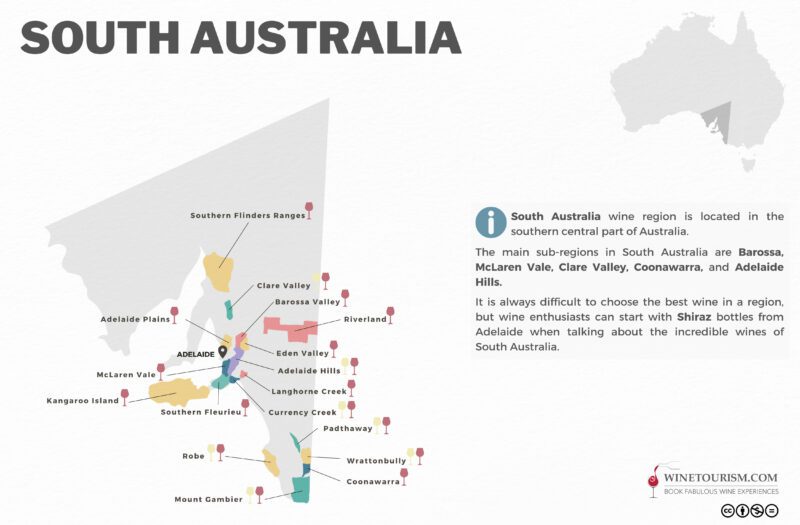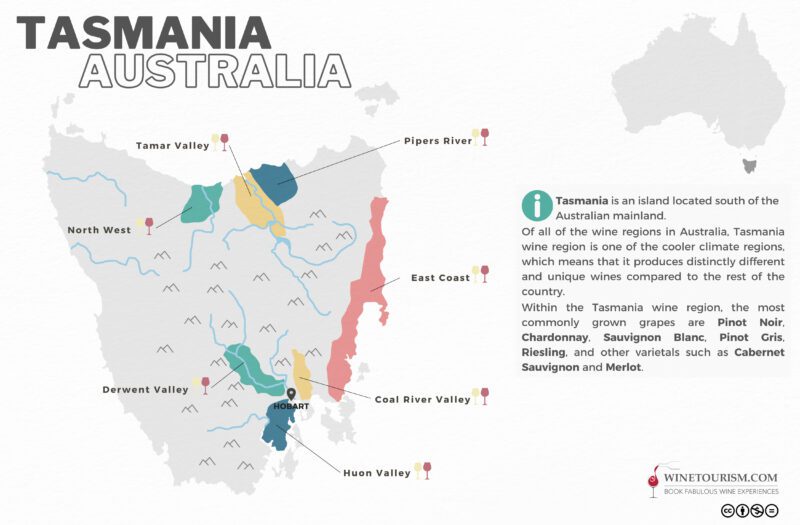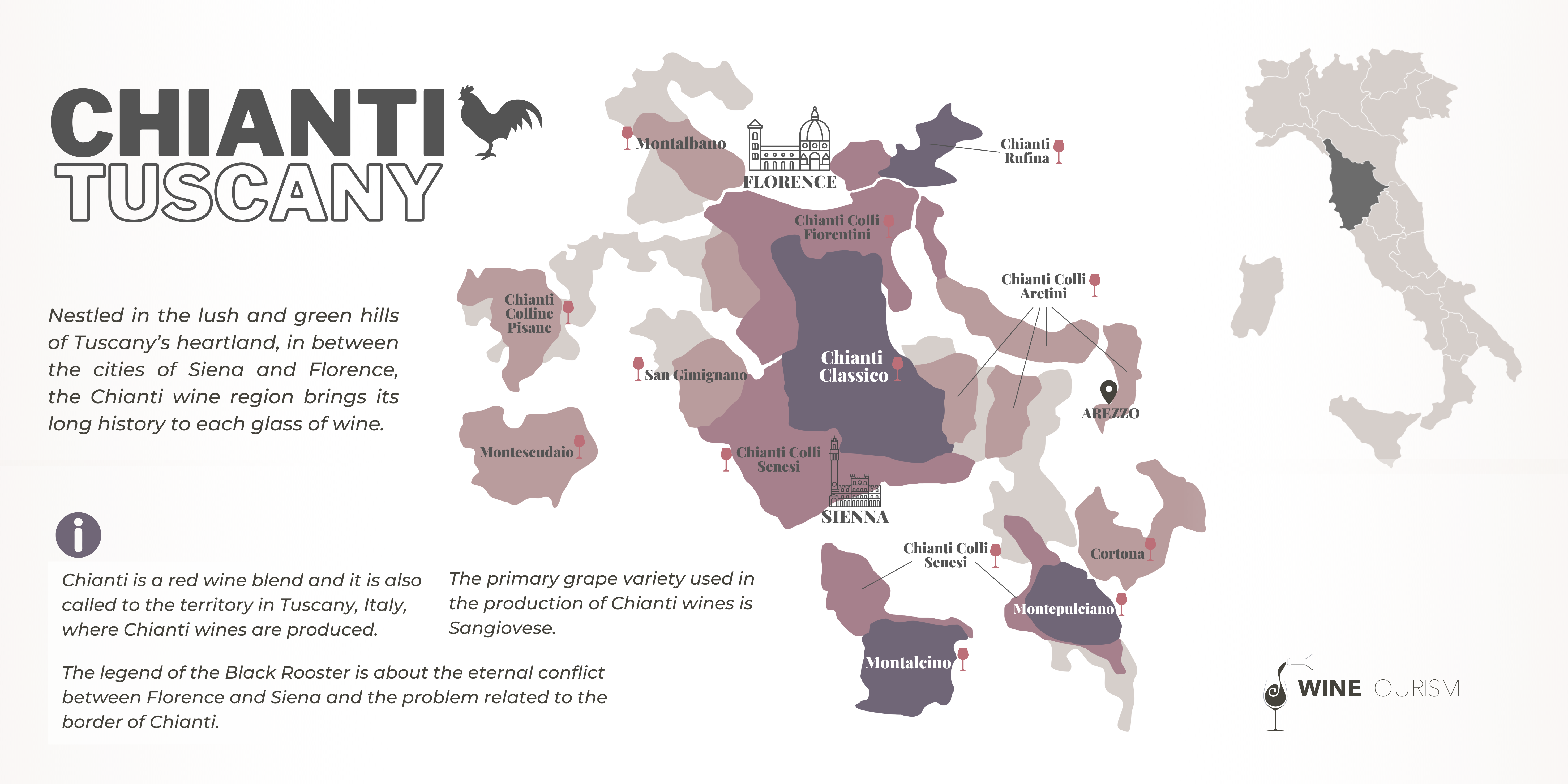

If you are looking for a free Tuscany wine region map, you can download the full-size version below. Tuscany, or Toscana, is one of Italy’s most celebrated wine regions, known for Sangiovese, iconic reds like Chianti and Brunello di Montalcino, and a wine culture that is deeply tied to landscape, history, and food.
Download the full-size Tuscany wine region map here
Key takeaways
- Tuscany is one of Italy’s most famous and influential wine regions.
- The region is strongly associated with Sangiovese and classic red wines.
- Chianti and Brunello di Montalcino are two of Tuscany’s best-known wine names.
- Tuscany combines major wine heritage with exceptional travel appeal.
- You can download a free high-resolution Tuscany wine map from the link above.
Table of contents
- Download the map
- Where Tuscany is
- Why Tuscany matters
- What the region is known for
- Sangiovese and the major wine styles
- Landscape, food, and wine culture
- Why this map is useful
Download the map
This page gives you access to a free, detailed, high-resolution wine map of the Tuscany wine region in Italy. It is useful if you want a clearer overview of one of the country’s most important wine areas, whether for wine study, travel planning, or general interest.
Click here to open and download the full-size map
Where Tuscany is
Tuscany is located in central Italy and is one of those regions whose name already carries enormous weight before anyone even mentions a grape variety. For many readers, Tuscany is almost shorthand for classic Italian wine country. Rolling hills, cypress-lined roads, old estates, and vineyard landscapes all play into that image.
That is one reason a map is especially useful here. Tuscany is famous enough that many readers know the name long before they know the geography in any practical sense. They may know Chianti, Brunello, or just the broader Tuscan image, but still not have a clear picture of how the region fits together as a wine landscape.
A wine map helps turn that broad recognition into something more concrete. It shows Tuscany not just as a dream destination or a famous label origin, but as a real regional wine structure with different areas, styles, and identities inside it.
Why Tuscany matters
Tuscany matters because it is one of the defining regions of Italian wine. It is not just important inside Italy. It is one of the places that shapes how many people around the world imagine serious red wine, wine travel, and the romance of vineyards in Europe.
The region also matters because it combines prestige and broad appeal unusually well. Some famous wine regions become so focused on prestige that they feel distant. Tuscany does not have that problem. It has top-level wine names and serious wine history, but it also remains accessible and emotionally recognisable to a wide audience.
For Corked News, Tuscany is especially valuable because it works across almost every kind of wine content. It fits wine maps, grape pages, regional guides, travel ideas, and food-and-wine content naturally. It is one of those regions that can support a lot of internal linking without ever feeling forced.
What the region is known for
Tuscany is known for exceptional wines and for a winemaking tradition that feels both storied and alive. Readers often come to Tuscany through the most famous names first, and for good reason. This is the home of some of Italy’s most recognised red wine regions and styles.
Chianti is one of the best-known names connected to Tuscany and often acts as the first entry point for readers. Brunello di Montalcino is another major name and adds a stronger prestige layer to the region’s identity. Together, they help define Tuscany as a place of both familiarity and serious wine ambition.
The region is also known for having a diverse terroir. That matters because Tuscany is not one simple vineyard zone repeating the same formula. It is a broader region where geography, elevation, local conditions, and grape focus create meaningful variation.
Sangiovese and the major wine styles
Sangiovese is the grape most closely associated with Tuscany, and it is central to understanding the region’s wine identity. When readers think of Tuscany as a classic red wine region, Sangiovese is usually the grape behind that image.
It is the key grape behind Chianti and Brunello di Montalcino, which makes it one of the most important grapes not just for Tuscany, but for Italy overall. That matters because Tuscany helps readers understand how one grape can take on different levels of structure, elegance, and intensity depending on where and how it is grown.
Tuscany is also broader than one grape alone. Cabernet Sauvignon and other varieties have had a role in parts of the region’s more modern wine story, but Sangiovese remains the clearest anchor. It gives Tuscany much of its identity and much of the reason the wines feel so rooted in place.
Landscape, food, and wine culture
Tuscany’s landscape is one of the strongest parts of its appeal. Few regions have such a clear visual identity in the minds of readers. The vineyard views, historic towns, stone estates, and long agricultural traditions all reinforce the wine story rather than competing with it.
The region also offers a rich gastronomic experience, and that matters because Tuscan wine is rarely best understood in isolation. These wines make more sense when seen alongside local cuisine, rural traditions, and the broader rhythm of the region. Wine, food, and landscape belong together here.
That is why Tuscany remains one of the strongest wine travel regions in Europe. It is not only a place to taste wine. It is a place where the full setting makes the wine more meaningful. For Corked News, that makes Tuscany one of the easiest regions to support with both informational and aspirational content.
Why this map is useful
A Tuscany wine region map is useful because the name is so famous that many readers assume they already understand it. In practice, they often know the image of Tuscany better than the wine geography. They may know Chianti or Brunello, but not how those places sit within the wider region.
This map helps solve that. It gives readers a practical overview they can use for wine learning, regional comparison, or travel planning. That is especially valuable in a region where there are several famous names inside one larger and very recognisable wine area.
The map is also useful because Tuscany often acts as a gateway to deeper Italian wine learning. Readers who begin with one famous region often go on to explore Sangiovese, nearby Tuscan appellations, broader central Italian wine, or wine travel planning. This page helps support that next step.
For Corked News, it also supports strong internal linking across Chianti content, Brunello-related pages, Sangiovese articles, Italy travel content, and the broader wine maps hub. It is the kind of evergreen page that works well both on its own and as part of the wider site structure.
See also our Wine Travel Ideas for Italy.
Wine map kindly provided by WineTourism.com.
Read next
Last updated: