
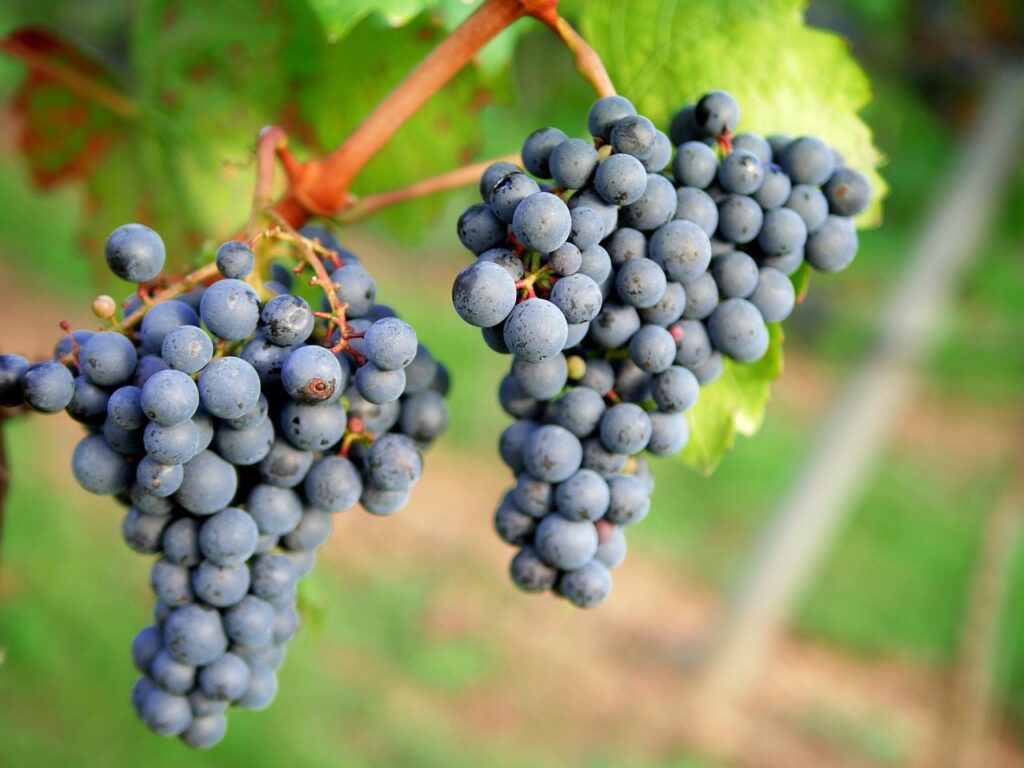
Montepulciano is one of Italy’s most important red grapes, but it is also one of the most commonly misunderstood. A lot of that confusion comes from the name. Montepulciano is the grape, while Montepulciano d’Abruzzo is the wine appellation most closely associated with it. That matters because once you separate the grape from the place name, it becomes much easier to understand what makes Montepulciano so appealing: deep color, dark fruit, generous texture, and enough structure to be serious without always becoming severe.
That balance is a big part of the grape’s success. Montepulciano can produce wines that feel bold and full without becoming too hard or too difficult. At its best, it combines ripe black fruit, moderate acidity, supple tannin, and a grounded earthy side that makes it very good with food. It can be simple and everyday or more layered and age-worthy depending on site, yield, and winemaking. That range is one reason it became so important in central Italy, especially in Abruzzo, where it found its clearest identity.
Key takeaways
- Montepulciano is a grape, not just a wine name, and it should not be confused with Vino Nobile di Montepulciano.
- The grape is especially important in Abruzzo, where it produces Montepulciano d’Abruzzo.
- It is known for deep color, dark fruit, soft-to-moderate tannins, and a broad, approachable structure.
- Better examples can age well, especially from stronger sites and stricter appellations like Colline Teramane.
- Montepulciano is one of Italy’s most food-friendly bold reds.
Table of contents
- Origins and history
- How Montepulciano tastes
- Terroir and growing conditions
- Winemaking techniques
- Notable appellations
- Food pairing and serving
- Why Montepulciano matters
Origins and history
Montepulciano is deeply tied to central Italy, above all Abruzzo, where it became one of the defining red grapes of the region. Although older stories sometimes push its roots far back into ancient history, what matters more for today’s wine drinker is that Montepulciano has long been part of the viticultural identity of east-central Italy and is now considered one of the country’s most important native red grapes.
For a long time, Montepulciano was not always treated as a prestige grape. It was valued for reliability, color, and blending usefulness as much as for standalone greatness. Over time, though, better vineyard work and more serious winemaking changed how people saw it. Producers began showing that Montepulciano could do much more than provide dark color and body. It could also produce expressive, balanced, and sometimes very fine wines in its own right.
This shift mattered most in Abruzzo, where Montepulciano became the leading red grape and the foundation of the region’s best-known wines. That remains true today. In practical terms, Abruzzo is still the place most drinkers should think of first when they think about Montepulciano.
How Montepulciano tastes
Montepulciano is usually easy to recognize once you know the pattern. It tends to give deeply colored red wines with black cherry, plum, blackberry, and darker berry fruit, often supported by spice, licorice, dried herbs, and sometimes a faint earthy or meaty edge. The fruit is usually generous rather than sharply acidic, which makes the wines feel broad and inviting even when they are full-bodied.
Deep color
This is one of the grape’s most obvious signatures. Montepulciano often gives intensely colored wines, sometimes edging toward inky purple in youth. That makes sense because the skins are richly pigmented, and the resulting wines often look darker and denser than many casual drinkers expect.
Dark fruit and spice
The core fruit profile usually leans black rather than red: black cherry, plum, blackberry, and sometimes dark raspberry. These flavors are often joined by subtle pepper, licorice, tobacco, or herbal notes, especially in more serious bottles or wines that have seen some oak.
Soft-to-moderate tannins
One reason Montepulciano is so approachable is that the tannins are often softer than people expect from a dark, full-bodied Italian red. That does not mean the wines lack structure. It means the structure is often more generous and rounded than severe. This makes Montepulciano easier to enjoy young than some other Italian reds, even when the wine has real depth.
Useful acidity
Montepulciano generally holds enough acidity to stay food-friendly and balanced. It is not usually a razor-sharp grape, but the freshness is often enough to stop the wine feeling heavy. That balance between ripe fruit, moderate tannin, and decent acidity is a big part of why the grape is so versatile.
If you want the broader context of where it sits among other important Italian and global grapes, our guide to the world’s most important grape varieties is the best place to continue.
Terroir and growing conditions
Montepulciano responds strongly to place, and Abruzzo gives it an especially useful combination of warmth, elevation, and Adriatic influence. This matters because the grape needs enough heat to ripen properly, but it also benefits from freshness if the wine is going to stay balanced rather than merely rich.
Hills and elevation
Many of the better vineyard sites sit in hilly areas where drainage is better and temperatures are moderated by altitude. Those conditions help the grape ripen steadily and maintain more freshness than it would on flatter, hotter land.
Adriatic influence
The Abruzzo region benefits from a relationship between mountains and sea that is especially important in viticulture. The Adriatic helps moderate heat, while inland elevation and exposure can keep the nights cooler. That combination often gives Montepulciano enough ripeness for dark fruit and body while still preserving shape in the wine.
Soil variation
Clay, limestone, and mixed alluvial soils all appear across Montepulciano-growing areas. These differences in soil help explain why some wines feel softer and broader, while others feel firmer, fresher, or more mineral in style. The grape is adaptable, but the better wines usually come from sites where vigor is controlled and ripeness is balanced rather than forced.
This is also a good reminder that Montepulciano is not just one flavor profile repeated endlessly. Site matters. If you want the broader explanation behind that, our article on the impact of terroir on wine is the natural next step.
Winemaking techniques
Montepulciano can be made in a surprisingly wide range of styles, from fresh, fruit-led everyday wines to more serious age-worthy reds. That flexibility comes partly from the grape itself and partly from how winemakers choose to shape it in the cellar.
Controlled fermentation
Temperature-controlled fermentation is common because it helps preserve the grape’s fruit character while keeping extraction under control. Since Montepulciano already brings plenty of color and flavor, the challenge is often less about forcing intensity and more about keeping the wine balanced.
Oak aging
Some Montepulciano wines see oak aging, which can add spice, smoke, vanilla, cocoa, and textural polish. In more ambitious examples, oak helps the wine feel broader and more integrated. But the grape does not always need strong oak to work well. Many of the most drinkable versions rely more on fruit and texture than on barrel flavor.
If you want the broader background there, our guide to oak in winemaking explains how barrel choices shape the final style.
Appassimento and concentration
Some producers also use appassimento-style drying methods to intensify fruit, richness, and body. This is not the default face of Montepulciano, but it shows how flexible the grape can be when producers want a denser and more concentrated style.
Modern versus traditional style
Modern Montepulciano often emphasizes ripe fruit, smooth texture, and immediate drinkability. More traditional or more serious examples may aim for greater structure, longer aging, and stronger terroir expression. That range is one of the grape’s strengths. It can speak to casual drinkers and more serious wine fans at the same time.
Notable appellations
Montepulciano d’Abruzzo DOC
This is the key appellation to know. It is the best-known Montepulciano-based denomination and the one most drinkers will encounter first. Official Abruzzo sources describe it as one of the region’s most representative wines, made almost entirely from Montepulciano with only limited allowance for other red grapes. The style can range from straightforward and everyday to much more serious depending on producer and vineyard source. [oai_citation:1‡Charming Taste of Europe](https://www.charmingtasteofeurope.eu/en/consorzio-tutela-vini-abruzzo/montepulciano-abruzzo-doc/?utm_source=chatgpt.com)
Colline Teramane Montepulciano d’Abruzzo DOCG
Colline Teramane is the most prestigious Montepulciano-based appellation in Abruzzo. It is the DOCG zone that sits within the broader Montepulciano d’Abruzzo landscape and is associated with stricter standards and more ambitious wines. The official consortium describes these wines as powerful yet soft and round, often summarised as an “iron hand in a velvet glove,” which is actually a very useful description of what good Montepulciano can do at a high level. [oai_citation:2‡Consorzio Colline Teramane](https://collineteramane.com/international-version/?utm_source=chatgpt.com)
Conero DOCG
Conero, in Marche, is another important home for Montepulciano and often gives wines with more structure and a slightly firmer, more age-worthy feel. This is one of the strongest examples of how the grape can shift stylistically outside Abruzzo while still keeping its core identity.
If you want the regional context around Abruzzo as Montepulciano’s spiritual home, the Abruzzo producer material from Wine Scholar Guild is a useful reference point. [oai_citation:3‡Wine Scholar Guild](https://www.winescholarguild.com/producer-guide/italy/abruzzo?utm_source=chatgpt.com)
Food pairing and serving
Montepulciano is extremely useful with food because it combines dark fruit and body with enough softness to avoid dominating the plate. It works especially well with grilled meats, tomato-based pasta dishes, roasted pork, sausage, pizza, lasagna, and harder cheeses. The fruit gives generosity, the acidity helps with tomato sauce, and the moderate tannins keep the wine from becoming too aggressive.
This is one reason Montepulciano has such lasting appeal in Italian food culture. It feels natural at the table. It does not require overly delicate pairing logic. It just tends to work with the kinds of dishes people actually want to eat.
Serving temperature matters, though. If served too warm, the wine can feel heavier than it should. If served slightly cooler, it often feels fresher and more focused. Our guide to wine serving temperatures is worth checking for that reason.
For broader pairing logic, our article on food and wine pairing basics fits naturally here too.
Why Montepulciano matters
Montepulciano matters because it offers something many drinkers want but do not always find easily: a bold red wine that still feels friendly. It has color, fruit, and enough body to satisfy people who like fuller reds, but it usually avoids the punishing tannin or excessive heaviness that can make some wines feel harder to love. That makes it one of Italy’s most useful and successful red grapes.
It also matters because the best examples prove the grape can do more than just easy drinking. In places like Colline Teramane and the stronger sites of Abruzzo and Marche, Montepulciano can become something much more serious: layered, structured, and capable of aging. That range, from everyday pleasure to real ambition, is exactly why the grape deserves more respect than it sometimes gets.
Read next
- The World’s Most Important Wine Grape Varieties: Red and White Grapes Explained
- The Impact of Terroir on Wine
- Food and Wine Pairing Explained: The Rules That Actually Help
Last updated:
