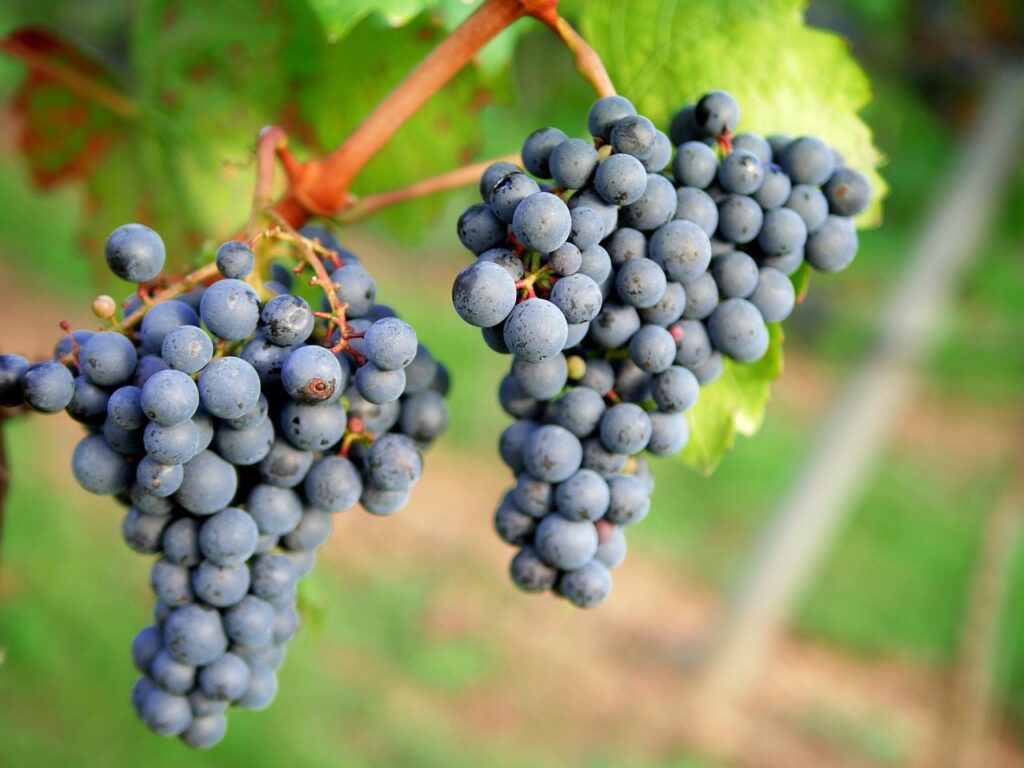

Grüner Veltliner is Austria’s signature white grape, and for good reason. It can be crisp and peppery, lean and mineral, or surprisingly layered and age-worthy depending on where it is grown and how it is made. At its best, Grüner Veltliner combines freshness, texture, and a distinctive spicy edge that makes it stand out in a crowded world of white wines.
For many wine drinkers, the first thing that grabs attention is the grape’s trademark white pepper note. But Grüner Veltliner is much more than that. It can show citrus, green apple, pear, stone fruit, herbs, and a stony mineral side that becomes more obvious in top Austrian bottles. It also happens to be one of the most food-friendly white wines around, which has helped it earn a loyal following well beyond Austria.
Although Grüner Veltliner is still most closely linked with Austria, especially regions like Wachau, Kamptal, and Traisental, it has gradually built an international reputation. What makes it especially interesting is that it can satisfy very different drinkers. Some love it for its bright, everyday-drinking appeal. Others seek out serious single-vineyard wines that can age and develop real complexity over time.
In this guide, we look at where Grüner Veltliner comes from, what it tastes like, how terroir shapes it, which Austrian regions matter most, and why this grape deserves a place in far more wine fridges and cellars than it usually gets.
Key takeaways
- Grüner Veltliner is Austria’s flagship white grape and the country’s most important wine variety.
- It is known for bright acidity, citrus and orchard fruit, a peppery note, and strong food-pairing ability.
- The best examples often come from Austrian regions such as Wachau, Kamptal, and Traisental.
- Styles range from light and refreshing to textured, mineral, and age-worthy.
- Top Grüner Veltliner wines can develop complexity with age, including honeyed, nutty, and savory notes.
Table of contents
- What is Grüner Veltliner?
- Origins and history
- Flavor profile and texture
- Terroir and growing conditions
- The key Austrian regions
- Winemaking techniques
- Aging potential
- Food pairings
What is Grüner Veltliner?
Grüner Veltliner is a white wine grape variety most closely associated with Austria, where it has become the country’s defining white wine. It is widely planted there and made in multiple styles, from fresh and easy-drinking bottles to serious terroir-driven wines with depth, structure, and aging capacity.
The grape is especially prized because it can do several things at once. It can be refreshing without being simple. It can show minerality without becoming austere. It can carry fruit, spice, and texture in the same wine without feeling heavy. That balance is part of what makes Grüner Veltliner so attractive to sommeliers and wine lovers who want white wines with personality.
It also fills a useful space in the wine world. If Sauvignon Blanc can sometimes feel too sharp and Chardonnay too oak-driven, Grüner Veltliner often lands somewhere in between. It brings energy, but also enough body and spice to feel distinctive. In good examples, that combination can be extremely compelling.
Origins and history
Grüner Veltliner’s story is deeply tied to Austria, where it has been cultivated for centuries and gradually evolved into the country’s signature grape. While references to Roman-era viticulture in the region often appear in discussions of Austrian wine history, Grüner Veltliner as a clearly identified variety emerged much later as part of the broader development of Central European viticulture.
What matters most is that the grape became thoroughly at home in Austria. Over time, it proved ideally suited to the country’s varied conditions, especially the vineyard zones along and around the Danube. The combination of cool nights, warm days, diverse soils, and careful vineyard work gave Grüner Veltliner the chance to show just how expressive it could be.
For a long period, the grape was valued mainly as a reliable Austrian variety rather than as an international prestige wine. That changed in the late 20th century, when Austrian producers shifted more decisively toward quality-focused winemaking. As export markets began to pay attention, Grüner Veltliner became one of the main symbols of modern Austrian wine.
Today, it is not just a national staple. It is a grape with a clear global identity, even if Austria still remains its natural reference point.
Flavor profile and texture
Grüner Veltliner can be easier to recognize than many other white grapes, but it still has range. The exact profile depends on region, ripeness, and style, yet some recurring traits show up again and again.
Fresh citrus and orchard fruit
Younger Grüner Veltliner often shows lemon, lime, green apple, pear, and sometimes a subtle stone-fruit note. These flavors are usually precise rather than lush. The wines often feel clean and focused, especially in lighter styles intended for early drinking.
As ripeness increases, the fruit profile can move toward yellow apple, peach, apricot, or ripe pear. In richer examples, the fruit becomes broader and more textured, though the best wines still keep their line of freshness.
The peppery note
The grape’s signature marker is its spicy edge, often described as white pepper. This note does not always dominate, but when it appears clearly, it is one of the reasons Grüner Veltliner is so memorable. It gives the wine a savory twist and helps separate it from more straightforward fruit-driven whites.
That peppery quality can be especially appealing at the table because it interacts so well with food. It gives the wine just enough bite and tension to feel lively without becoming aggressive.
Minerality and structure
Top Grüner Veltliner often shows a distinctly mineral side. Depending on site and soil, that can come across as stony, chalky, or almost salty. This is especially true in serious Austrian examples from well-regarded vineyard sites. The minerality gives the wine length and seriousness, turning it from a pleasant white into something more layered and memorable.
Texture
One of Grüner Veltliner’s underrated qualities is texture. It can be crisp and linear, but it can also feel rounded and layered, especially when yields are lower or the wine spends time on lees. That textural flexibility is part of its appeal. It can be refreshingly light or quietly substantial, depending on the producer and style.
If you like textured whites with character, you may also enjoy our guides to Chenin Blanc and Viognier.
Terroir and growing conditions
Grüner Veltliner is highly responsive to terroir, which is one reason Austria’s landscape matters so much to the grape. The same variety can feel very different depending on site, soil, altitude, and exposure.
Cool climate advantage
Austria’s cooler climate is one of the grape’s greatest allies. Warm days help Grüner Veltliner ripen properly, while cooler nights preserve acidity and aromatic freshness. That combination is essential. Without it, the grape could become broad without tension. With it, the wines stay vibrant and precise.
This is especially important for dry white wines, where acidity is often what keeps the fruit from feeling flat. Grüner Veltliner benefits from that Austrian climate pattern in a very direct way.
Soil diversity
The grape also reacts clearly to soil. Loess can give broader, more generous wines with a softer shape. Limestone and other mineral-rich soils can produce more focused wines with a pronounced stony edge. Gneiss and schist can add tension and complexity. That means even within Austria, Grüner Veltliner can show very different faces from one site to another.
For wine drinkers who enjoy terroir-driven whites, this is one of the grape’s most attractive features. It does not just survive in different soils. It reflects them.
Topography and exposure
Steep vineyard sites, especially along the Danube, can make a major difference. Better drainage, more sunlight exposure, and cooler airflow all help shape the final wine. In top vineyards, these factors often lead to more concentrated fruit and more precise structure, which is part of why the best Grüner Veltliner wines can age surprisingly well.
The key Austrian regions
Austria is the center of the Grüner Veltliner world, and a few regions matter especially when trying to understand the grape properly.
Wachau
Wachau is one of Austria’s most famous wine regions and one of the places where Grüner Veltliner reaches its most serious expression. The steep terraces above the Danube, the dramatic temperature swings, and the mix of soils all contribute to wines that can be both powerful and precise.
Lighter Wachau Grüner Veltliners can be brisk and bright, but the top bottlings are more than that. They often combine mineral depth, ripe fruit, peppery lift, and strong aging potential. These are the kinds of wines that helped turn Grüner Veltliner from an Austrian staple into an internationally respected white grape.
Kamptal
Kamptal is another major region for Grüner Veltliner and often offers a slightly broader stylistic range. Depending on site, Kamptal wines can show freshness, floral notes, orchard fruit, and mineral structure, often with a polished overall feel. This is a region where the grape can be both accessible and serious, which makes it a useful introduction for people new to Grüner Veltliner.
Traisental
Traisental is smaller and sometimes less famous internationally, but it has become increasingly respected for high-quality Grüner Veltliner. The wines often lean toward freshness and precision, with bright fruit, floral detail, and a clean mineral profile. For drinkers who enjoy a more focused style, Traisental is worth paying attention to.
To explore another distinctive European white with a strong regional identity, see our article on Riesling.
Winemaking techniques
Grüner Veltliner can handle a range of cellar approaches, but the grape usually performs best when the winemaking supports rather than overwhelms its natural character.
Stainless steel fermentation
Many producers use stainless steel to keep the wine pure, crisp, and aromatic. This method preserves the citrus, orchard fruit, spice, and mineral qualities that drinkers often look for in Grüner Veltliner. It is especially common in fresher, more direct styles.
Lees aging
Lees contact can add texture and subtle complexity without taking the wine too far away from its core identity. This is often where Grüner Veltliner gains a slightly creamier feel or a more layered palate while still holding onto freshness. It is a useful technique when the goal is to make a wine feel more serious without making it heavier.
Single-vineyard expressions
Some of the most impressive Grüner Veltliner wines come from specific vineyard sites. These wines are often made to highlight site character rather than a broad regional style. In these cases, the focus is usually on clarity, balance, and detail rather than overt winemaking influence. For drinkers who enjoy comparing terroir, these wines can be especially rewarding.
Oak, used carefully
Grüner Veltliner is not usually defined by oak, but some producers use it in measured ways to build structure and depth. When done with restraint, oak can add texture and spice without burying the grape’s identity. The best examples still taste like Grüner Veltliner first.
If you want more context on white-wine production choices, our guide to how white wine is made is a helpful follow-up.
Aging potential
Grüner Veltliner is often treated like a wine to drink young, and plenty of bottles are at their best in the first few years. But that only tells part of the story. Top examples, especially from strong sites and serious producers, can age very well.
With time, Grüner Veltliner can move beyond citrus and pepper into something more layered. Honeyed notes, dried orchard fruit, nutty hints, and a deeper savory complexity can all emerge. The acidity that made the wine refreshing in youth becomes the framework that keeps it alive and balanced as it matures.
This aging ability is one of the things that makes Grüner Veltliner more interesting than many people assume. It is not just a bright aperitif wine. In the right hands, it can be a bottle with genuine development potential.
Food pairings
Grüner Veltliner is one of the most reliable food wines in the white-wine world. Its acidity, peppery edge, and flexibility make it easy to match with a wide range of dishes.
Seafood and lighter dishes
Lighter, fresher Grüner Veltliner works beautifully with shellfish, grilled fish, sushi, salads, and vegetable dishes. The acidity keeps things lively, and the wine’s subtle spice can make simple food feel more interesting.
Classic Austrian-style pairings
The grape is also good with foods that combine richness and freshness, such as schnitzel, roast chicken, or herby potato dishes. Its balance makes it easy to use at the table in ways that more aggressively aromatic whites sometimes are not.
Spicy food
One of Grüner Veltliner’s underrated strengths is how well it handles spice. The acidity and peppery character make it a strong partner for Asian dishes, including Thai and Vietnamese cooking. It does not need to be sweet to work here. Often the wine’s freshness is enough.
For more pairing ideas, read our guides to spicy food and wine pairing and cheese and wine pairing.
Why Grüner Veltliner matters
Grüner Veltliner matters because it offers something that not many white grapes do. It can be fresh without being thin, spicy without being heavy, mineral without becoming severe, and serious without losing drinkability. That is not an easy balance to strike.
It also gives Austria a genuinely distinctive flagship grape, one that does not feel like a copy of a more internationally famous variety. In a global wine market full of familiar names, Grüner Veltliner stands out because it has its own voice. It does not need to imitate Chardonnay, Sauvignon Blanc, or Riesling. It works on its own terms.
For drinkers, that makes it worth seeking out. A good Grüner Veltliner can be a weeknight white, a restaurant wine, a cellar candidate, or a brilliant food bottle depending on style. That kind of versatility is rare, and it is part of why the grape has earned such a strong reputation among people who know it well.
If you enjoy discovering grape varieties with a clear regional identity and a broad stylistic range, Grüner Veltliner is one of the best places to look next.
Read next
- Overview of the Grape Varieties of the World
- Sauvignon Blanc White Wine Grape Guide
- Pinot Blanc White Wine Grape Guide
Last updated: