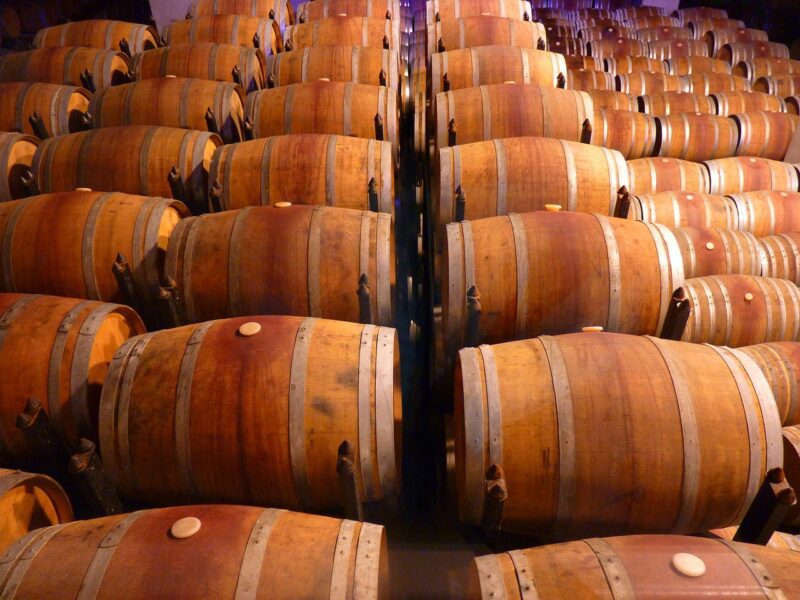
Wine barrels matter because they do far more than just hold wine. They change texture, shape aroma, soften structure, and influence how a wine develops over time. But “barrel-aged” does not mean one single thing. The type of oak, the size of the barrel, the toast level, and whether the barrel is new or already used all affect what ends up in the glass.
That is why two wines aged in wood can taste completely different. One may feel subtle, spicy, and polished. Another may come across as creamy, smoky, sweet, or heavily vanilla-driven. The barrel is not just a container. It is part of the winemaking itself.
Most of the time, when people talk about wine barrels, they really mean oak, and for good reason. Oak has the right combination of strength, porosity, workability, and flavour contribution. But even inside the world of oak, there is a lot of variation. French oak, American oak, Hungarian oak, and Slavonian oak can all push wine in slightly different directions. On top of that, some producers experiment with acacia, chestnut, amphora, concrete, or neutral tanks depending on the style they want to create.
Key takeaways
- French oak usually gives a subtler, tighter, and more refined oak impression, while American oak often feels bolder and sweeter.
- Toast level, barrel age, and barrel size matter almost as much as the wood itself.
- Not every wine benefits from obvious oak. The best barrel choice is the one that supports the wine rather than overpowering it.
Table of contents
- Why wine barrels matter in the first place
- French oak vs American oak
- Hungarian oak, Slavonian oak, and other oak options
- Toast level, barrel size, and new vs used barrels
- Alternative woods and neutral aging vessels
- How winemakers choose the right barrel
- Where barrel aging is heading
- What all this means in the glass
Why wine barrels matter in the first place
When wine ages in barrel, a few important things happen at once. First, the wood contributes aroma and flavour compounds. These can show up as vanilla, toast, smoke, clove, coconut, cedar, caramel, baking spice, or roasted notes depending on the barrel and how it was made. Second, the barrel allows a slow exchange with oxygen. That gradual oxygen exposure can soften tannins, knit the wine together, and help it feel rounder and more complete.
This is why barrel aging can have such a dramatic effect on texture. A young red that feels a little hard or angular after fermentation can become smoother, calmer, and more integrated after time in wood. In white wine, oak can add breadth, creaminess, and a sense of weight, especially when paired with lees aging or malolactic fermentation.
But barrels are not automatically good news. Too much oak can flatten a wine’s fruit, bury its freshness, or make everything taste of toast and vanilla. A great barrel-aged wine is not one where you only notice the oak. It is one where fruit, structure, and wood feel like they belong together.
If you want the broader context for how aging fits into winemaking, The Art and Science of Wine Production: From Vine to Glass is one of the best internal follow-up reads.
French oak vs American oak
This is the comparison most wine drinkers hear first, and it is still the most important one. French oak and American oak do not just come from different places. They usually behave differently in the cellar and leave different signatures in the wine.
French oak
French oak is often associated with finesse. In general, it tends to give a subtler, more restrained oak impression, with notes like spice, cedar, toast, clove, and a quieter vanilla character. It can also contribute a firmer, finer-grained sense of structure. That is one reason it is so often linked with wines where elegance matters, from fine Chardonnay to Pinot Noir to classic Cabernet-led blends.
Within French oak, forest origin can matter too. Names like Allier, Tronçais, Nevers, Vosges, and Limousin do show up in barrel discussions, especially among producers and serious enthusiasts. But for most readers, the bigger point is not memorising forest names. It is understanding that French oak usually aims for integration rather than obvious sweetness.
American oak
American oak is usually more direct. It tends to give stronger aromas of vanilla, coconut, sweet spice, toast, and sometimes dill-like or creamy notes. In texture, it can feel more generous and less restrained than French oak, especially when used on ripe, fruit-forward reds.
That is why American oak became so strongly associated with styles where bold fruit and visible oak influence are part of the appeal. Rioja is one of the classic examples, though many New World producers use it too. When done well, American oak can add charm and immediate pleasure. When overdone, it can make wine feel loud, sweet, or dominated by wood.
The cleanest way to think about the difference is this: French oak usually whispers more, American oak usually speaks louder. Neither is automatically better. It depends on the wine and the effect the winemaker wants.
For a more oak-focused companion article, link naturally to The Importance of Oak in Winemaking.
Hungarian oak, Slavonian oak, and other oak options
French and American oak dominate the conversation, but they are not the only serious options. Hungarian oak has become a well-known alternative because it can offer some of the spice, restraint, and structure people like in French oak, often at a lower price. It tends to sit somewhere in the middle stylistically, less sweet and showy than American oak, but not always identical to French oak either.
Slavonian oak is another important name, especially in Italian wine. It is often used in larger casks rather than small barriques, which means the wood influence can feel gentler simply because the ratio of wood to wine is lower. That suits wines where long development matters more than obvious oak flavour. Traditional Barolo and Brunello discussions often touch this style of aging for exactly that reason.
There are also regional oak sources beyond these famous categories, including Spanish oak and other local cooperage traditions. To the average drinker, though, the practical message is simple: there is no single “oak taste.” Oak is a whole spectrum, and even two barrels made from the same broad category can behave differently depending on grain, seasoning, cooperage, and toast.
This is also why reading a wine label only gets you so far. Oak style is often felt in the glass more than clearly stated on the bottle. If you want to get better at spotting those clues, Spotting a Good Wine: Secrets of the Label is a useful related read.
Toast level, barrel size, and new vs used barrels
Many people talk about barrel type as if the wood species tells the whole story. It does not. Toast level is hugely important. Before a barrel is finished, the inside is heated. That process changes the wood chemically and affects what the barrel gives to the wine. Light toast tends to preserve more structural character and subtle spice. Heavier toast can push aromas more toward smoke, caramel, coffee, char, and sweeter oak notes.
That means the same French oak barrel can act very differently depending on how it was toasted. A heavily toasted barrel may make a wine feel warmer, darker, and more roasted. A lighter toast may keep the wine feeling more precise and less oak-dominant.
Barrel size matters too. Small barrels, especially classic barriques, expose the wine to more wood relative to volume. That leads to stronger oak impact and faster development. Large casks are gentler. They still allow oxygen exchange, but the wood flavour tends to be less obvious. This is one reason big old casks remain so attractive for producers who want evolution without lots of vanilla and toast.
Then there is the question of new versus used barrels. New barrels have the strongest impact. Once-used and older barrels lose a lot of their flavour intensity over time, even though they can still function as aging vessels. That is why some wines are raised partly in new oak and partly in older oak. It gives the producer more control. You get texture and development without every component shouting “new barrel.”
This is where good winemaking shows. The best producers do not just buy expensive barrels and hope for the best. They build a barrel program, balancing wood origin, toast, barrel age, and time in wood according to the wine in front of them.
Alternative woods and neutral aging vessels
Oak is still the benchmark, but it is not the only thing happening in the cellar. Some producers experiment with other woods such as acacia or chestnut, while a smaller number have tried woods like cherry or mulberry. These are much more niche, and they are not nearly as universal in fine wine as oak. Still, they can be useful when a producer wants a different aromatic signature or a different structural effect.
Acacia is often discussed in relation to white wines because it can be gentler and more floral. Chestnut has a long history in parts of Europe, though it is less common in modern fine wine than oak. Cherry and mulberry tend to be more experimental and much rarer. These woods are interesting, but it is better not to treat them as everyday equivalents to French or American oak. They are alternatives, not standard answers.
It is also important to separate wood aging from neutral vessel aging. Stainless steel does not belong in a list of barrel types in the same way oak does. In real cellar practice, it is usually stainless steel tanks or other neutral vessels, not “stainless steel barrels,” that producers use when they want purity and no wood flavour. These vessels preserve freshness, fruit, and acidity rather than adding oak-derived aromas.
Concrete and amphora sit somewhere else again. They are not wooden vessels, but they matter in the same larger conversation because they shape texture and oxygen exposure differently from steel. That is part of why so many modern producers now think in terms of vessels, not just barrels.
There is a similar story with oak alternatives. Chips, staves, and other oak fragments are widely used in parts of the industry because they are cheaper and faster than full barrel aging. They can add oak character, especially in tank-aged wines, but they do not fully replace the slow, layered development that barrel aging can provide. They are tools, not magic shortcuts.
How winemakers choose the right barrel
The short answer is that they start with the wine, not the barrel. A delicate Pinot Noir does not need the same oak treatment as a dense Cabernet Sauvignon. A fresh mineral Chardonnay may need only a touch of older French oak, while a richer style may welcome more new oak and more lees work.
Region and tradition matter here too. In some places, certain barrel choices became part of the local identity. That does not mean producers are trapped by tradition, but it does mean barrel choice often sits inside a bigger regional style. Rioja without American oak history would not taste like Rioja in the same way. Likewise, certain top Chardonnay styles would feel very different without French oak in the background.
Winemakers also think about timing. How long will the wine stay in wood? Will it be bottled young? Is the fruit powerful enough to absorb new oak? Is the goal immediate drinkability or long-term development? These questions matter because barrel aging is not just about flavour. It is also about rhythm. It changes how a wine unfolds over months and years.
That is why barrel choice connects naturally with drink windows. A wine shaped by serious oak and structure may need more time before it feels open and balanced. If that side of the topic interests you, Understanding When a Wine is Ready to Drink is a very relevant next read.
And once the bottle is open, oxygen becomes part of the story again in a different way. That makes The Lifespan of Opened Wine: Understanding Oxidation and Preservation and The Art of Decanting Wine good supporting links, because barrel aging and post-opening oxygen exposure are related topics, even if they happen at different stages of the wine’s life.
Where barrel aging is heading
The future of wine aging is not about abandoning barrels. It is about using them more precisely. Producers today have more options than ever: different oak origins, different toasts, large and small formats, neutral vessels, oak alternatives, amphora, concrete, and more careful control over oxygen management. That means the conversation is becoming less dogmatic and more practical.
Sustainability is part of that shift too. New barrels are expensive and resource-heavy. Some producers are reducing dependence on new oak, using older barrels longer, blending vessel types more intelligently, or turning to alternatives where they make sense. Others are rethinking whether every premium wine really needs visible oak at all.
This is not just about cost-cutting. It is also about style. Many drinkers now want more freshness, more site expression, and less obvious oak makeup. That does not mean oak is disappearing. It means winemakers are being pushed to use it with more purpose and more restraint.
For readers interested in the broader production and sustainability angle, The Art and Science of Wine Production: From Vine to Glass and The Importance of Oak in Winemaking are the two strongest internal pieces to connect here.
What all this means in the glass
The main lesson is that barrels are not just background detail. They are one of the quiet forces that shape how wine smells, feels, and ages. But the best barrel influence is rarely the most obvious one. In great wine, the wood supports the fruit, the texture, and the structure without hijacking the whole experience.
That is why understanding barrel types can genuinely improve the way you taste wine. If a wine smells like vanilla, cedar, coconut, smoke, toast, or sweet spice, there is a good chance the aging vessel helped put those notes there. If the texture feels polished, broad, or more settled than expected, the barrel may have played a role there too.
And once you start noticing that, a lot of wines begin to make more sense. You see why one Chardonnay feels creamy and toasty while another feels sharp and pure. You understand why one Rioja leans into coconut and dill while another red feels more restrained and cedar-driven. You start tasting the vessel, not just the grape.
That is really the point of learning barrel types. Not to memorise cooperage trivia for its own sake, but to understand why wine tastes the way it does. And once that clicks, barrel aging stops being abstract cellar jargon and becomes something much more useful: a clear part of the flavour story in your glass.
Read next
- The Importance of Oak in Winemaking: Learn Everything About It
- Unlocking the Perfect Moment: Understanding When a Wine is Ready to Drink
- The Art and Science of Wine Production: From Vine to Glass
Last updated: