
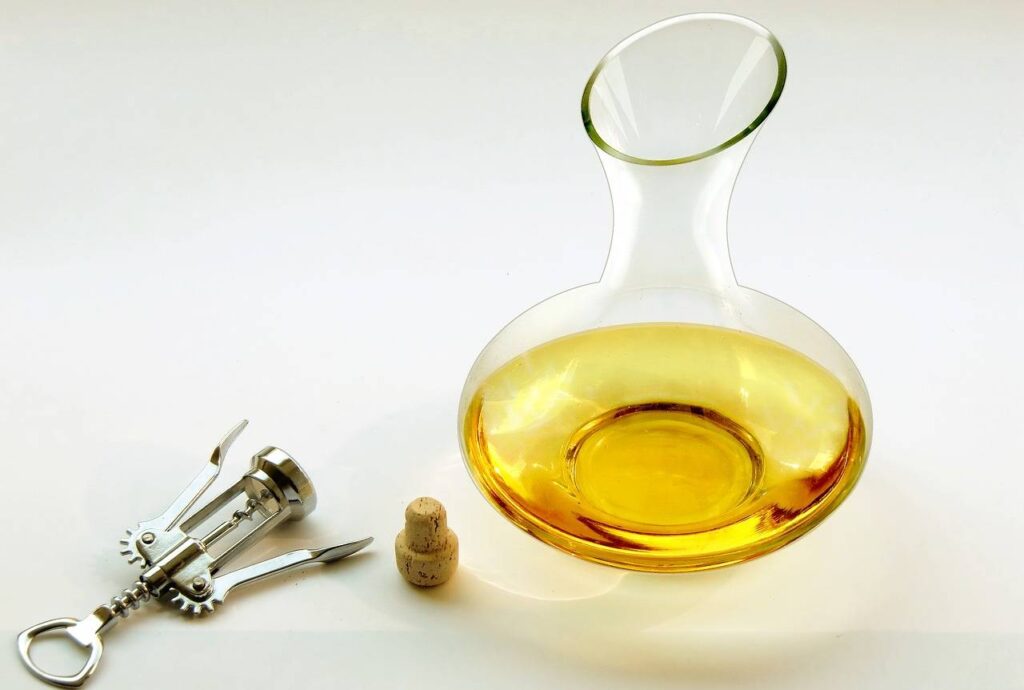
Decanting wine is one of those wine rituals that can either be genuinely useful or completely unnecessary, depending on the bottle. Done properly, it can help a tight young red open up, separate an older wine from sediment, and make the whole drinking experience feel more polished. Done blindly, it can also waste time or even flatten a wine that was already showing well straight from the bottle.
That is why decanting matters less as a performance and more as a tool. You do not decant because wine lovers are supposed to. You decant because a specific wine will benefit from air, because an older bottle needs careful handling, or because you want the wine to show its best side before it hits the glass. Once you understand that difference, decanting stops feeling mysterious and starts feeling practical.
Key takeaways
- Decanting mainly helps in two ways: it gives some wines air and it separates older wines from sediment.
- Young, structured reds often benefit most from oxygen.
- Older wines may need decanting for sediment, but often need less air than younger wines.
- Not every wine needs a decanter, and some are better left alone.
- The right decanting time depends on the wine’s age, style, and how it tastes after opening.
Table of contents
- Why decant wine in the first place?
- Which wines benefit most from decanting?
- Which wines usually do not need decanting?
- How to decant wine step by step
- How long should you decant wine?
- Special care for older wines
- Common decanting mistakes
- Do you actually need a decanter?
- When decanting is worth the effort
Why decant wine in the first place?
People often talk about decanting as if it is one thing, but it actually serves two different purposes. The first is aeration. When wine is poured into a decanter, it gets more contact with oxygen than it would sitting in a narrow bottle neck. That extra air can help certain wines feel less closed, less harsh, and more expressive.
The second purpose is sediment removal. Older red wines, vintage Port, and some unfiltered bottles can throw sediment over time. That sediment is not dangerous, but it is unpleasant in the glass. Decanting helps you leave it behind in the bottle and pour the clean wine into the decanter.
Those are two very different goals, and they should shape how you handle the bottle. A young, tannic Cabernet may want broad exposure to air. A mature Bordeaux may simply need a slow, careful pour to avoid dragging sediment into the decanter. Understanding which job you are doing makes the whole process much easier.
It also helps to remember that decanting is not a magic fix. It cannot rescue a flawed wine or turn a weak bottle into a great one. What it can do is help a wine show more clearly.
Which wines benefit most from decanting?
Young, tannic red wines
This is the most obvious category. Young reds with lots of structure often improve with air because they can feel tight, firm, or a little severe right after opening. Wines made from grapes like Cabernet Sauvignon, Syrah, Nebbiolo, Tempranillo, and sometimes Malbec can all benefit, especially if they are from serious producers or stronger vintages.
When these wines get air, the tannins often soften a little, the fruit becomes more obvious, and the aromatic profile opens up. What felt strict or muted in the first ten minutes can feel far more complete half an hour later.
Vintage Port and other sediment-heavy wines
Vintage Port is a classic decanting wine because sediment is so often part of the bottle’s evolution. In these cases, decanting is not just about air. It is about clarity and texture. The goal is to leave the gritty material behind and pour the wine cleanly.
Older red wines with visible sediment
Older wines can also benefit, but for a different reason. With age, many reds throw sediment naturally. A careful decant can make them much more pleasurable to drink. The key point is that older wines usually need gentler handling than young wines. They may open quickly, but they may also fade faster.
If you are unsure whether an older bottle is at the right stage for drinking in the first place, our guide to when a wine is ready to drink is a helpful companion.
Which wines usually do not need decanting?
Plenty of wines are perfectly fine straight from the bottle. Most fresh, simple whites do not need a decanter. Many rosés do not either. Young sparkling wines are rarely candidates for decanting unless there is a very specific stylistic reason, and even then it is not common. Light-bodied reds that already taste open and expressive may gain little from the process.
Some very old wines are also risky to decant too aggressively. They may need sediment separation, but not prolonged air exposure. If a wine is fragile, very mature, or already delicate on opening, too much decanting can make it fall apart faster instead of helping it.
This is where tasting matters. Wine should lead the decision, not ritual. If the bottle smells open, tastes balanced, and has no sediment issue, there may be no reason to decant it at all.
How to decant wine step by step
1. Stand the bottle upright first if it is older
If you are dealing with an older bottle or anything likely to contain sediment, stand it upright for several hours before opening. Overnight is even better. This helps the sediment settle at the bottom of the bottle so you are less likely to disturb it when pouring.
2. Open the bottle carefully
With young wines, this is usually straightforward. With older bottles, it can be trickier because fragile corks are more likely to crumble. If you are handling mature wine regularly, it helps to know the safer methods for old corks. Our guide to opening an old wine bottle with a fragile cork covers that properly.
3. Smell and taste the wine first
This step gets skipped far too often. Before you pour the whole bottle into a decanter, taste it. Is it closed and tight? Is it already generous and expressive? Does it feel fragile? You learn more from that first small pour than from any fixed rule.
4. Pour slowly into the decanter
For young wines, you can pour more freely. For older wines, pour slowly and steadily. If sediment is a concern, watch the neck of the bottle as you pour. Stop as soon as you see sediment approaching.
5. Let the wine sit, then taste again
Do not assume the wine will be “ready” after a set number of minutes. Taste it after a short period and see how it changes. Some wines improve quickly. Others need more time. Some peak and then start to decline. The only reliable way to know is to check.
Glassware matters here too. If you want to get the full benefit of decanting, the wine still needs the right kind of glass once it is poured. Our guide to wine glasses and how shape affects tasting explains why that part should not be ignored.
How long should you decant wine?
This is where many people want a neat formula, but wine does not really work like that. Still, there are some useful starting points.
Young structured reds
These often benefit from 30 minutes to 2 hours, depending on how dense and tannic they are. A serious young Cabernet Sauvignon, Barolo, or northern Rhône Syrah may need longer than a softer Merlot or Grenache-based wine.
Medium-bodied reds
These may benefit from 20 to 45 minutes, especially if they feel a bit closed on opening. Many do not need more than that.
Older wines
These are more variable. Some need only a very brief decant to remove sediment, then should be served almost immediately. Others can hold for 20 to 30 minutes and become more expressive. The risk with older wine is not that it will stay too tight forever. It is that it may fade if you leave it too long.
Vintage Port
This often benefits from a proper decant and can handle meaningful air, but the timing still depends on age and style.
Temperature also changes how wine behaves after decanting. A wine served too warm may feel heavy and alcoholic. Too cold, and the aromas can stay muted. Our guide to wine serving temperatures is worth checking if you want decanting to work as well as it should.
Special care for older wines
Older wines deserve their own section because they are where many decanting mistakes happen. People hear that “wine needs to breathe” and assume the same long-air treatment that helps a young tannic red will also help a 25-year-old bottle. Sometimes it will not.
Older wines often need more delicacy than force. They may already be open aromatically when first poured. Their issue is not always lack of air, but fragility and sediment. In those cases, the best decant is often a brief one: separate the wine cleanly, serve it, and enjoy the window while it is showing well.
If you have a mature bottle and want to preserve some of it after opening, that can also be tricky. Systems like Coravin can be useful in the right situation, especially if the bottle is sound and you do not want to commit to the full wine at once. Our guide to Coravin and wine preservation goes deeper into that.
Common decanting mistakes
Decanting every wine automatically
This is the biggest one. Not every bottle needs it, and some gain almost nothing from it.
Ignoring sediment until it is in the glass
If you are opening an older wine, preparation matters. Stand the bottle upright and pour slowly.
Leaving old wines in the decanter too long
Older wines can lose their energy faster than people expect. Sometimes less is more.
Using decanting to mask serving mistakes
Decanting is not a substitute for proper temperature, good glasses, or careful storage.
Assuming more air is always better
Some wines bloom with oxygen. Some only need a little. Some start fading after the initial lift. Pay attention to the actual wine, not the performance around it.
Do you actually need a decanter?
If you drink structured reds regularly or open older bottles with some frequency, yes, a decanter is worth having. It does not need to be extravagant. It just needs a shape that allows a stable pour and some surface area for air.
If you only open everyday whites, rosés, and softer reds, you may not need one often. In that case, a decanter is more of a nice extra than a true essential. It is useful, but it may not earn cupboard space every week.
That is also why decanters sit in the category of genuinely useful wine accessories rather than mandatory gear. If you want the bigger picture on what accessories are actually worth owning, our guide to essential wine accessories is a good follow-up.
When decanting is worth the effort
Decanting is worth it when it changes the wine in a way you can actually notice. A young red that goes from hard and muted to expressive and balanced, that is worth it. An older bottle that pours cleanly without sediment, that is worth it too. A fragile mature wine that loses its charm after an hour in a broad decanter, that is the opposite.
That is the useful way to think about it. Decanting is not a badge of seriousness. It is simply one of the tools that helps a bottle show properly. Once you stop treating it like a fixed ceremony, you get better results and enjoy the wine more.
Decanting is a tool, not a ritual
The best reason to decant wine is simple: the wine needs it. Sometimes that means air. Sometimes it means removing sediment. Sometimes it means both. And sometimes it means leaving the bottle alone and just pouring a glass.
The more you taste with intention, the easier that judgment becomes. You start noticing when a wine feels shut down, when an older bottle needs careful handling, and when a decanter will help rather than just look impressive on the table. That is really the art of decanting. Not the drama of it, but knowing when it makes the wine better.
Read next
- Understanding When a Wine Is Ready to Drink
- The Ultimate Guide to Wine Serving Temperatures
- The Art of Wine Glasses: How Glass Shape Impacts Your Tasting Experience
Last updated:


