
Prosecco looks easygoing in the glass, but its production is more precise than many people realize. At its best, it is not just “Italian bubbly.” It is a wine style built around freshness, clean fruit, lively acidity, and a production method designed to protect those qualities rather than bury them under too much yeast character or oak.
That is the key to understanding Prosecco properly. It is not trying to be Champagne, and it is not trying to taste like a bottle-aged sparkling wine with brioche and autolytic depth at the center. Good Prosecco is about brightness, floral lift, pear and apple fruit, and a fine, easy-drinking energy that feels immediate rather than heavy.
The best way to appreciate it, then, is to understand what makes it different. That starts with Glera, the main grape behind the style, but it also involves geography, regulation, fermentation method, sweetness levels, and the difference between broad Prosecco DOC and the more focused hills of Conegliano Valdobbiadene Prosecco Superiore DOCG.
Key takeaways
- Prosecco is built mainly around the Glera grape and is usually produced with the Martinotti-Charmat tank method.
- The broad Prosecco DOC area is much larger than the steeper, more prestige-focused Conegliano Valdobbiadene Prosecco Superiore DOCG zone.
- Its hallmark style is fresh, fruity, floral, and youthful, which is why most Prosecco is meant to be enjoyed relatively young.
Table of contents
- What Prosecco actually is
- DOC vs DOCG: why the origin matters
- Glera and the other permitted grapes
- Harvest, sorting, and gentle pressing
- How the base wine is made
- The Martinotti-Charmat method and why it defines Prosecco
- Spumante, frizzante, still, and sweetness levels
- How to serve and pair Prosecco properly
- What makes Prosecco worth understanding
What Prosecco actually is
Prosecco is a protected Italian wine designation, not just a generic name for sparkling wine. In practical terms, it refers to wines made under the Prosecco rules in a defined area of northeastern Italy, with Glera as the main grape and production standards that shape the finished style.
That already clears up one common misunderstanding. Prosecco is not simply any sparkling wine made from Glera, and it is not just a casual synonym for inexpensive bubbles. It is a regulated category with its own grape rules, production area, and style expectations.
Most people meet Prosecco in its sparkling form, but the category also includes semi-sparkling and still versions. Sparkling Prosecco is by far the most visible and internationally successful version, which is why many drinkers barely realize the category is broader than that.
It also helps to remember that Prosecco is usually designed for youth and freshness. Unlike some other sparkling categories, its appeal is normally in immediacy, not long cellaring. That is part of its charm. It aims to taste lively, floral, and bright rather than deeply mature or autolytic.
DOC vs DOCG: why the origin matters
One of the biggest mistakes people make is talking about all Prosecco as if it comes from the same place and means the same thing. It does not. The broader Prosecco DOC zone is large and stretches across nine provinces in Veneto and Friuli-Venezia Giulia. That makes it a wide production area with a broad stylistic range.
Inside the bigger Prosecco story, Conegliano Valdobbiadene Prosecco Superiore DOCG represents a more focused hillside zone with stronger prestige and a more demanding viticultural reputation. These hills, now UNESCO-listed, are often treated as the qualitative heart of classic Prosecco culture. Their steep slopes, patchwork vineyards, and long wine history are a major part of why the zone stands apart in the public imagination.
That does not mean every DOC bottle is basic or every DOCG bottle is automatically great. But it does mean origin within Prosecco matters, and readers should understand that the category has internal hierarchy, not just one flat style.
If you want the regional context around where Prosecco sits in Italy more broadly, Italy Wine Region and Wine Regions are natural internal places to keep exploring.
Glera and the other permitted grapes
Glera is the backbone of Prosecco. It is the grape that gives the style its signature notes of pear, apple, white flowers, and light citrus freshness. Under Prosecco DOC rules, the wine must be at least 85% Glera, with up to 15% made up of other permitted varieties. That is important because it means Prosecco is not always a pure single-variety wine, even if Glera is always the center of gravity.
Those supporting grapes can include local varieties such as Verdiso, Bianchetta Trevigiana, Perera, and Glera Lunga, along with certain international grapes under the rules. In practice, though, the identity of Prosecco remains overwhelmingly tied to Glera’s aromatic freshness and easy-drinking profile.
This is also where Prosecco Rosé becomes relevant. That style follows a different rule set and includes Pinot Noir, which is used to add both color and structure. It is not just ordinary Prosecco with a pink tint. It is a regulated variation with its own production parameters.
For readers who want more grape background in general, The Ultimate Guide to All The Wine Grape Varieties Of The World is the strongest internal follow-up.
Harvest, sorting, and gentle pressing
Good Prosecco starts with preserving freshness, and that means harvest decisions matter. The grapes are typically picked when they still have the acidity and aromatic lift needed for a crisp sparkling style. If the fruit goes too ripe, the resulting wine can lose some of the tension and delicacy that make Prosecco appealing in the first place.
Hand harvesting is especially important in the steeper, more prestige-oriented hillside areas, where machinery is less practical and fruit selection can be more precise. In broader or flatter areas, mechanization is more possible, but the quality goal remains the same: bring in healthy, clean fruit with as little damage as possible.
Once the grapes reach the winery, pressing is handled gently. The aim is not to extract phenolic weight or skin texture. It is to get clean, bright juice with minimal harshness and minimal oxidation. That is one of the reasons Prosecco’s fruit profile tends to feel so clear and direct.
For readers who want the harvest side mapped in more detail, Grape Harvest in Winemaking: How Timing, Ripeness, and Picking Shape Wine fits this article very well.
How the base wine is made
Before Prosecco becomes sparkling, it starts life as a still base wine. After pressing, the juice goes through primary fermentation, usually in stainless steel tanks. This stage turns grape juice into dry still wine and sets the stage for the secondary fermentation that will later create the bubbles.
Stainless steel is important here because it protects freshness and preserves Glera’s aromatic character. Producers are not usually looking for oak flavor or heavy textural shaping at this stage. They want a clean, fruit-forward base with enough acidity and precision to become a lively sparkling wine later.
This is also where temperature control matters. Cooler fermentation helps keep floral and fruity aromatics in place and prevents the wine from becoming dull or overly broad. In many ways, the base wine already shows the finished Prosecco’s personality before the bubbles arrive.
If you want the wider production context beyond Prosecco specifically, Wine Production is the best internal hub to link here.
The Martinotti-Charmat method and why it defines Prosecco
This is the core of the whole style. Prosecco is normally made by carrying out its second fermentation in sealed pressurized tanks, not in individual bottles. This is called the Martinotti-Charmat method, and it is one of the main reasons Prosecco tastes the way it does.
In simple terms, the base wine is placed in a tank with yeast and sugar so a second fermentation can happen in a closed environment. The carbon dioxide created during that fermentation gets trapped in the wine, creating sparkle. Because this happens in tank rather than bottle, the resulting style tends to emphasize freshness, fruit, and floral character rather than long lees complexity.
That difference matters enormously. Champagne and Cava are generally defined by bottle fermentation and longer lees contact, which can create toast, brioche, pastry, and more autolytic depth. Prosecco’s tank method usually keeps the style more immediate, lighter, and fruit-led. That is not a lesser method. It is simply a different stylistic choice aimed at a different result.
That makes Exploring the Art of Crafting Cava a very strong internal comparison point, especially for readers trying to understand why Prosecco tastes so different from other sparkling wines. It also sits naturally beside Sparkling Wine Production Techniques, if you want readers to zoom out from Prosecco to sparkling wine more broadly.
Spumante, frizzante, still, and sweetness levels
Most people think of Prosecco as one thing, but the category actually includes several forms. The most famous is spumante, the fully sparkling version with the most consistent global presence. Frizzante is less pressurized and lighter in sparkle. Tranquillo is still Prosecco, without bubbles, though it is much less common on export markets and far less visible internationally.
Sweetness level matters too, and this is an area where many casual drinkers get confused because terms like “Dry” do not mean what they sound like. Prosecco can be labeled in a range that includes Brut Nature, Extra Brut, Brut, Extra Dry, Dry, and Demi-Sec. So a bottle marked Extra Dry is usually sweeter than Brut, even though the wording can make people assume the opposite.
This matters when buying and pairing. Brut and Extra Brut styles will usually feel sharper and more citrus-driven. Extra Dry, which has long been a classic Prosecco style, often feels rounder and a little softer. Knowing that already makes you a smarter buyer than most people standing in front of a shelf.
How to serve and pair Prosecco properly
Prosecco should be served cold, usually around 6 to 8°C. Too warm and the wine loses some of the freshness and precision that make it attractive. Served properly chilled, it feels cleaner, brighter, and more refreshing, with the bubbles showing better too.
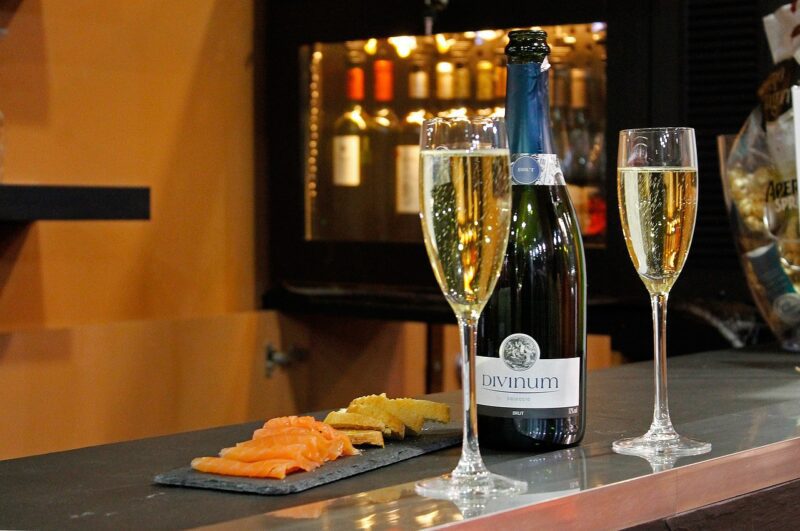
As for food, Prosecco is at its best with lighter, fresher dishes and aperitivo-style moments. Seafood, light appetizers, prosciutto, simple pasta dishes, salty snacks, and many fried foods can all work well. The wine’s acidity and bubbles help refresh the palate, which is why it is such a natural aperitif.
It is also one of the most cocktail-friendly sparkling wines in the world. Bellinis, Spritzes, and other sparkling aperitif drinks lean on Prosecco precisely because it brings fruit, freshness, and fizz without the weight or cost structure of more serious bottle-aged sparkling wine.
For the practical side of that, The Ultimate Guide to Wine Serving Temperatures and Learn How to Pair Food and Wine: In-Depth Guide are the two strongest internal reads to connect here.
What makes Prosecco worth understanding
Prosecco is easy to underestimate because it is so familiar. People see it everywhere, order it casually, mix it into cocktails, and often think of it as simple background sparkle. But that familiarity can hide the fact that it is a carefully defined category with real differences in origin, quality level, and production style.
Once you understand the essentials, it becomes much easier to buy better and talk about it more clearly. Glera gives the wine its identity. The DOC and DOCG distinction explains why not all Prosecco is the same. The Martinotti-Charmat method explains why the fruit stays so bright and immediate. And the sweetness terms explain why two bottles can taste surprisingly different even when both say “Prosecco” on the label.
That is really the point of learning how Prosecco is made. Not to turn a casual sparkling wine into an academic exercise, but to understand why it tastes the way it does and why the best bottles feel more intentional than people often assume.
At its best, Prosecco is exactly what it should be: light on its feet, refreshing, floral, gently fruity, and easy to enjoy without being empty. That is not a small thing. Done well, it is a style with real precision behind the charm.
Read next
- Exploring the Art of Crafting Cava: Unveiling the Meticulous Journey of Spain’s Iconic Sparkling Wine
- The Ultimate Guide to Wine Serving Temperatures: In-Depth Knowledge and Tips
- The Ultimate Guide to All The Wine Grape Varieties Of The World
Last updated: