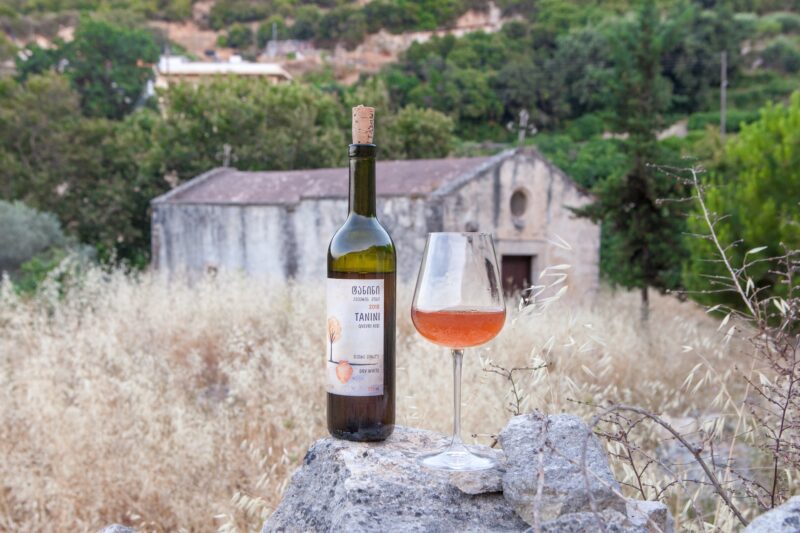
Orange wine is not made from oranges. It is white wine made like a red wine, with the juice left in contact with the grape skins for far longer than in standard white winemaking. That one decision changes almost everything. It deepens the color, builds tannin, alters the texture, and often pulls the wine into a much more savory, structured, and layered direction than people expect from white grapes.
That is why orange wine feels so different in the glass. It often has the freshness of white wine, some of the grip of red wine, and a flavor profile that can move from citrus peel and tea to dried apricot, herbs, nuts, honey, and spice. Some examples are bright and lightly grippy. Others are deeply amber, oxidative, and almost chewy. The category is broad, but the central idea stays the same: skin contact changes white wine dramatically.
This style may feel trendy in modern wine bars, but the method itself is ancient. Orange wine is often linked to Georgia’s deep winemaking history and the traditional use of buried clay qvevri, though the style now appears all over the world in many different forms. So if you want to understand orange wine properly, the key is not just what it tastes like, but how it is made and why those choices matter so much.
Key takeaways
- Orange wine is white wine made with extended skin contact, which adds color, tannin, texture, and complexity.
- The grape variety, maceration length, fermentation vessel, and aging style all shape the final result.
- Orange wine can be ancient in method and modern in style at the same time, which is exactly why the category is so varied.
Table of contents
- What orange wine actually is
- Where orange wine comes from
- Which grapes work best for orange wine
- Harvest, sorting, and the starting point
- Skin contact and maceration: the heart of orange wine
- Fermentation, vessels, and aging
- Why orange wine tastes the way it does
- How to serve and pair orange wine
- Why orange wine keeps pulling people in
What orange wine actually is
The most useful definition is also the simplest one: orange wine is white wine made with prolonged skin contact. In standard white winemaking, the juice is usually pressed off the skins quickly, often before fermentation or after only a short contact period. In orange wine, that separation is delayed. The skins stay with the juice during fermentation, and sometimes well beyond it.
That matters because grape skins are not neutral. They carry phenolic compounds, tannins, texture, aroma precursors, and pigment. White grapes do not have the same deep color potential as red grapes, but their skins still contribute enough material to shift the wine from pale straw toward gold, copper, amber, or true orange tones. The longer the contact, the more structural and aromatic influence the skins can have.
This is also why “skin-contact white wine” and “orange wine” are often used almost interchangeably, even if the styles are not always identical. Some skin-contact whites are only lightly macerated and barely look orange at all. Others are deeply amber and unmistakably oxidative or grippy. The method defines the category more than the color alone.
If you want the wider production background first, Discovering White Wine Production: A Detailed Journey from Grapes to Glass is a useful internal companion, because orange wine makes much more sense once you understand how normal white wine is usually made differently.
Where orange wine comes from
Orange wine may look like a modern restaurant obsession, but its roots are far older than most wine styles people casually talk about. Georgia is central to that story. The country’s qvevri tradition, where wine is fermented and aged in large earthenware vessels buried in the ground, is one of the most famous historical foundations for skin-contact white wine. :contentReference[oaicite:1]{index=1}
That does not mean every orange wine today is Georgian, or that every skin-contact white is made in qvevri. Not at all. Modern orange wine is made in Italy, Slovenia, Croatia, France, Spain, Australia, the United States, and elsewhere, often with very different cellar choices and very different levels of skin contact. But Georgia remains an important reference point because it shows that this is not some new fad invented for natural wine bars. The method has deep historical roots. :contentReference[oaicite:2]{index=2}
In modern wine culture, orange wine came back into broader view partly because producers and drinkers became more interested in low-intervention winemaking, forgotten techniques, indigenous grapes, and non-standard textures. That revival is one reason it often sits close to conversations about amphora, native yeast, and minimal-intervention cellars. For that angle, The Natural and Biodynamic Wine Revolution: A Dive into Sustainable Winemaking is one of the best internal follow-ups.
Which grapes work best for orange wine
In theory, many white grapes can be used for orange wine. In practice, some are far more convincing than others. Grapes with enough structure, aromatic interest, acidity, or skin material tend to give the most satisfying results. This is why names like Ribolla Gialla, Rkatsiteli, Malvasia, Gewürztraminer, Pinot Grigio, and sometimes Sauvignon Blanc or Chenin Blanc show up so often in orange-wine discussions. :contentReference[oaicite:3]{index=3}
Pinot Grigio is especially interesting because the grape itself can carry a pinkish-grey skin tone, which can push the wine toward copper or deeper amber shades when handled with skin contact. That makes Pinot Gris / Pinot Grigio / Grauburgunder a particularly relevant internal link here.
But grape choice is not just about color. It is about what the grape can handle. A variety with good acidity and enough phenolic interest is often a stronger candidate than one that quickly turns soft or dull under long maceration. Aromatic grapes can produce especially distinctive orange wines because the skin contact adds spice, tannin, and savory depth to already expressive fruit.
For readers who want the bigger grape context beyond orange wine specifically, The Ultimate Guide to All The Wine Grape Varieties Of The World is the natural next step.
Harvest, sorting, and the starting point
Orange wine begins in the vineyard like every other serious wine. Harvest timing matters enormously because skin contact will magnify what is already in the fruit. If the grapes are underripe, the wine can turn sharp, hard, or aggressively phenolic. If the grapes are overripe, the wine can become heavy, loose, or too alcoholic. The target is usually balanced ripeness, not just sugar maturity.
That is one reason producers often pick orange-wine fruit with a different mindset from fruit destined for fresh, crisp white wine. They usually need enough ripeness to support texture, tannin, and longer maceration, but they still need acidity so the final wine does not collapse under its own structure.
Sorting matters too, arguably more than in many standard white wines. Because skins stay with the juice for so long, damaged or diseased fruit can have a much bigger effect. Rot, bitterness, or off notes do not stay politely hidden. They get extracted. That is why careful fruit selection is such a big part of well-made orange wine.
If you want the vineyard side of that story in more detail, The Art and Science of Grape Harvesting in Winemaking: Detailed Insight is the strongest internal companion piece.
Skin contact and maceration: the heart of orange wine
This is the point where orange wine stops being ordinary white wine and becomes something else. After harvest, the grapes are usually destemmed either fully or partly, though some producers use whole bunches or include some stems depending on the style they want. The juice is then fermented with the skins rather than being pressed off immediately.
The length of maceration can vary hugely. Some wines only spend a short period on skins, producing a lightly textured, lightly golden result. Others stay on skins for weeks or months, giving the wine far more tannin, deeper color, and a denser, more tea-like or nutty character. Research on skin-contact wines consistently points to maceration length as a major driver of phenolic extraction, color intensity, and mouthfeel. :contentReference[oaicite:4]{index=4}
This is also where the producer’s judgment really shows. Too little extraction and the wine can feel conceptually interesting but not fully formed. Too much extraction and it can feel bitter, rough, or aggressively drying. The best orange wines are not simply the darkest or the most extreme. They are the ones where skin contact has created texture and complexity without wrecking balance.
That makes orange wine surprisingly close in spirit to red-wine thinking. The producer is no longer only protecting freshness. They are managing phenolics, grip, integration, and texture in a much more tactile way. If you want the red-wine comparison, Red Wine Production Techniques: In-Depth Knowledge helps make that connection clearer.
Fermentation, vessels, and aging
Orange wine can be fermented and aged in many different vessels, and the choice has a big influence on style. Qvevri and amphora are the most romanticized because they connect the wine to very old methods and allow slow oxygen exchange. But plenty of orange wines are made in stainless steel, concrete, neutral oak, or other cellar setups. There is no single mandatory vessel for the category. :contentReference[oaicite:5]{index=5}
Qvevri and clay vessels tend to appeal to producers who want texture, gentle oxygen movement, and a strong link to ancient method. Stainless steel gives a cleaner, more reductive frame and preserves freshness more clearly. Neutral oak can round the wine without making it taste overtly oaky. New oak is much less common because it can easily dominate a style that already has so much going on from skins alone.
During fermentation, the cap of skins has to be managed just as in red wine. That can mean punch-downs or pump-overs, though many orange-wine producers work more gently to avoid over-extraction. Some use native yeast, some do not. Some stir lees, some leave the wine alone. There is no single universal orange-wine recipe, which is part of why the category feels so varied from bottle to bottle.
After pressing, aging can continue for months or longer depending on the style. This is where oxygen, lees, vessel choice, and time all start to shape the final tone of the wine. Some wines stay fresh and lifted. Others move toward dried fruit, nutty, savory, or oxidative notes. That stylistic spread is part of what makes orange wine exciting and occasionally confusing.
For the wider cellar context, The Art and Science of Wine Production: From Vine to Glass is the most useful internal article to link here.
Why orange wine tastes the way it does
Orange wine tastes different because the method extracts things white wine usually leaves behind. Skin contact brings tannin, bitterness, grip, aroma precursors, and a more structured mouthfeel. That is why orange wine can feel almost tea-like or gently red-wine-like in texture even when it is made entirely from white grapes. :contentReference[oaicite:6]{index=6}
Flavor-wise, the range is wide, but certain notes show up often: orange peel, dried apricot, bruised apple, chamomile, herbs, nuts, spice, black tea, honey, and a kind of savory grip that makes the wine feel more gastronomic than many whites. Some examples are floral and lightly oxidative. Others are deeply earthy, resinous, or almost cider-like in texture and aroma.
This is why orange wine can be polarizing at first. If someone expects simple white wine fruit, they may be surprised by the tannin and the savory profile. But once you understand what the method is doing, the style starts to make far more sense. It is not trying to taste like chilled Chardonnay or Sauvignon Blanc. It is trying to get something more textural and more layered out of white grapes.
How to serve and pair orange wine
Orange wine usually shows best when it is not served too cold. Ice-cold service can shut down aroma and exaggerate hardness. A slightly warmer white-wine range, or even just below light-red territory for more structured examples, often makes much more sense. For that reason, The Ultimate Guide to Wine Serving Temperatures is a very relevant internal link for readers new to the style.
Food is where orange wine often wins people over. Because it has acidity like a white and structure like a red, it can handle dishes that ordinary white wine struggles with. Spiced food, roasted vegetables, mushrooms, fermented flavors, hard cheeses, tagines, Middle Eastern dishes, and richer poultry preparations often make much more sense with orange wine than with a simple crisp white.
That is why orange wine is such a natural fit for more adventurous food pairings. It is not always the easiest aperitif wine, but at the table it can be incredibly useful. If you want to build that side out, Learn How to Pair Food and Wine: In-Depth Guide is the best internal partner article.
And if the bottle feels tight or slightly awkward on opening, do not panic. Many orange wines improve with air. A little oxygen can soften the edges and open up the aromatics, especially in younger or more structured examples.
Why orange wine keeps pulling people in
Orange wine remains fascinating because it does not fit neatly into the usual wine boxes. It is made from white grapes, but often drinks with more grip and structure than people expect. It can feel ancient and modern at the same time. It can be rustic, polished, savory, fragrant, oxidative, precise, or beautifully strange.
That variety is exactly why the category keeps growing. Once drinkers understand that orange wine is about method rather than hype, it becomes easier to appreciate what producers are actually trying to do. They are not simply making white wine look fashionable. They are using skin contact to pull out texture, depth, and complexity that standard white winemaking often avoids.
Some bottles will be too wild for certain palates. Some will feel almost perfectly balanced between freshness and grip. But the best orange wines have a way of sticking in the memory because they do not behave like anything else. They make you pay attention.
And that is the real appeal. Orange wine is not just another category to tick off. It is a reminder that winemaking is full of old ideas that can still feel fresh when they are done well. From grape to glass, it shows how one major shift in technique can completely change what white wine becomes.
Read next
- Discovering White Wine Production: A Detailed Journey from Grapes to Glass
- The Natural and Biodynamic Wine Revolution: A Dive into Sustainable Winemaking
- The Art and Science of Grape Harvesting in Winemaking: Detailed Insight
Last updated: