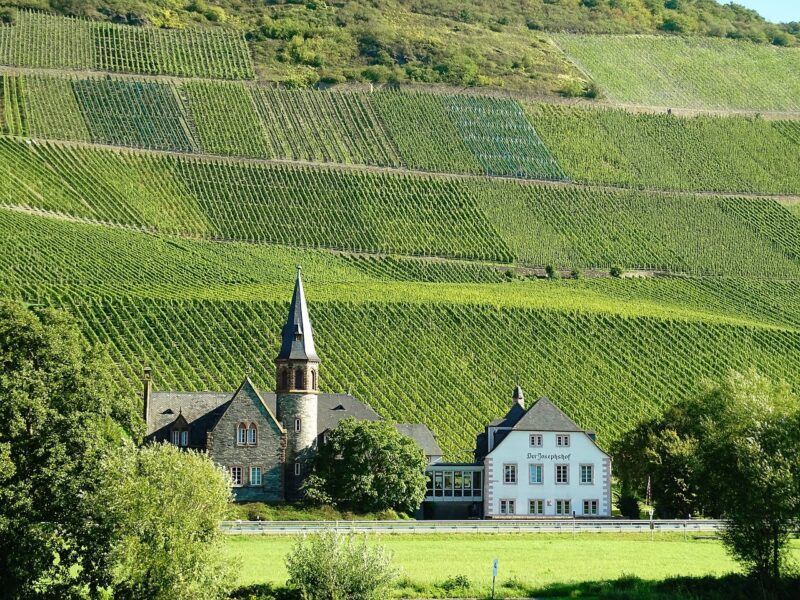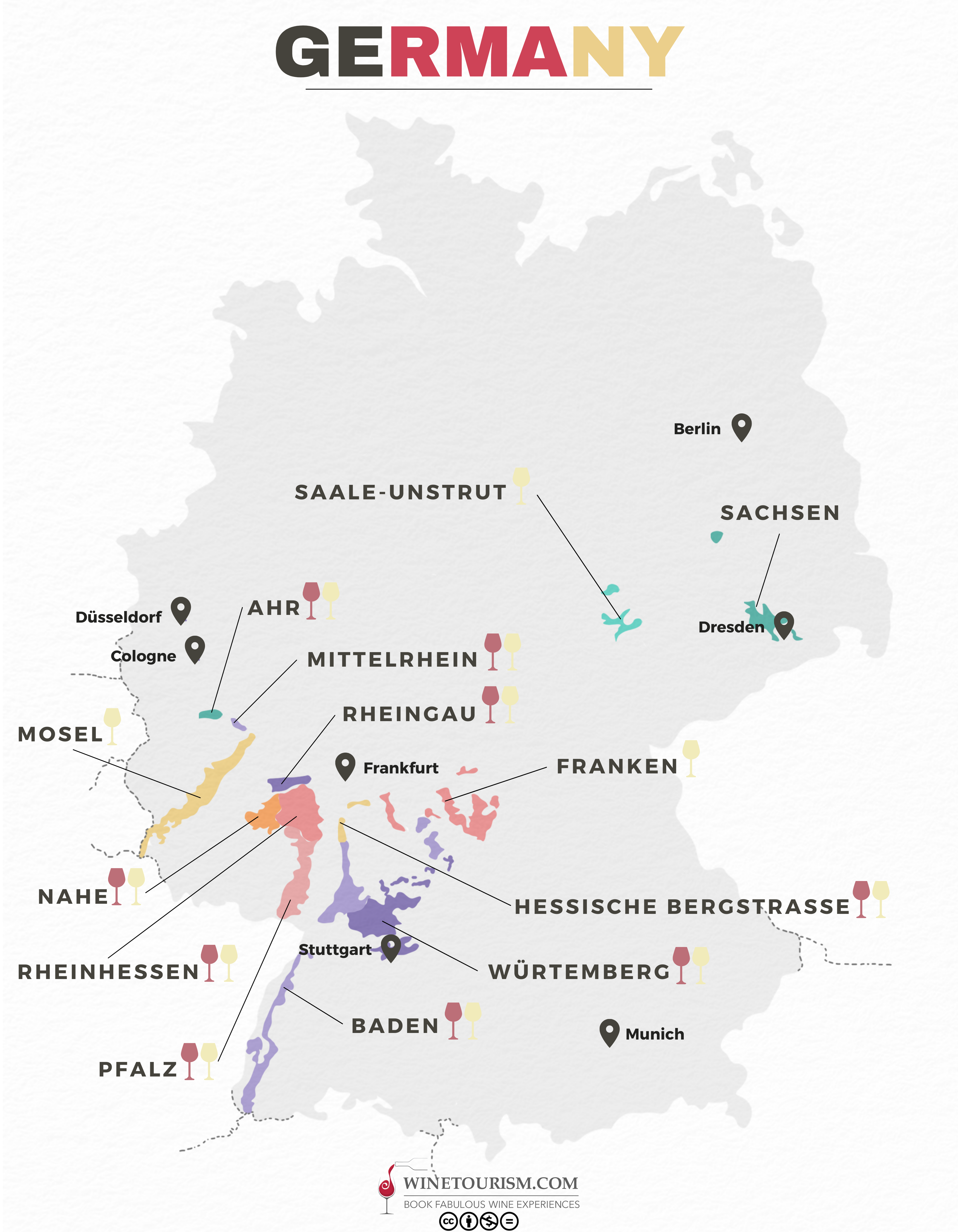

The Baden wine region is one of Germany’s most important and most distinctive wine areas. Stretching along the country’s southwest, close to the Rhine and the French border, Baden stands out for one simple reason: it is warmer than most other German wine regions. That matters because it helps Baden produce a broader range of styles, from refined Riesling and vibrant white Burgundy grapes to some of Germany’s most convincing Spätburgunder.
For wine lovers, Baden is especially interesting because it combines German precision with a slightly sunnier, broader, more generous personality than many people expect from German wine. It is a region of diversity rather than a one-note story. Volcanic slopes, limestone sites, river influence, and varied elevations all shape the wines, and that gives Baden a depth that goes well beyond the basic idea of “warm German wine.”
In this guide, we look at Baden’s history, terroir, key grape varieties, winemaking traditions, and the most important sub-regions that make it one of Germany’s true wine gems.
Key takeaways
- Baden is one of Germany’s warmest and most diverse wine regions.
- The region is especially famous for Spätburgunder, but it also produces excellent Riesling, Grauburgunder, and Weißburgunder.
- Its varied soils include volcanic, granite, limestone, and loess, which help create very different wine styles.
- Kaiserstuhl, Tuniberg, and Ortenau are among the most important sub-regions.
- Baden combines long winemaking tradition with modern quality-minded production.
Table of contents
- Why Baden matters
- The history of wine in Baden
- Baden’s terroir and climate
- The main grapes of Baden
- Winemaking in Baden
- The most important sub-regions of Baden
- What Baden wines taste like
- Why Baden is worth exploring
Why Baden matters
Baden matters because it broadens the picture of German wine. Many drinkers first approach Germany through Riesling and often imagine cool-climate wines that are sharp, light, and narrowly focused on one grape. Baden changes that picture. It still makes excellent Riesling, but it also excels with Pinot Noir and the Pinot family more broadly, showing a side of Germany that feels more textural, more varied, and in some cases more closely linked to Burgundy than outsiders might expect.
It also matters because it has real internal diversity. This is not a single compact wine district with one easy style. Baden stretches over a long north-south distance and includes very different soils, exposures, and mesoclimates. That gives the region a lot more range than many casual wine drinkers realise.
For Corked News readers, Baden is especially useful as a learning region because it connects several important ideas at once: climate, soil, grape adaptation, sparkling wine, and the relationship between German and Burgundian varieties. It is also an appealing region from a travel perspective, thanks to its vineyard scenery, historic towns, and strong food culture.
The history of wine in Baden
Baden’s wine history stretches back well over a thousand years. The Romans were among the earliest to recognise the region’s potential for viticulture, and vineyards were planted along key river routes where conditions were favourable for grape growing. That early foundation mattered because it established wine not as a passing agricultural experiment, but as part of the region’s long-term identity.
Later, monasteries and noble estates played a major role in sustaining and improving the region’s vineyards. Like in many important European wine regions, monastic orders helped refine vineyard practice, preserve agricultural knowledge, and strengthen the connection between land, wine, and local prestige. Over time, these influences shaped Baden into one of the core regions of German wine culture.
The region did not have an easy path throughout history. Wars, economic shifts, and the phylloxera crisis all created serious pressure. But Baden’s growers adapted. Replanting, changing vineyard practice, and modernising cellar work helped the region survive and eventually strengthen its reputation again. That resilience is part of what gives Baden its weight today. It is not only a beautiful wine region. It is one that has repeatedly had to rebuild and redefine itself.
This long historical arc still matters. Baden is not a newly fashionable region trying to manufacture a story. It has real depth, and that depth shows in the strength of its identity and the seriousness of its wine culture.
Baden’s terroir and climate
Baden’s terroir is one of the main reasons the region is so compelling. It is a warm region by German standards, but it is not uniform. The best way to understand Baden is to think of it as a long, varied wine corridor with multiple terroirs rather than a single stylistic zone.
Diverse soils
One of Baden’s great strengths is its range of soil types. Vineyards here can include volcanic soils, granite, limestone, and loess, and those differences matter enormously. Volcanic soils, especially in areas such as Kaiserstuhl, can help produce wines with depth, spice, and mineral force. Limestone can support freshness and precision, while loess often contributes softness and generosity.
This variation gives Baden winemakers multiple styles to work with. It is one reason the region can handle both reds and whites so well, and why site expression matters strongly in the best wines.
Elevations and microclimates
Baden includes vineyards at a range of elevations, and that helps create important climatic differences. Higher sites tend to be cooler, which can preserve acidity and aromatic clarity, especially in grapes such as Riesling. Lower and warmer sites can support fuller ripening in red grapes like Spätburgunder.
Microclimates are also shaped by the Rhine, nearby hills, and local exposure patterns. That means even within one sub-region, the wines can vary more than many drinkers first expect.
A warmer German climate
Baden is often described as Germany’s warmest wine region, and that warmth is central to its identity. Warm, sunny days help grapes ripen fully, while cooler nights can still preserve some freshness and structure. This is a big reason the region can produce reds of real depth and whites with a little more flesh and generosity than in cooler northern zones.
The Rhine and the protective influence of surrounding landscape features help moderate extremes. That creates a growing season that is relatively favourable for multiple grape families, especially the Pinots. In a German context, that flexibility is a major advantage.
The main grapes of Baden
Baden is one of Germany’s most versatile grape regions, but several varieties clearly define its reputation.
Spätburgunder
Spätburgunder, the German name for Pinot Noir, is arguably Baden’s most important red grape and one of the strongest reasons the region is so respected. Baden produces some of Germany’s best Pinot Noir, and in the right sites the wines can be elegant, silky, and structured, with red berry fruit, spice, earth, and a subtle mineral edge.
What makes Baden Spätburgunder especially compelling is that it often combines ripeness with restraint. The wines can have enough fruit and body to feel complete, but still keep the freshness and finesse that good Pinot Noir needs. This is why Baden matters so much to drinkers who want to see how Germany interprets one of the world’s most demanding grapes.
Riesling
Riesling is still a major grape in Baden, even if the region is less singularly associated with it than places like the Mosel or Rheingau. In Baden, Riesling often shows freshness, citrus, orchard fruit, and a mineral line shaped by site and soil. Higher and cooler sites can produce especially vibrant examples.
It is useful to understand Baden Riesling as part of the broader German conversation around the grape, but with a slightly warmer regional accent in some places. That can make the wines a touch broader or riper while still keeping the grape’s essential tension.
Grauburgunder and Weißburgunder
Grauburgunder, or Pinot Gris, and Weißburgunder, or Pinot Blanc, are especially important in Baden. This is one of the regions where both grapes can feel particularly at home. Grauburgunder often shows generous texture, orchard fruit, and a softly rounded shape, while Weißburgunder tends to be fresher, cleaner, and more linear.
These grapes matter because they reinforce Baden’s connection to the Burgundy family and help explain why the region feels broader than a Riesling-only destination. They are also a big part of Baden’s everyday drinking appeal, since both can be very food-friendly and versatile.
Winemaking in Baden
Baden’s winemaking culture combines long tradition with a strong willingness to adapt. The best producers work seriously in the vineyard, focus on site expression, and use cellar techniques that support rather than bury the fruit.
Sustainable and organic farming
Many producers in Baden place increasing emphasis on sustainable and organic vineyard practices. This is not only a marketing trend. In many cases, it reflects a serious effort to improve soil health, preserve biodiversity, and allow the vineyards to express themselves more clearly over time.
That shift matters because the region’s identity depends strongly on place. If site expression matters, then farming choices matter too. More growers now understand that clearly.
Barrique ageing for reds
Some of Baden’s Spätburgunder producers use barrique ageing to give their wines more depth, texture, and complexity. Used carefully, oak can soften tannins and add nuance without overwhelming the fruit. In the best examples, the result is a wine that feels layered and polished rather than woody.
This is particularly important for Pinot Noir, where too much oak can quickly flatten the delicacy that makes the grape attractive in the first place. Baden’s top producers generally understand that balance well.
Sparkling wine
Baden also has a strong reputation for high-quality sparkling wine made by the traditional method. This side of the region is often overlooked, but it makes sense. The Pinot family is well established here, and the climate can support the kind of acidity and precision needed for serious sparkling production.
That adds another layer to Baden’s versatility. It is not just a still wine region. It is one of Germany’s more complete wine landscapes.
The most important sub-regions of Baden
Baden is divided into several sub-regions, and while the full region is long and varied, a few names stand out especially strongly.
Kaiserstuhl
Kaiserstuhl is perhaps the best-known sub-region of Baden and is especially famous for its volcanic soils. These soils help produce wines with depth and a strong mineral signature, particularly in Spätburgunder and Grauburgunder. The warmth of the area also supports fuller ripening, making it one of the region’s most expressive zones.
Kaiserstuhl is a key reason Baden has such a strong reputation for Pinot varieties.
Tuniberg
Tuniberg, near Freiburg, is known for elegance and finesse, especially in Pinot Noir and sparkling wines. The area tends to produce wines with polish and balance rather than sheer force. That makes it especially interesting for drinkers who like precision and quiet refinement.
Ortenau
Ortenau is one of the most diverse and versatile parts of Baden. It produces important Riesling as well as Spätburgunder, and its varied soils and exposures allow a broad range of styles. Ortenau is a good reminder that Baden is not only about one grape or one sub-region. It is a region of layered internal identity.
For readers planning a visit, our Germany wine trip travel ideas guide and our Baden wine region map are useful next steps.
What Baden wines taste like
Baden wines often feel a little sunnier and broader than many people expect from Germany, but the best bottles still keep a clear sense of balance. Spätburgunder can show red cherry, plum, spice, forest floor, and fine tannins. Riesling tends to show citrus, stone fruit, and mineral freshness. Grauburgunder often feels textured and ripe without becoming heavy, while Weißburgunder stays brisk and elegant.
That range is exactly what makes Baden appealing. There is no single flavour profile that covers the whole region. Instead, the wines reflect a mix of climate generosity and site-driven detail. That makes Baden particularly rewarding for drinkers who want to explore beyond the most familiar stereotypes of German wine.
Why Baden is worth exploring
Baden is worth exploring because it is one of Germany’s most complete wine regions. It has history, vineyard beauty, grape diversity, and a quality ceiling high enough to interest serious wine lovers. It also offers a different side of Germany than many people first meet through Riesling alone.
This is a region where the Pinot family matters, where soil diversity genuinely shapes style, and where producers can make everything from structured reds to vibrant whites to elegant sparkling wines. That breadth makes Baden especially valuable for anyone trying to build a fuller picture of European wine.
It is also a very satisfying region to visit or study because it combines scenic appeal with real substance. The vineyards are beautiful, but the wines justify the attention. That is what separates a pretty wine region from an important one.
Raise a glass to Baden and you are not only tasting one of Germany’s warmest wine regions. You are tasting one of its most versatile, historically grounded, and quietly impressive wine landscapes.
See our article on planning a wine trip to Germany for more inspiration.
Read next
Last updated: