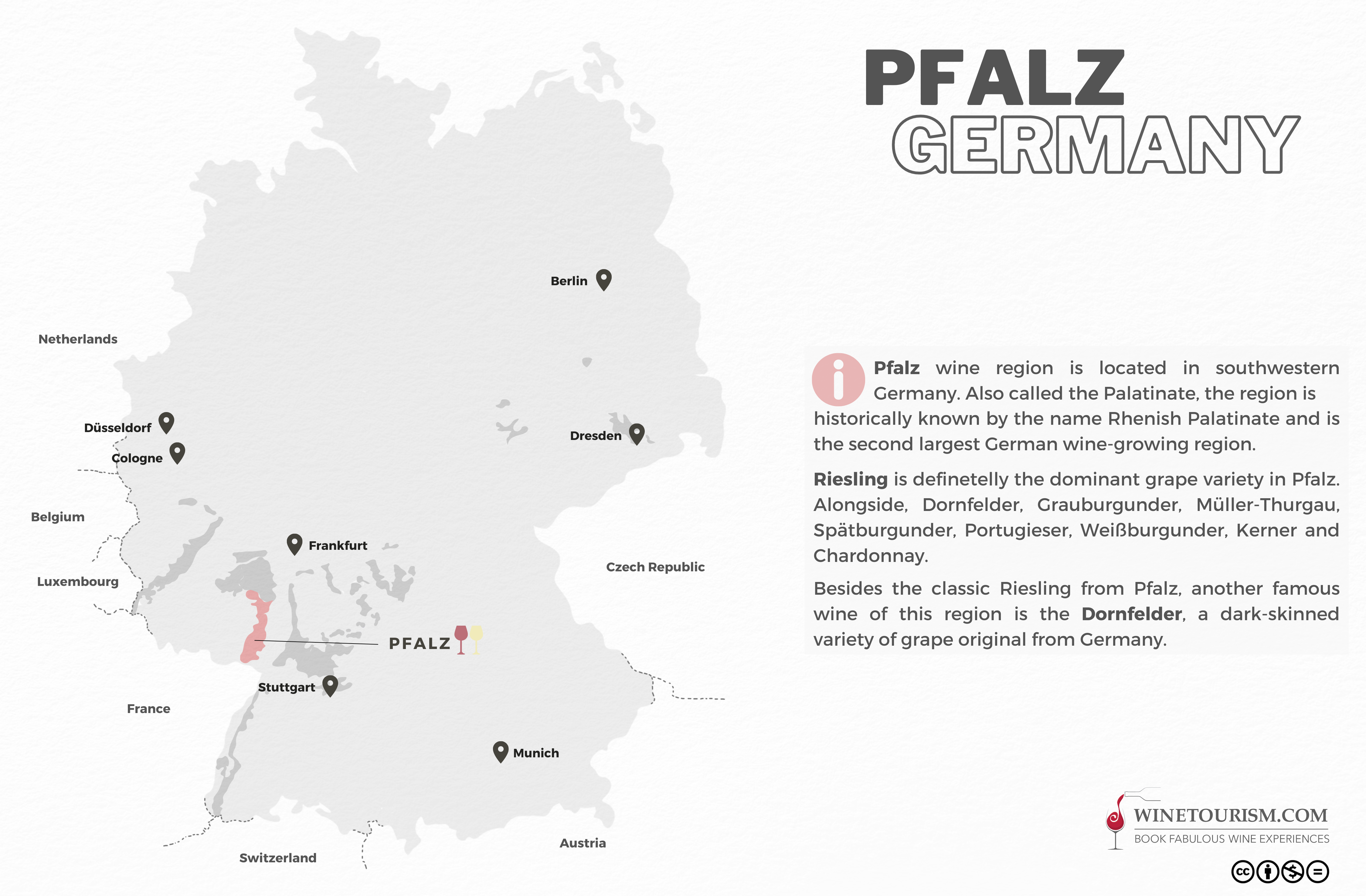
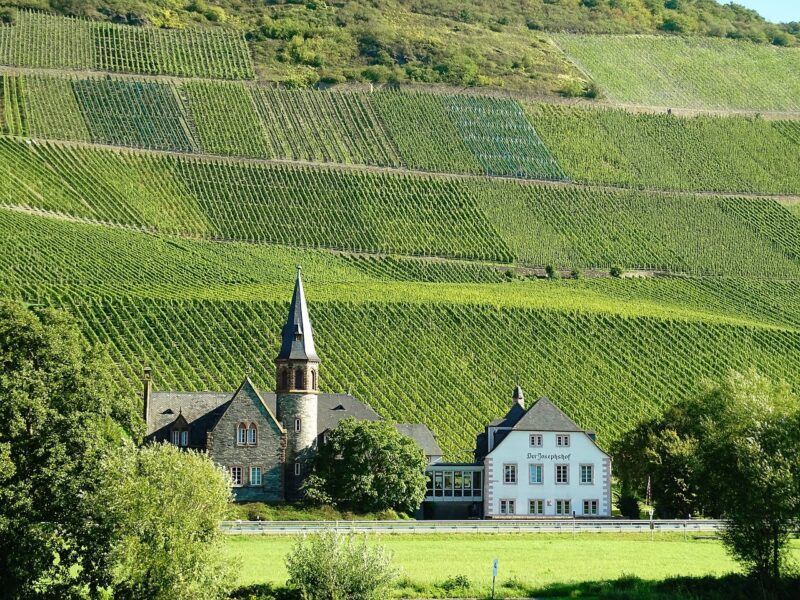
The Pfalz wine region is one of Germany’s most generous and approachable wine areas. Located in the country’s southwest, it combines a long winemaking history with sunny conditions, varied soils, and a style range that makes it especially appealing for both newer wine drinkers and more experienced enthusiasts. Pfalz can produce fresh, expressive whites, serious Pinot Noir, and fuller red wines, all within one of Germany’s most inviting vineyard landscapes.
What makes Pfalz stand out is that it often feels warmer, broader, and more open than many people expect from German wine. Riesling still matters enormously here, but the region is not defined by one grape alone. Spätburgunder, Grauburgunder, and Dornfelder all help shape its identity, and that gives Pfalz a flexibility that makes it one of Germany’s most rewarding regions to explore.
Key takeaways
- Pfalz is one of Germany’s oldest and most important wine regions, with roots going back to Roman times.
- The region benefits from a relatively warm, Mediterranean-like climate by German standards.
- Riesling is central to Pfalz, but Spätburgunder, Dornfelder, and Grauburgunder are also important.
- Diverse soils and protected vineyard sites help create a wide range of wine styles.
- Important areas include Mittelhaardt, Südliche Weinstraße, and the broader Deutsche Weinstraße route.
Table of contents
- Why Pfalz matters
- History of the Pfalz wine region
- Terroir and climate in Pfalz
- Main grape varieties in Pfalz
- Winemaking traditions in Pfalz
- Notable areas and wines of Pfalz
- Why Pfalz is worth exploring
Why Pfalz matters
Pfalz matters because it gives a broader view of German wine than many drinkers expect. If someone only knows Germany through sharp, cool-climate Riesling stereotypes, Pfalz can be a surprise. The region still makes excellent Riesling, but it also has enough warmth and vineyard diversity to handle red grapes and fuller white styles with confidence.
It also matters because it is one of Germany’s most visitor-friendly wine regions. The combination of vineyard-covered hills, historic villages, and the famous wine route gives Pfalz a strong travel identity as well as a serious wine identity. That makes it useful for both wine study and wine tourism, which is a strong combination.
For Corked News readers, Pfalz is especially interesting because it sits at the meeting point of history, terroir, and variety. It is one of those regions where climate, soil, and grape choice all feel easy to understand once you start exploring the wines.
History of the Pfalz wine region
The history of winemaking in Pfalz stretches back to Roman times, which makes it one of Germany’s oldest wine-growing regions. The Romans recognised the area’s potential for viticulture and planted vineyards that helped lay the foundation for what would become one of the country’s most important wine landscapes.
Over the centuries, monasteries and noble estates helped shape the region’s wine culture. As in many great European wine areas, religious and aristocratic influence played a major role in preserving vineyard knowledge, organising production, and improving quality. That long continuity still matters today. Pfalz does not feel like a newly fashionable region. It feels established, rooted, and historically serious.
That said, the region has not remained static. Like other old European wine regions, Pfalz has had to adapt repeatedly through changing economic conditions, modernisation, and shifting consumer tastes. Its current identity reflects both that long tradition and a willingness to evolve.
Terroir and climate in Pfalz
Pfalz has one of the most favourable climates in Germany for viticulture, and that helps explain why the region is so diverse. It is warmer and sunnier than many other German regions, and that creates opportunities for both white and red grapes to ripen successfully.
Soils and geology
The region includes a wide range of soils, including limestone, sandstone, clay, and loess. This diversity matters because it helps create very different wine expressions across the region. Limestone can bring freshness and precision, clay can hold moisture and add body, and sandstone or loess can influence drainage and aromatic profile in different ways.
These soil differences are one of the reasons Pfalz does not feel one-dimensional. The wines can range from bright and mineral to fuller and more textured depending on where the grapes are grown.
A Mediterranean-like climate
Pfalz is often described as having a Mediterranean-like climate, at least by German standards. Summers are warm, sunshine is generous, and winters are relatively mild. The Haardt Mountains help protect the vineyards from harsher weather, creating conditions that support consistent grape ripening.
This warmth is a major asset for grapes such as Spätburgunder and Dornfelder, which benefit from fuller ripening. It also allows Riesling in Pfalz to show both freshness and fruit generosity rather than only sharp tension.
Sunny slopes and even ripening
Many vineyards stretch along gentle slopes that maximise sun exposure and promote even ripening. That matters because the combination of slope and climate helps grapes mature with balance rather than simply accumulating sugar. The result is often wines with ripe fruit, but still enough structure to stay fresh and defined.
Main grape varieties in Pfalz
Pfalz is home to a broad range of grapes, but a few stand out as especially important to the region’s identity.
Riesling
Riesling remains one of the central grapes of Pfalz and is often the first place many wine lovers start. Pfalz Rieslings are known for expressive aromatics, good fruit ripeness, and enough acidity to keep them lively and age-worthy. Compared with cooler German regions, they can feel a little broader and sunnier, but the best examples still keep the precision that makes Riesling such a compelling grape.
If you want to understand how Riesling changes across Germany, it also helps to compare Pfalz with regions such as Rheingau and Mosel.
Spätburgunder
Spätburgunder, or Pinot Noir, is one of the clearest reasons Pfalz feels broader than a purely Riesling-focused region. The warmer conditions allow Pinot Noir to ripen well, giving wines with good fruit, soft texture, and elegant structure. Pfalz Spätburgunder can be velvety and expressive without losing the finesse that makes the grape so attractive.
Dornfelder
Dornfelder thrives in Pfalz’s sunny conditions and produces deeply coloured red wines with dark berry fruit and gentle tannins. It helps give the region a more approachable red wine side and has long been part of Pfalz’s broader appeal for drinkers who want ripe, easygoing, fruit-forward wines.
Grauburgunder
Grauburgunder, or Pinot Gris, is another important grape in Pfalz. The wines often show a pleasing mix of fruitiness, freshness, and subtle spice, which makes them very versatile at the table. This grape helps reinforce the idea that Pfalz is not only about one flagship variety, but about balance and range across multiple styles.
Winemaking traditions in Pfalz
Pfalz producers blend modern techniques with long-established regional traditions. This is not a region trapped in the past, but it is also not one trying to erase its roots. The best wines tend to reflect both good farming and careful cellar work.
Sustainable practices
Many wineries in Pfalz now emphasise sustainable viticulture and a more careful relationship with the vineyard environment. That matters because it supports long-term vine health and often improves the clarity of site expression in the finished wines.
Gentle pressing
For white wines especially, gentle pressing is important. It helps preserve delicate aromas and maintain a cleaner, more precise profile in the finished wine. In a region where freshness and fruit expression matter so much, that makes a clear difference.
Barrel ageing
Some of the top Spätburgunder wines from Pfalz are aged in barrel to build complexity and refine the tannins. Used well, oak can support the fruit and add structure without overwhelming the wine. This is especially important for Pinot Noir, where balance and restraint matter.
Notable areas and wines of Pfalz
Pfalz includes several important wine areas, each contributing its own expression of the region.
Mittelhaardt
Mittelhaardt, in the heart of Pfalz, is especially known for top-quality Riesling. This is one of the key places to look for some of the region’s most complete and age-worthy white wines. For many readers, Mittelhaardt is one of the clearest examples of why Pfalz Riesling deserves serious attention.
Südliche Weinstraße
The southern part of the region, Südliche Weinstraße, is known for a wider spread of styles, including fuller Dornfelder and attractive Grauburgunder. It helps show how the warmer side of Pfalz can translate into variety and generosity rather than just simple ripeness.
Deutsche Weinstraße
The Deutsche Weinstraße, or German Wine Route, is one of the most recognisable travel names in the region. It links vineyards, villages, and wine culture in a way that makes Pfalz especially attractive for visitors. This is where the region’s tourism appeal and wine identity come together most clearly.
For trip planning, our guides to Germany wine trip travel ideas and the Pfalz wine map are useful next reads.
Why Pfalz is worth exploring
Pfalz is worth exploring because it gives you one of the most complete pictures of modern German wine. It has ancient roots, a visitor-friendly landscape, a strong Riesling culture, and a real ability with red and white varieties alike.
It also shows that German wine is not as narrow as some people assume. In Pfalz, you can move from aromatic Riesling to elegant Spätburgunder, from fruit-driven Dornfelder to textured Grauburgunder, all within one region. That versatility is one of its greatest strengths.
For wine drinkers, Pfalz offers both accessibility and substance. The wines are often easy to enjoy, but the region has enough depth to reward more serious exploration too. That balance makes it one of Germany’s most appealing wine regions, both in the glass and on the ground.
See our article on planning a wine trip to Germany for inspiration on more German wine destinations.
Read next
Last updated: