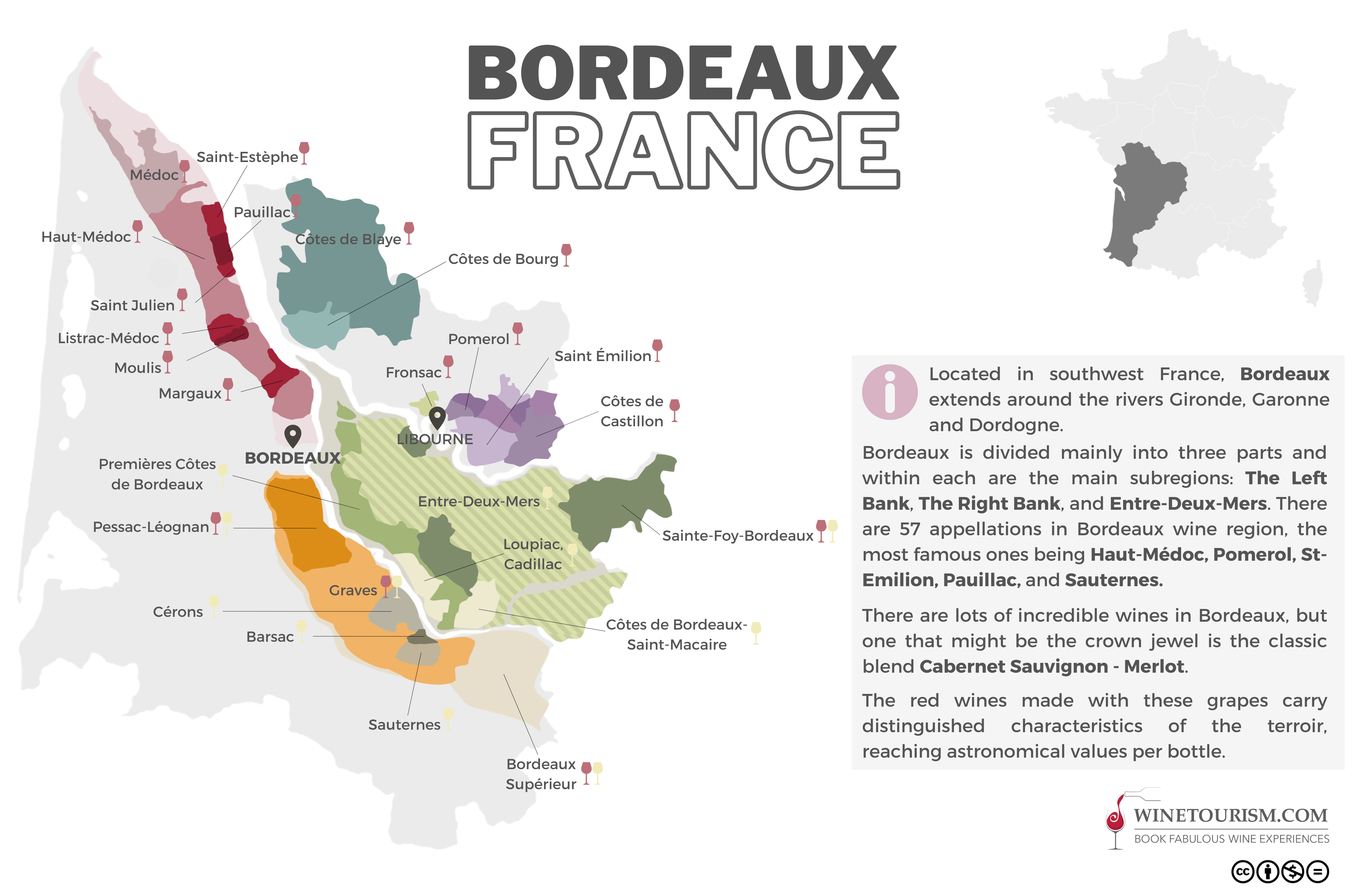

If you are looking for a free Saint-Émilion wine region map, you can download the full-size version below. Saint-Émilion is one of Bordeaux’s most famous wine areas, known for Merlot-led reds, historic vineyards, and a reputation that combines beauty, heritage, and serious winemaking.
Download the full-size Saint-Émilion wine region map here
Key takeaways
- Saint-Émilion is one of the most prestigious wine areas on Bordeaux’s right bank.
- The region is especially associated with Merlot and Cabernet Franc.
- Its wines are known for elegance, complexity, and strong aging potential.
- Historic vineyards, traditional winemaking, and terroir all play a major role in its identity.
- You can download a free high-resolution Saint-Émilion wine map from the link above.
Table of contents
- Download the map
- Where Saint-Émilion is
- Why Saint-Émilion matters
- What the region is known for
- Grapes, terroir, and style
- History, beauty, and wine culture
- Why this map is useful
Download the map
This page gives you access to a free, detailed, high-resolution wine map of the Saint-Émilion wine region in France. It is useful if you want a clearer overview of one of Bordeaux’s best-known right bank areas, whether for wine study, travel planning, or general wine interest.
Click here to open and download the full-size map
Where Saint-Émilion is
Saint-Émilion is located in Bordeaux, France, and is one of the most recognised names on the right bank. For many wine readers, the name carries instant weight. Even people who are not deep into Bordeaux already know that Saint-Émilion is associated with top-level red wine, old estates, and a classic French wine atmosphere that feels both historic and highly prestigious.
That location matters because Bordeaux is not a single, uniform region. It is a broader wine area made up of places with very different styles and identities. Saint-Émilion stands out because it represents one of the clearest alternatives to the left-bank model. If readers first learn Bordeaux through Médoc and Cabernet Sauvignon, Saint-Émilion often becomes the point where they start to understand the other side of Bordeaux more clearly.
A map is especially useful here because Saint-Émilion is so famous by name that readers often assume they already understand it. But many still do not have a clear visual sense of where it sits or why its location helps shape the wines. A good regional map turns prestige into place.
Why Saint-Émilion matters
Saint-Émilion matters because it is one of the most important names in red Bordeaux. It has the kind of reputation that goes beyond specialist wine circles and reaches a broader audience of travellers, collectors, and casual readers who simply know it as one of the places where serious French wine comes from.
It also matters because the region offers a different expression of Bordeaux greatness. Saint-Émilion is often associated with Merlot and Cabernet Franc rather than a Cabernet Sauvignon-led profile. That helps readers understand that Bordeaux prestige is not tied to only one grape mix or one stylistic tradition.
The area’s significance is also cultural. Saint-Émilion is not just a vineyard zone. It is one of those wine places where the visual setting, village identity, and wine reputation all strengthen each other. That gives the region a strong presence in both wine education and travel content, which is why it fits so naturally on Corked News.
What the region is known for
Saint-Émilion is renowned for red wines celebrated for their elegance, complexity, and age-worthiness. That reputation is at the centre of the region’s identity. Readers do not usually search for Saint-Émilion because they want a broad introduction to Bordeaux. They search for it because they want something more specific, more refined, and more recognisable.
The wines are often seen as polished yet layered. They can offer ripeness and richness, but the region’s best examples are valued for more than just concentration. The appeal lies in balance, texture, aromatic depth, and the ability to develop over time without losing shape.
Saint-Émilion is also known for picturesque vineyards and a strong sense of place. That matters because the region’s status is not built on wine alone. It is built on a complete image of fine wine culture: vineyard slopes, old stone surroundings, tradition, and a long continuity between land and bottle.
Grapes, terroir, and style
Merlot and Cabernet Franc are the grapes most closely associated with Saint-Émilion. Together, they help define the region’s style and explain why the wines often feel different from the classic left-bank profile many readers first associate with Bordeaux.
Merlot usually gives the wines roundness, fruit depth, and a softer, more generous core. Cabernet Franc can bring lift, aromatic complexity, freshness, and structure. That combination is one of the reasons Saint-Émilion wines are so widely admired. They can feel open and expressive, but still serious and capable of aging.
Terroir is also central to the region’s identity. Saint-Émilion is one of those wine areas where the idea of place is not abstract. The region’s soils and vineyard positions are part of how the wines are understood. Readers may first come for the famous name, but they often stay interested because Saint-Émilion is also a good entry point into Bordeaux terroir thinking.
The result is a wine style that often leans toward elegance and texture rather than sheer force. That does not mean the wines are simple or light. It means the region is prized for a kind of balance that serious wine drinkers keep coming back to.
History, beauty, and wine culture
Saint-Émilion’s history reaches back to Roman times, and that long past still matters to how the region is perceived today. This is not a modern wine brand built from scratch. It is a place where wine heritage feels deeply embedded, and that historical depth adds weight to the name.
The dedication to traditional winemaking is also part of the appeal. Readers often respond strongly to Saint-Émilion because it seems to preserve something older and more rooted within Bordeaux. Even when estates adopt modern vineyard and cellar techniques, the overall identity still feels tied to continuity rather than reinvention.
The visual appeal of the region strengthens that impression. Picturesque vineyards, historic surroundings, and a village identity that feels unmistakably tied to wine all give Saint-Émilion a kind of magnetism that many wine regions would love to have. It is one of those places where the travel appeal does not feel separate from the wine story. It is part of it.
That is why Saint-Émilion works so well in map content. Readers are often not just trying to understand the wine. They want to picture the place. They want to see where this famous region sits and why it carries such a strong reputation in both wine and travel.
Why this map is useful
A Saint-Émilion wine region map is useful because the region is famous enough that many readers know the name, but not always well enough that they can place it clearly in Bordeaux geography. They may know it is prestigious. They may know it is on the right bank. But they often still want a clearer visual guide.
This map helps solve that. It gives readers a practical overview they can use for wine study, Bordeaux comparison, or planning a visit. That is especially valuable in a region where place and prestige are so tightly connected.
The map is also useful because Saint-Émilion often acts as an entry point into right-bank Bordeaux. Readers who begin here can more easily understand how Merlot-led Bordeaux differs from the left-bank Cabernet frame. In that sense, this page is not only useful on its own. It also helps support wider regional understanding.
For Corked News, this page also strengthens internal linking across Bordeaux pages, France travel content, Merlot and Cabernet Franc grape content, and the broader wine maps section. It is the kind of evergreen resource that supports both direct user intent and the wider content structure of the site.
See also our Wine Travel Ideas for France.
Wine map kindly provided by WineTourism.com.
Read next
Last updated: