If you want to become a sommelier, the short version is this: build deep wine knowledge, get formal education, develop tasting discipline, and spend real time in service. A sommelier is not just someone who knows wine facts. A strong sommelier can read guests, pair wine with food, manage a list, work with a cellar, and communicate clearly under pressure.
That is why the path usually combines study and practical work. You can read books, take courses, and earn certifications, but you also need hands-on experience in restaurants, wine bars, or hospitality settings where wine service is part of the job. The best sommeliers combine theory, palate training, and calm, professional service.
Key takeaways
- Becoming a sommelier starts with genuine curiosity about wine and a willingness to keep learning for years.
- Formal education through programs such as WSET or the Court of Master Sommeliers helps build structure and credibility.
- Restaurant and wine service experience is essential because sommeliers need practical skills, not just theory.
- Blind tasting, food pairing, communication, and cellar knowledge all matter if you want to progress.
- Networking, mentorship, and consistent practice can make a major difference in building a long-term wine career.
Table of contents
- What a sommelier actually does
- Step 1: Build a real interest in wine
- Step 2: Get structured wine education
- Step 3: Work in service and get practical experience
- Step 4: Earn certifications
- Step 5: Train your palate and tasting skills
- Step 6: Keep expanding your wine knowledge
- Step 7: Build a network and find mentors
- Step 8: Start positioning yourself professionally
- Is becoming a sommelier worth it?
What a sommelier actually does
A sommelier is often described as a wine steward, but the job is broader than many people think. In a restaurant, a sommelier may help build the wine list, buy bottles, manage inventory, train staff, oversee storage, recommend pairings, and guide guests through choices in a way that fits both the food and the mood of the table.
The role sits at the intersection of wine knowledge and hospitality. That matters because a sommelier is not only being tested on facts. You might know every Grand Cru in Burgundy and still struggle if you cannot read a guest, explain a bottle clearly, or handle service gracefully during a busy dinner shift.
In some businesses, the sommelier role is highly specialised. In others, it overlaps with beverage management, floor service, and buying. Either way, the strongest sommeliers combine knowledge, taste, sales sense, and composure. If that mix appeals to you, the career can be deeply rewarding.
Step 1: Build a real interest in wine
The first step is not certification. It is curiosity. You need to care enough about wine that you are willing to keep learning even when there is no exam date pushing you. The best sommeliers usually start by tasting widely and asking simple but important questions. Why does this Sauvignon Blanc taste so different from another one? Why does one Pinot Noir feel light and lifted while another feels earthy and deep? Why does a wine work brilliantly with one dish and fall flat with another?
That kind of curiosity matters because wine is too broad to memorise without interest. You need a reason to keep going. Start tasting wines from different grapes, regions, and styles. Taste a New Zealand Sauvignon Blanc next to a Loire Valley Sauvignon Blanc. Taste a dry rosé next to a fuller white wine. Taste an easy Prosecco next to a more serious sparkling wine. You are building reference points.
Read as you taste. Books, articles, region guides, wine maps, and grape variety explainers help turn random impressions into structured knowledge. That is where a site like Corked News can help, because following links through wine regions and wine grape varieties helps you connect bottle names to place and style.
Keep a wine journal too. It does not need to be fancy. Write down what you drank, where it came from, what you noticed, what food worked with it, and whether you would recommend it again. Over time, this becomes one of the most useful tools you have. It trains your memory and helps you spot patterns in your own palate.
Step 2: Get structured wine education
Self-study is important, but formal wine education gives you a framework. Without structure, wine can feel endless and scattered. A proper course helps you move from random facts to a real understanding of grapes, regions, climate, winemaking, and tasting method.
Two of the most respected routes are WSET and the Court of Master Sommeliers. They are not identical. WSET is broader and often more academic in tone, which makes it very useful for people who want a strong general wine foundation. The Court of Master Sommeliers is more closely linked to restaurant service and professional sommelier work.
If you are just starting, entry-level courses can be ideal. They introduce tasting basics, food pairing principles, major grapes, and core wine styles without overwhelming you. As you progress, the courses become more detailed and more demanding, moving into blind tasting, wine law, regional detail, and professional-level evaluation.
This matters because certification alone does not make you a sommelier, but it does show discipline. It also tells employers that you have chosen a serious path rather than only informal interest. If you want a fuller overview of the most respected options, see our article on the world’s most renowned wine courses.
It can also be smart to broaden your beverage knowledge over time. Depending on where you want to work, knowledge of sake, spirits, beer, tea, or coffee can make you more useful in hospitality settings. But wine is the core, and that core needs to be strong first.
Step 3: Work in service and get practical experience
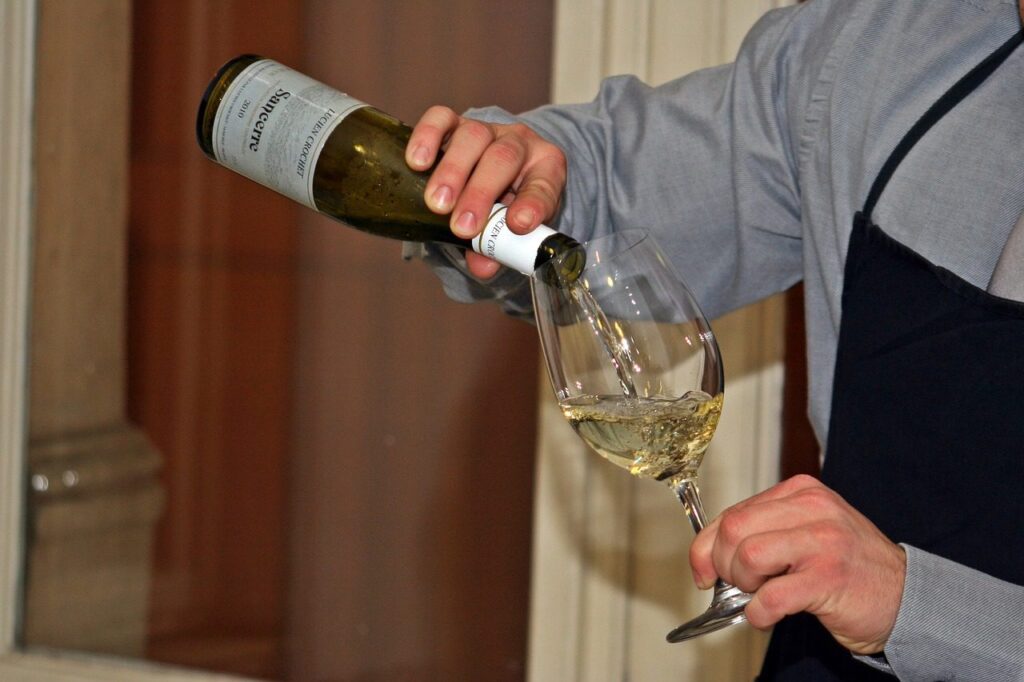
This is the step many people underestimate. You cannot become a strong sommelier from books alone. You need to spend time in real service environments where wine is ordered, opened, poured, recommended, questioned, returned, upsold, celebrated, and sometimes misunderstood.
That practical experience can start in wine bars, restaurants, hotels, tasting rooms, or retail. It does not have to begin with a sommelier title. In fact, it often does not. Many people start as servers, runners, bar staff, or junior wine assistants and slowly take on more wine responsibility.
Working in service teaches things that courses cannot fully reproduce. You learn how to speak to guests with different levels of confidence. You learn when to recommend something safe and when to stretch someone a little. You learn how to manage timing, temperature, glassware, bottle condition, and the pace of a meal. These are not side skills. They are central to the job.
If possible, try to work somewhere with a serious wine program. Being around experienced sommeliers helps immensely. You hear how they describe wines, how they solve problems, and how they balance hospitality with sales. That kind of observation can accelerate your growth faster than another stack of notes ever will.
Harvest experience at a winery can also be valuable. Even if you do not end up working in production, seeing grapes arrive, watching fermentation, and understanding cellar rhythms gives you a stronger grip on how wine is actually made. That makes you more credible and more grounded when you talk about wine later.
Step 4: Earn certifications
At some point, most aspiring sommeliers should aim for recognised certification. This is where your path becomes more visible to employers and mentors. The exact credential matters less than the fact that you are moving through a serious system and proving you can perform to a standard.
For many people, WSET Level 2 or Level 3 becomes a strong early milestone. For others in restaurant service, introductory or certified sommelier exams through the Court of Master Sommeliers may make more sense. The right route depends on your environment and your goals.
Certification matters for a few reasons. First, it gives you measurable progress. Second, it sharpens your study discipline. Third, it signals seriousness. In competitive hospitality environments, being able to point to recognised study can help open doors.
But it is also important not to romanticise certification too much. Passing exams is not the same as becoming effective in the dining room. You still need the practical side. The strongest professionals are the ones who let certification support their work rather than replace it.
Preparation for these exams is also a skill in itself. Blind tastings, flashcards, map study, tasting groups, region summaries, and repeated service drills all help. If you can find a study group, do it. Wine is easier to learn when you can test each other and share bottle costs.
Step 5: Train your palate and tasting skills
Tasting is one of the most visible sommelier skills, but people often misunderstand what makes someone good at it. It is not about having a magical palate. It is about disciplined repetition. Great tasters usually build their skill through systems, comparison, and memory.
You need to learn how to taste analytically. That means looking at appearance, smelling carefully, assessing structure, noting acidity, sweetness, tannin, alcohol, body, fruit profile, finish, and quality level. It also means staying calm enough to do that in a consistent order, especially during blind tasting.
Blind tasting is worth practising even if you never intend to sit a top-level sommelier exam. It teaches you to focus on evidence rather than assumption. Instead of guessing wildly, you learn to build a case from what is in the glass. That is a very useful mental discipline in wine.
Comparison tastings are especially powerful. Taste wines side by side whenever you can. Compare oaked and unoaked Chardonnay. Compare Rioja with Chianti. Compare Albariño with Sauvignon Blanc. Those exercises teach difference, and difference is one of the core ways sommeliers learn.
If you want to sharpen this part of your toolkit, our guide to the art of wine tasting is a useful next step.
Step 6: Keep expanding your wine knowledge
Wine knowledge is never finished. Regions change. Producers evolve. Climate affects style. New areas gain relevance. Trends move in and out. A sommelier who stops learning quickly becomes stale.
That does not mean chasing every trend. It means staying engaged. Read trade publications, follow major producers, keep tasting new regions, and revisit classics. Learn the benchmark appellations, but also spend time on emerging areas and lesser-known grapes. Guests do not always ask about the obvious bottles. Sometimes the best recommendation is something they have never heard of.
Travel helps when possible. Seeing vineyards in person changes how you understand wine. Slope, soil, temperature, altitude, and local food culture all become more real. But even if travel is limited, maps and regional reading still help a lot. That is one reason we have put so much emphasis on regional guides and wine maps at Corked News.
It is also smart to widen your cultural understanding. A good sommelier is not only a technician. They also understand context. Why does a region make the food it does? Why do certain wines evolve the way they do in local drinking culture? Those details help make your recommendations feel human rather than rehearsed.
Step 7: Build a network and find mentors
Wine is a relationship-driven industry. Knowledge matters, but so do the people who help shape your path. A mentor can save you years of wasted effort by helping you focus on the right areas at the right time.
That mentor might be a head sommelier, a restaurant wine director, a buyer, an educator, or even a producer. The point is not to collect famous contacts. It is to learn from people who can sharpen your standards and push you forward.
Networking also matters because opportunities often move through trust. Jobs, tastings, harvest opportunities, distributor introductions, and study groups often come through people who already know your attitude and work ethic. That is why showing up consistently matters. Be useful, be curious, and take the work seriously.
Industry events, tastings, masterclasses, and professional organisations can all help. But long-term relationships matter more than flashy encounters. People remember reliability, humility, and real enthusiasm far more than they remember a polished line at a trade tasting.
If you are interested in the people who shape wine conversation more broadly, our article on the world’s most famous wine critics and their preferences gives useful context on the wider ecosystem around the wine trade.
Step 8: Start positioning yourself professionally
At a certain point, your growth needs to become visible. That means building a strong resume, documenting your certifications, listing relevant restaurant or wine experience, and making it clear what kind of role you are ready for next.
If you have entered competitions, led tastings, written about wine, helped manage a cellar, built pairings, or participated in harvest, include it. Those details show range. A sommelier career is rarely built from one qualification alone. It is built from layers of credible work.
It can also help to build a clean online presence. That does not mean forcing yourself into personal branding. It just means making it easy for people to understand your background, your qualifications, and your seriousness about wine. A professional LinkedIn profile is usually enough for many people.
Public speaking and writing can help too. Leading staff trainings, hosting tastings, writing short wine notes, or contributing to wine conversations in a thoughtful way all strengthen your authority over time. You do not need to become a public wine personality, but it helps if others can see your knowledge in action.
Is becoming a sommelier worth it?
For the right person, yes. Becoming a sommelier can be deeply rewarding because it combines study, sensory training, hospitality, culture, travel, and constant learning. Few careers let you connect agriculture, craft, food, service, and human interaction in the same way.
That said, it is not an easy path. The hours can be long, the early years can be demanding, and certification takes serious effort. You need patience. You also need to enjoy serving people, because this is still a hospitality profession at heart.
If that mix appeals to you, it can be an excellent career. You may end up in restaurants, hotels, retail, import, education, consulting, winery sales, or beverage leadership roles. The title sommelier is only one destination. The skill set can take you much further than one dining room.
The strongest mindset is to think long term. Do not rush to look impressive. Build foundations. Taste often. Study seriously. Work hard in service. Learn from people better than you. If you do that consistently, you will not just look like a sommelier on paper. You will become one in practice.
Keep learning with our guides to wine grape varieties, wine regions, and renowned wine courses.
Read next
Last updated: