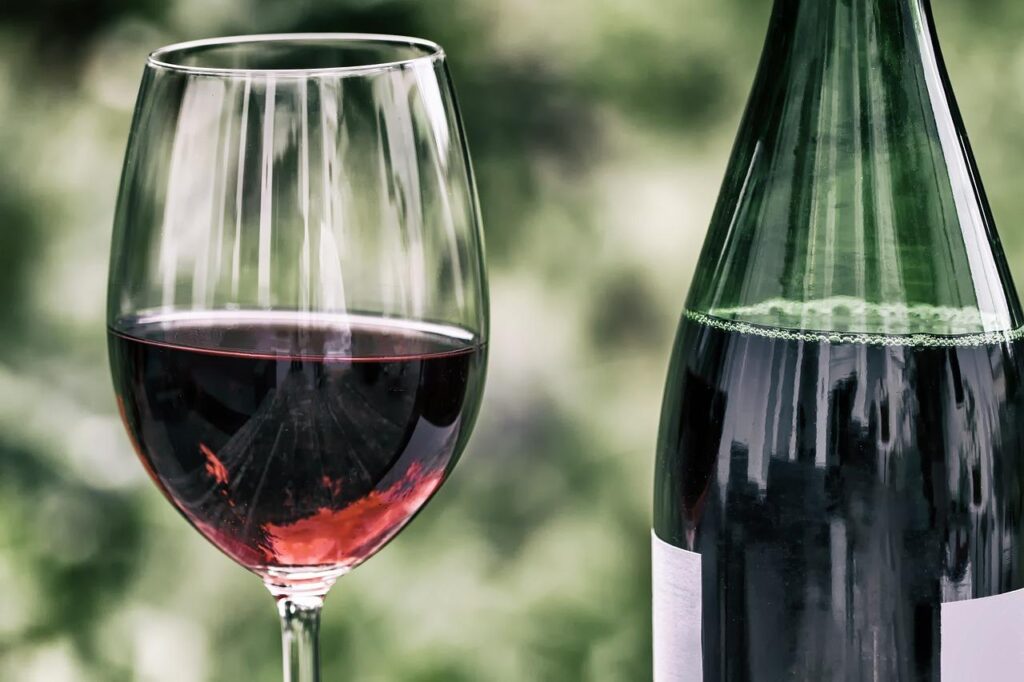
Red wine is made differently from white wine for one main reason: the juice ferments with the grape skins. That one decision changes almost everything. It is what gives red wine its color, much of its tannin, and a big part of its structure. From there, the winemaker starts shaping style through a long chain of choices about harvest timing, extraction, fermentation, aging, and bottling. Some reds are built to be light, juicy, and easy to drink young. Others are made for tannic structure, oak influence, and long aging. The production path is what creates that difference.
That is also why red winemaking can look deceptively simple from the outside. Yes, grapes are picked, fermented, pressed, aged, and bottled. But every stage can move the wine in a different direction. Earlier harvest can hold freshness. Longer skin contact can build tannin. Warmer fermentation can increase extraction. Oak can add texture and spice, or overwhelm the fruit if the wine cannot carry it. Good red winemaking is not about using every technique available. It is about using the right ones in the right amount.
This article is the broad red-wine guide in the Corked News production hub. If you want the wider overview first, start with our general guide to wine production. If you want the adjacent styles afterward, jump to our guides on white wine production, rosé wine production, sparkling wine production, and orange wine.
Key takeaways
- Red wine gets its color, tannin, and much of its structure from fermenting with grape skins.
- Harvest timing is one of the most important choices because it affects sugar, acidity, tannin ripeness, and flavor.
- Cap management during fermentation helps control how much color, tannin, and flavor is extracted.
- Malolactic fermentation is a major part of many red wines because it softens acidity and rounds out the palate.
- Oak, blending, bottling, and storage all continue shaping the wine after fermentation is over.
Table of contents
- What makes red winemaking different
- Vineyard and grape choices
- Harvest and sorting
- Destemming, crushing, and cold soak
- Fermentation and cap management
- Pressing and wine separation
- Malolactic fermentation
- Aging, blending, and bottle time
- Fining, filtration, and bottling
- What red winemaking is really about
What makes red winemaking different from white wine?
The short answer is skin contact. Most red wines are fermented with the skins and often the seeds, while most white wines are pressed off the skins much earlier. That one difference is what gives red wine its visual and structural identity. Without skin contact, there is no real red wine as most people understand it. The juice of many red grapes is actually pale to begin with, so the deep red, purple, or garnet color has to be extracted during maceration.
But this is not only about color. The skins and seeds also bring phenolic compounds, especially tannins, which shape the grip, texture, bitterness, and aging potential of the wine. That is why red winemaking is often less about preserving fragility and more about controlling extraction. The challenge is not simply “get more color and tannin.” It is “get the right amount, in the right form, for the style you want.” Too little extraction and the wine can feel weak or dilute. Too much and it can turn hard, bitter, or drying.
That is also why red wine production is more closely tied to decisions around maceration, cap management, and post-fermentation handling than many white wines are. The winemaker is not just fermenting juice. They are managing a solid-liquid mixture that changes every day as the skins rise, the cap forms, the temperature moves, and extraction progresses.
Vineyard and grape choices still set the limits
Before any of that cellar work happens, the vineyard has already shaped the fruit. Grape variety matters, of course, but site, climate, yield, canopy, and ripeness matter just as much. Cabernet Sauvignon does not behave like Pinot Noir. Syrah does not behave like Nebbiolo. Thick-skinned grapes tend to give more color and tannin potential, while thinner-skinned grapes may need gentler handling if elegance is the goal.
That is why red wine production starts long before crush day. Vineyard management influences how concentrated the berries are, how evenly they ripen, how thick the skins become, and whether the seeds and tannins reach the kind of maturity the winery wants. Sun exposure, water stress, crop load, and disease pressure all feed into that. The cellar can guide the result, but it cannot erase what the fruit already is.
If you want to dig deeper into the moment where vineyard work turns into winemaking, our detailed harvest article is the most relevant next read.
Harvest and sorting: this is where the style starts to lock in
Harvest timing is one of the most important calls in red winemaking because it affects sugar, acidity, phenolic ripeness, and aroma profile all at once. Pick too early and the wine may feel green, thin, or hard. Pick too late and you risk jammy fruit, softer acidity, and heavier alcohol. Neither is automatically wrong, but each pushes the wine in a different direction.
For red wines, tasting the fruit matters as much as the numbers. Brix and pH are useful, but they do not tell the whole story. Winemakers also look at skins, seeds, pulp texture, and how the grapes taste in the mouth. Are the skins still bitter and aggressive? Are the seeds still green? Is the fruit profile fresh and lifted, or sliding into overripe? That sensory side matters because red wine relies so heavily on what is extracted from the solid parts of the berry.
Once the fruit arrives at the winery, sorting removes leaves, raisins, underripe berries, damaged fruit, and anything else that does not belong in a serious ferment. Better sorting usually means cleaner tannins, fewer off-flavors, and less need for correction later. In a very real sense, this is where quality control becomes visible.
Destemming, crushing, and cold soak
After sorting, the fruit may be destemmed, crushed, or handled as whole bunches depending on the style. Destemming removes the stems, which can add herbal, green, or structural notes if included. Some producers want that effect and use partial or full whole-cluster fermentation. Others want purer fruit and softer tannin, so they remove stems almost entirely. There is no single correct answer. It depends on the grape, the ripeness of the stems, and the style being targeted.
Crushing opens the berries and releases juice, but gentle handling matters. The goal is not to shred everything into a bitter mess. It is to open the fruit enough for fermentation and extraction to begin while avoiding unnecessary damage to seeds and skins.
What cold soak is trying to do
Some red wines go through a cold soak before active fermentation starts. This means the must is held cool for a short time so color and aromatic compounds can begin to extract before alcohol is present. The theory is that this can build color and aroma in a different way from a hot, fast ferment. It is not mandatory, and it is not automatically better, but it can be useful, especially for varieties where the winemaker wants a bit more depth without overdoing tannin.
Like most red winemaking decisions, cold soak is a tool, not a rule. In some wines it helps. In others it is unnecessary or even counterproductive.
Fermentation and cap management are the heart of red winemaking
Fermentation is where sugars become alcohol, but in red wine it is also where extraction really takes shape. As yeast activity ramps up, carbon dioxide pushes skins and seeds upward, creating a floating cap on top of the fermenting juice. That cap has to be managed. If it is left alone, extraction becomes uneven and the cap itself can dry out or become problematic. This is why cap management is one of the core differences between red and white production.
Yeast, vessel, and temperature all matter
Winemakers may use cultured yeast for control or rely on ambient yeast for a more natural ferment. Fermentation might happen in stainless steel, concrete, oak, or open-top fermenters. Temperature control is especially important because warmer ferments usually increase extraction, while cooler ferments can hold fruit and freshness a bit better. None of these choices works in isolation. They all interact.
Punch-downs and pump-overs
The two classic cap-management techniques are punch-downs and pump-overs. Punch-downs physically push the cap back into the fermenting juice. Pump-overs draw juice from below and spray it back over the cap. Both are designed to improve contact between liquid and solids, but they do not necessarily give the same result in every wine. A gentler approach may suit delicate fruit. A more assertive approach may be useful when the must needs more color or tannin.
This is one of the real skill points in red winemaking. A producer has to keep tasting, watching, and adjusting. Extraction that looks promising on day two may be too much by day six. A light Pinot Noir ferment and a dense Cabernet ferment do not want the same handling.
Extended maceration
Some red wines stay on their skins after alcoholic fermentation is finished. This is called extended maceration. It can build texture, deepen phenolic structure, and change how tannins feel in the final wine. It can also go wrong if pushed too far, making the wine bitter, overly astringent, or vulnerable to spoilage. This is why extended maceration tends to be used selectively rather than automatically.
When it works, though, it can be one of the techniques that helps turn a firm young red into something more layered and age-worthy.
Pressing and wine separation
Once the winemaker is happy with fermentation and maceration, the wine is separated from the solids. This is a key turning point because the producer is deciding that enough has been extracted, or at least that the next stage should happen without continued skin contact.
Free-run wine and press wine
The wine that drains off before heavier pressing is often called free-run wine. It is usually softer and more refined. The wine that comes from pressing the skins can be firmer, more tannic, and more phenolic. Some producers keep these fractions separate at first and decide later how much press wine to include in the final blend. That gives them more control over structure and balance.
This stage matters because not all tannin is equally useful. A wine may have enough shape already and need only a little press wine, or none at all. Another may need that extra backbone. Again, the point is not maximum extraction. It is the right final balance.
Malolactic fermentation: one of the most important steps in red wine
Many people outside wine circles know about alcoholic fermentation but overlook malolactic fermentation, even though it is a major part of how many red wines become smoother and more complete. In simple terms, lactic acid bacteria convert sharper malic acid into softer lactic acid. That changes the feel of the wine, usually making it seem rounder and less edgy.
For many red wines, this is a natural next step after alcoholic fermentation. It can happen in tank, barrel, or another vessel, and it is one reason a young, raw red can start to feel more settled. Malolactic fermentation is not just about softening acidity. It can also influence aroma, microbial stability, and how the wine integrates during early maturation.
Not every wine wants the same full malo expression, and timing can vary, but for red wine it is often one of the most important bridges between fermentation and aging.
Aging, blending, and bottle time
Once fermentation work is done, the wine enters a different phase. The dramatic extraction decisions are mostly over. Now the focus shifts to integration, texture, oxygen exposure, and whether the wine should be shaped further through oak, blending, or extended rest.
Oak aging
Oak is one of the classic tools in red winemaking because it can add spice, toast, vanilla, cedar, and texture while also allowing slow oxygen exchange. But oak only works if the fruit can carry it. Too much new oak can flatten character just as easily as it can add complexity. That is why good producers think about barrel size, origin, toast level, and how long the wine should stay in wood, not just whether oak is used at all.
Blending
Blending is another key decision point. A producer may blend different vineyard lots, different grape varieties, different barrel selections, or different fractions such as free-run and press wine. This is not only about fixing problems. It is often about building a more complete wine. One lot may bring perfume, another tannin, another acidity, another mid-palate weight. The final wine is often assembled rather than simply poured from one vessel unchanged.
Bottle aging
Some red wines are released young because that suits the style. Others benefit from bottle aging before release, allowing tannins to settle and aromas to integrate. Bottle time can turn a wine from a set of separate parts into something more coherent. It is not magic, and not every wine improves dramatically, but for serious reds it can be one of the most important finishing stages.
Fining, filtration, and bottling
Before the wine is bottled, the producer has to decide how clear, stable, and polished it should be. Some red wines are bottled with minimal intervention, while others are fined or filtered more actively to improve clarity, reduce sediment risk, or increase microbial stability. These choices are often more stylistic and practical than romantic wine talk admits.
Fining and filtration
Fining agents can remove unwanted compounds, soften texture, or clarify the wine. Filtration can remove particles and improve stability before bottling. Some winemakers use very light filtration or avoid it if they believe it strips character. Others see careful filtration as simple quality control. Both positions exist in serious wine, and context matters.
Bottling and closure choice
Bottling may sound like an administrative end point, but it is not trivial. Oxygen pickup, hygiene, closure choice, and timing all matter. A wine bottled too early may feel disjointed. A wine bottled too late may lose some freshness. Cork, screw cap, and other closures each come with trade-offs around aging, consistency, and consumer expectations.
If you are interested in the lower-intervention side of these decisions, our guide to natural and biodynamic winemaking is the best related read.
What red winemaking is really about
The easiest way to understand red wine production is to stop thinking of it as one fixed recipe. It is really a controlled conversation between fruit and extraction. The vineyard provides the raw material. Harvest timing locks in the basic balance. Skin contact builds color and structure. Fermentation and cap management decide how much is extracted and how it feels. Malolactic fermentation softens the profile. Oak, blending, and bottle time then shape the final tone.
That is why red wines can vary so dramatically even when they come from the same grape. A fresh, early-drinking Pinot Noir and a dense, age-worthy Cabernet Sauvignon are not only different because the grapes are different. They are different because the production choices are different too.
In the end, great red winemaking is not about doing more. It is about making better decisions, at the right time, in the right order. That is what turns fermented grapes into a wine with real character.
Read next
- The Art and Science of Wine Production: From Vine to Glass
- Grape Harvest in Winemaking: How Timing, Ripeness, and Picking Shape Wine
- Discovering White Wine Production: A Detailed Journey from Grapes to Glass
Last updated: