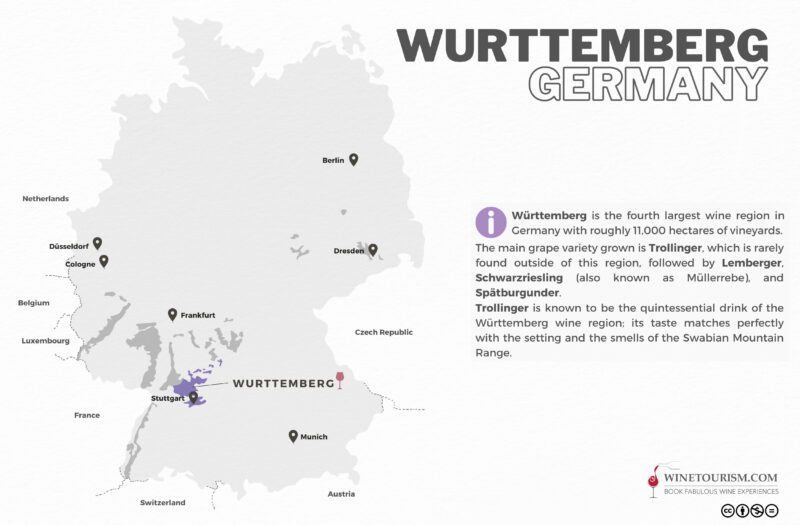
If you are looking for a free Württemberg wine region map, you can download the full-size version below. Württemberg is one of Germany’s most distinctive wine regions, known for its red wine culture, scenic vineyard slopes, and long-standing winemaking tradition along the Neckar River.
Download the full-size Württemberg wine region map here
Key takeaways
- Württemberg is one of Germany’s best-known wine regions for red wine production.
- The region is closely associated with grapes like Trollinger and Lemberger.
- Its vineyard landscapes along the Neckar River help define its identity.
- Württemberg combines historic wine culture with a strong regional character.
- You can download a free high-resolution wine map of Württemberg from the link above.
Table of contents
- Download the map
- Why Württemberg stands out
- What the region is known for
- Vineyards, climate, and landscape
- Wine identity and tradition
- Why this map is useful
Download the map
This page gives you access to a free, detailed, high-resolution wine map of the Württemberg wine region in Germany. It is useful if you want a clearer overview of the area, are comparing German wine regions, or are planning a wine-focused trip through southern Germany.
Click here to open and download the full-size map
Why Württemberg stands out
Württemberg stands out because it gives Germany a different wine identity than many readers expect. When people think of German wine, they often think first of white wines and regions like Mosel or Rheingau. Württemberg shifts that picture. It is especially known for red wine, which makes it one of the more distinctive wine areas in the country.
That matters because it gives Württemberg a strong regional profile. It is not trying to be a version of another German region. It has its own style, its own historical rhythm, and its own local wine culture. For readers exploring wine maps, that makes it more memorable straight away.
The region also has a visual appeal that suits map content well. River landscapes, vineyard slopes, and traditional wine villages all help give Württemberg a clear sense of place. A good map is useful here because the region is not just about grapes. It is also about geography, setting, and how that setting shapes the wines.
What the region is known for
Württemberg is widely associated with red wine production, especially varieties such as Trollinger and Lemberger. That alone makes it notable inside Germany, where many famous wine areas are more strongly linked to white grapes.
Trollinger is often seen as one of the region’s best-known local grapes, while Lemberger adds another layer of identity. Together, they help define the style and reputation of Württemberg. Even readers who are not deeply familiar with German wine can use those names as a quick entry point into what makes the region different.
Beyond grape varieties, Württemberg is also known for its historic winemaking heritage. This is not a region built around a recent wine boom. It has a long tradition, and that shows in the way the region is described, visited, and understood. The wines are part of a broader cultural landscape, not just an isolated product.
Vineyards, climate, and landscape
Württemberg lies in southwestern Germany and is strongly shaped by the Neckar River. River-based vineyard regions often have a very clear visual identity, and that is true here. The vineyards, slopes, and surrounding scenery all contribute to the region’s appeal.
The climate is often described as mild, and that matters because it helps explain why red varieties can do well here. In cooler countries, red wine regions need the right pockets of warmth and exposure, and Württemberg benefits from conditions that support ripening while still fitting within a broader German wine context.
This landscape also gives the region a more approachable and lived-in feel. Some wine regions feel grand and famous. Württemberg feels rooted, practical, and closely tied to local tradition. That is part of its charm. It offers a different kind of wine appeal, built around regional familiarity and long-term continuity rather than pure prestige.
The vineyard scenery is also part of why this map has practical value. Seeing the region visually helps make sense of how the wine culture connects to the land. River valleys and vineyard corridors are easier to understand on a map than through text alone.
Wine identity and tradition
Württemberg’s identity is closely tied to its winemaking heritage. It is one of those regions where wine is not just an export or a tourist theme. It is built into the local story. That gives the region a depth that readers often appreciate once they look past the biggest international names.
Its reputation for red wines helps reinforce that identity. While Germany is often introduced through white wine, Württemberg gives readers a reason to broaden that picture. It reminds people that German wine culture has more variety than first impressions suggest.
That makes the region especially useful in broader editorial coverage too. If you are building content around German wine regions, travel, wine maps, or grape styles, Württemberg adds balance. It helps round out the national picture and gives readers a more complete understanding of what Germany offers as a wine country.
It also has strong internal linking value for Corked News because it fits naturally into Germany wine travel content, wine maps, and broader wine region coverage. Regions like Württemberg help connect educational wine geography with more practical travel and discovery-focused pages.
Why this map is useful
A Württemberg wine region map is useful because the region deserves more attention than it often gets in general wine coverage. A strong map helps readers place it quickly, understand its context inside Germany, and connect the region’s identity to its geography.
It is especially helpful for readers researching German wine, planning wine travel, or comparing regions across Europe. Because Württemberg is not always the first name people know, a visual reference makes a big difference. It shortens the learning curve and gives readers a fast, practical overview.
The map is also useful because Württemberg’s appeal is closely tied to place. River setting, vineyard landscapes, and regional identity all matter here. A downloadable map gives readers something concrete, whether they are using it for travel inspiration, wine education, or general browsing.
For a site like Corked News, map pages like this work best when they do more than repeat a download link. They should also explain why the region matters. Württemberg matters because it adds a red-wine-focused perspective to German wine, brings strong historical character, and offers a clear sense of local identity.
See also our Wine Travel Ideas for Germany.
Wine map kindly provided by WineTourism.com.
Read next
Last updated: