
Alsace is one of France’s most distinctive wine regions, and one of the easiest to recognize once you understand its style. It sits in northeastern France, close to Germany, and is best known for aromatic, mostly white wines that combine freshness, perfume, and a strong sense of place. Riesling, Gewürztraminer, Pinot Gris, Muscat, and increasingly Pinot Noir all play important roles here, but what really makes Alsace special is the way grape variety, geology, and climate show so clearly in the glass.
That clarity is part of the region’s appeal. Alsace is one of the few classic European regions where varietal labeling has long been central, which makes it more approachable than many traditional appellation systems. You can often look at the label, see Riesling or Gewürztraminer, and already have a decent idea of the wine’s personality. But that does not mean Alsace is simple. Far from it. Behind the clear labels is a region full of geological diversity, Grand Cru sites, late-harvest specialties, sparkling wine, and a food culture that makes the wines even more compelling.
So if you want to understand Alsace properly, it helps to think of it as both a beginner-friendly region and a serious wine region. It can introduce you to aromatic whites in a very direct way, but it can also take you deep into terroir, sweetness levels, vineyard hierarchy, and age-worthy wines that are among the finest in France.
Key takeaways
- Alsace is one of France’s leading white wine regions, especially for Riesling, Gewürztraminer, Pinot Gris, and Muscat.
- The dry climate, Vosges rain shadow, and highly varied soils help create wines with strong identity and real site expression.
- Beyond standard Alsace AOC wines, the region is also known for Grand Cru bottlings, Crémant d’Alsace, Vendange Tardive, and Sélection de Grains Nobles.
Table of contents
- What makes Alsace different
- Terroir and climate in Alsace
- The main grapes of Alsace
- How Alsace wines are labeled and classified
- Grand Cru, Vendange Tardive, and Sélection de Grains Nobles
- Why Alsace is such a strong food-wine region
- Wine tourism and the Alsace Wine Route
- Why Alsace matters more than many drinkers realize
What makes Alsace different
Alsace stands apart from much of France because it is both deeply traditional and unusually transparent. In regions like Burgundy, Bordeaux, or the Rhône, place names often do most of the talking on the label. In Alsace, grape variety often takes center stage. That makes the region more immediately readable, especially for drinkers still learning their way around wine.
But the style is not just about clear labels. Alsace also has a very distinctive visual identity, from its long, slender flute bottles to its mixture of French and German cultural influence. That borderland history matters. It shaped the region’s cuisine, language, grape choices, and wine culture over centuries, which is one reason Alsace feels a little different from the rest of France in the best possible way.
The wines themselves also feel distinct. Even when they are aromatic, they often have a clean line of acidity and a kind of precision that keeps them from becoming overly soft or vague. Good Alsace wines can be floral, spicy, mineral, smoky, broad, dry, or gently off-dry, but they rarely feel anonymous.
Terroir and climate in Alsace
Alsace’s terroir is one of the biggest reasons the region is so respected. The Vosges Mountains protect much of the vineyard area from rain-bearing westerly weather, creating one of the driest wine climates in France. That rain shadow is a major part of the region’s identity. It allows grapes to ripen slowly and relatively cleanly, often preserving acidity while still reaching full flavor maturity.
The climate is broadly continental, with warm summers, cool autumns, and cold winters. That combination supports a long growing season, which can be especially helpful for aromatic varieties that need time to build flavor without losing their freshness too quickly. It also helps explain why Alsace can make both crisp dry wines and rich late-harvest styles with real depth.
Then there is the soil story, which is one of the most fascinating in France. Alsace has an unusually varied geological patchwork, including granite, limestone, sandstone, marl, volcanic material, schist, and more. This is not just romantic terroir talk. Different sites really do behave differently, and the best producers know exactly how their parcels shape the style of the finished wine.
That is why The Exciting Impact of Terroir on Wine is such a relevant internal read here. Alsace is one of the clearest places to see how soil and microclimate influence a wine’s final personality.
The main grapes of Alsace
Alsace is above all a white-wine region, though Pinot Noir has grown in importance and quality in recent years. The classic image of Alsace still rests on aromatic whites, and understanding the region usually means understanding its key grape varieties.
Riesling
Riesling is often considered the king of Alsace. In the best examples, it combines citrus, stone fruit, flowers, mineral tension, and very good aging ability. Alsace Riesling is usually drier and more structured than many casual drinkers expect, especially compared with sweeter stereotypes built around some German examples. It can be steely and severe when young, or broad, smoky, and layered with time.
If you want a deeper grape-specific read, Riesling White Wine Grape: The Noble Aromatic White is an obvious companion piece.
Gewürztraminer
Gewürztraminer is one of the most unmistakable grapes in the wine world. In Alsace it often shows rose petals, lychee, exotic spice, ginger, and a broad, oily texture that can be either deeply seductive or a bit much, depending on style and balance. At its best, it is opulent but not clumsy. It is also one of the region’s great food wines, especially when spice or aromatic intensity is involved.
Pinot Gris
Pinot Gris in Alsace is usually richer and more textured than the lighter Pinot Grigio styles many drinkers first encounter. It can be smoky, spicy, broad, and full-bodied, with a real sense of weight and seriousness. The best versions can be superb with food and can age well too.
For the broader grape background, Pinot Gris / Pinot Grigio / Grauburgunder White Wine Grape fits perfectly here.
Muscat
Alsace Muscat is often misunderstood because people expect soft sweetness. In fact, it can be beautifully dry, fresh, and aromatic, with grapey perfume, blossom notes, and surprising precision. It is often one of the most instantly charming wines in the region.
Pinot Noir
Pinot Noir is Alsace’s main red grape, and it has become more important as quality has improved. Traditionally it was lighter and simpler, but serious producers are now making more ambitious Pinot Noir with real depth, especially as warmer vintages have made ripening more reliable. If you want the grape context, Pinot Noir / Spätburgunder Red Wine Grape is a useful supporting read.
How Alsace wines are labeled and classified
One of the most attractive things about Alsace is that the labeling system is more readable than in many French regions. The broadest appellation is Alsace AOC, which covers the majority of still wines. These are often varietally labeled, which makes them easier for drinkers to navigate.
Then there is Crémant d’Alsace, the region’s sparkling appellation. This category has become extremely important and is one of the best-value sparkling wine styles in France. It is usually made by the traditional method and offers a fresher, more affordable alternative to Champagne in many cases. That makes Sparkling Wine Production Techniques a relevant related article if you want to understand the production side better.
The top still-wine tier is Alsace Grand Cru, which applies to specific vineyard sites rather than the region as a whole. These sites are tightly delimited and intended to represent the highest expression of terroir in the region. Not every producer uses the system in the same way, and not every Grand Cru wine is automatically better than every village-level or standard Alsace wine, but the category matters and helps point drinkers toward site-specific seriousness.
Alsace also uses the traditional flute bottle, which is required for most still wines of the region. It is one of the most recognizable bottle shapes in wine and part of the region’s visual identity.
Grand Cru, Vendange Tardive, and Sélection de Grains Nobles
Grand Cru is where Alsace often becomes especially interesting for serious wine drinkers. There are 51 official Grand Cru vineyards, each with its own geological and climatic character. These sites are meant to produce wines with greater depth, longevity, and site expression, and they often do when the producer is strong.
But Alsace is not only about dry terroir-driven wines. It is also one of France’s great sources of sweet and late-harvest wines. This is where two important terms appear: Vendange Tardive and Sélection de Grains Nobles.
Vendange Tardive means late harvest. These wines come from grapes picked later than usual, with more concentration and sugar ripeness. They can be lush and rich, sometimes with botrytis influence, but the category is broader than just noble rot.
Sélection de Grains Nobles is more specific and more intense. These wines are made from individually selected berries, usually strongly affected by noble rot, and they can be among the most concentrated, luxurious, and age-worthy sweet wines in France.
These categories matter because they show how flexible Alsace can be. The same region can produce dry mineral Riesling, floral Gewürztraminer, rich Pinot Gris, lively Crémant, elegant Pinot Noir, and deeply sweet botrytized wines, all within a relatively compact area.
Why Alsace is such a strong food-wine region
Alsace is one of the most food-friendly wine regions in Europe because its wines tend to combine freshness, aromatic detail, and clear structure. They are not just good on their own. They often become even more convincing at the table.
Classic local pairings help explain why. Riesling can be brilliant with choucroute, fish, shellfish, and dishes that need freshness and acid. Gewürztraminer works beautifully with spicy or aromatic food, including many Asian dishes. Pinot Gris can handle richer plates, creamy sauces, mushrooms, and poultry. Muscat can shine with asparagus and lighter dishes, which is not an easy pairing category for wine. Even Pinot Noir has a place with charcuterie, roast poultry, and lighter meat dishes.
Alsace also works beautifully with cheese, especially Munster and other more aromatic styles. The region’s wines have enough character to stand up to strong flavors without always needing heavy oak or high alcohol.
If you want to explore this side more, Learn How to Pair Food and Wine: In-Depth Guide is the most useful internal next step.
Wine tourism and the Alsace Wine Route
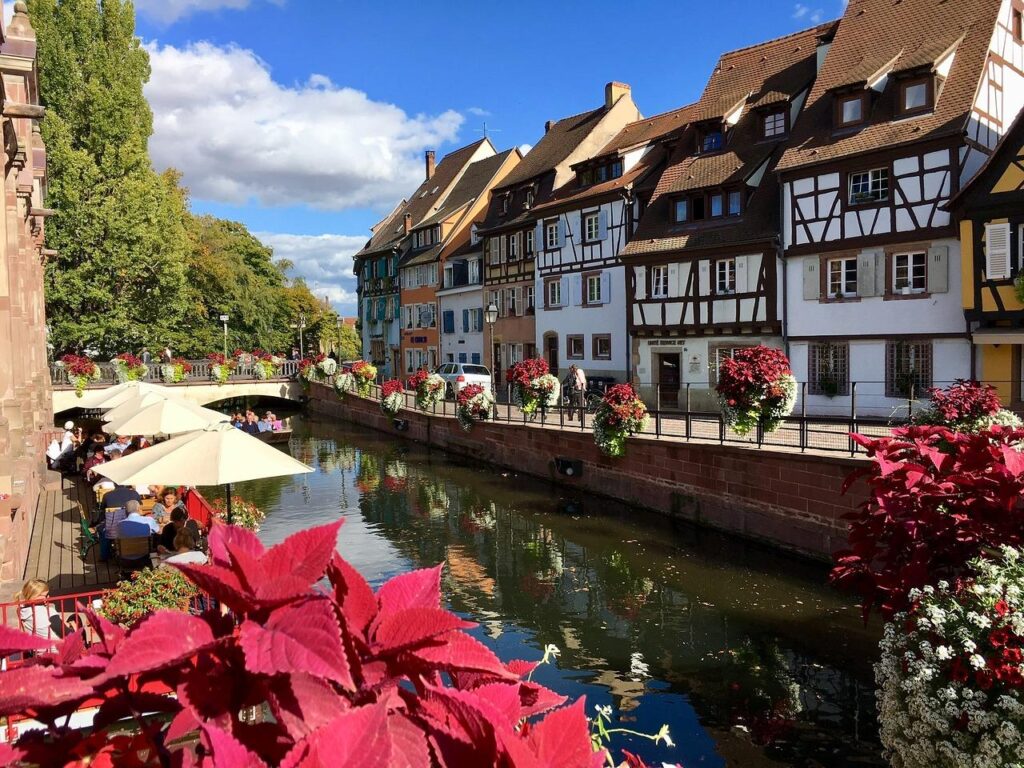
Alsace is one of the most charming wine-travel regions in Europe because the wine culture is not hidden away from daily life. Vineyards, villages, half-timbered houses, cellar doors, and restaurants all sit close together, which makes the region feel very accessible on the ground.
The Route des Vins d’Alsace is the best-known wine road in the region and runs for more than 170 kilometers through some of its most attractive villages and vineyard areas. This is where wine tourism really comes alive. You can move from tasting room to tasting room, stop in places like Ribeauvillé, Riquewihr, Eguisheim, or Colmar, and get a much better feel for how closely wine, food, and regional identity are tied together here.
That is also why Alsace works so well for wine travel. It is visually beautiful, compact, and full of producers who make wines in styles that are easy to compare and learn from. If that angle interests you, Planning a Wine Trip to France is the best direct internal follow-up.
Why Alsace matters more than many drinkers realize
Alsace matters because it offers something that many wine regions struggle to balance: it is both distinctive and approachable. The labels are often clear. The grape varieties are memorable. The styles are expressive. But under that easy surface lies a region with serious geological diversity, strong vineyard identity, and wines that can age and evolve in very impressive ways.
It also matters because it breaks some common wine assumptions. Aromatic does not always mean sweet. White wine does not have to be simple. Pinot Gris can be serious. Riesling can be dry and structured. Gewürztraminer can be more than perfume. Crémant d’Alsace can offer genuine value. Pinot Noir from Alsace is more important now than many people still realize.
In other words, Alsace is not just a pretty region with nice aromatic whites. It is one of the most rewarding places in France to learn from because it teaches you so many useful wine lessons in such a clear way.
If you only know Alsace by reputation, it is worth going deeper. And if you have never really explored the wines, it is one of the easiest classic regions to start with because the labels give you a way in, while the wines themselves keep giving you reasons to stay interested.
Read next
- Riesling White Wine Grape: The Noble Aromatic White
- The Exciting Impact of Terroir on Wine
- Planning a Wine Trip to France
Last updated:


