
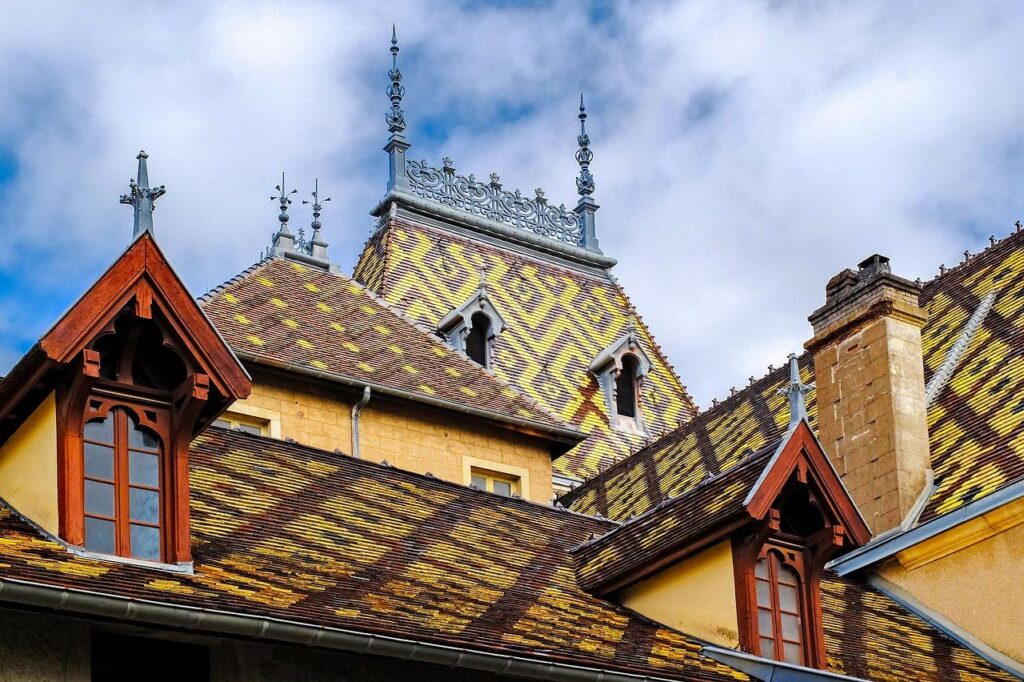
Bourgogne, or Burgundy is one of the most famous wine regions in the world because it does something very few places do quite as clearly: it shows how much site can matter. The region is built around Pinot Noir and Chardonnay, but the real story is not just the grapes. It is the land beneath them. In Burgundy, tiny shifts in slope, soil, drainage, altitude, and exposure can change a wine’s personality in ways that collectors and winemakers have obsessed over for centuries.
That is why Burgundy has such a powerful reputation. On paper, it can look simple. Two main grapes. A cool climate. A famous strip of vineyards in eastern France. But once you look closer, it becomes one of the most detailed and layered wine regions anywhere. A bottle from one village can taste very different from one made only a short distance away. A Premier Cru can feel subtly different from the vineyard beside it. A Grand Cru can become a benchmark for an entire style.
So if you want to understand Burgundy properly, it helps to stop thinking of it as just a luxury wine region. It is also one of the clearest places to learn how terroir, vineyard hierarchy, tradition, and winemaking choices all shape what ends up in the glass.
Key takeaways
- Burgundy is built mainly around Pinot Noir and Chardonnay, but its real identity comes from terroir and site expression.
- The region’s famous hierarchy runs from regional wines to village wines, Premier Cru, and Grand Cru.
- Chablis, Côte d’Or, Côte Chalonnaise, and Mâconnais all belong to Burgundy, but they produce very different wine styles.
Table of contents
- What makes Burgundy different
- Geography, climate, and why the Côte d’Or matters
- The Burgundy hierarchy: regional, village, Premier Cru, and Grand Cru
- The main grapes of Burgundy
- The key subregions of Burgundy
- Winemaking style and Burgundy’s hands-off reputation
- Food pairing and why Burgundy is such a strong table region
- Wine travel in Burgundy
- Why Burgundy matters so much in wine
What makes Burgundy different
Burgundy matters because it is one of the world’s great terroir regions. Plenty of places make excellent Pinot Noir and Chardonnay, but few have built such a deep cultural identity around tiny vineyard differences. In Burgundy, site is everything. Producers talk about climats, lieux-dits, slopes, and exposures with an intensity that can seem almost obsessive until you taste enough wines from the region to understand why.
This is also why Burgundy can be confusing at first. In some regions, the producer or grape tells you most of what you need to know. In Burgundy, the vineyard name can matter just as much, sometimes more. That is part of the fascination, but it is also why the region can feel intimidating to beginners.
The easiest way into Burgundy is to keep three things in mind. First, Pinot Noir and Chardonnay dominate. Second, the region is split into distinct subregions with different personalities. Third, Burgundy runs on hierarchy, where place and classification shape price, prestige, and expectations. Once those three ideas are in place, the rest becomes much easier to follow.
This is also why Burgundy keeps coming up in bigger wine conversations. If you have already read Bordeaux vs Burgundy: How Burgundy Surpassed Bordeaux in Popularity, you will already know that Burgundy is no longer just a classic region. It has become one of the defining reference points for fine wine globally.
Geography, climate, and why the Côte d’Or matters
The heart of Burgundy lies along the Côte d’Or, the famous limestone escarpment that includes the Côte de Nuits in the north and the Côte de Beaune in the south. This is where many of the region’s most revered vineyards sit, and it is the part of Burgundy that most collectors picture first when they hear the name.
The climate here is broadly continental, with cold winters, warm summers, and a real risk of spring frost, hail, and uneven growing seasons. Burgundy is not an easy region. That is part of what makes great vintages so exciting and difficult years so instructive. The climate is cool enough to preserve freshness and detail, but not so cool that ripening is impossible in normal years. That tension is exactly what Pinot Noir and Chardonnay need to show nuance rather than simple fruit weight.
Then there is the soil. Burgundy’s famous limestone and marl base is one of the main reasons the region is so associated with precision and mineral tension. But it would be misleading to treat the region as geologically uniform. Soil changes throughout Burgundy, sometimes over very short distances, and those changes are part of why one vineyard may behave very differently from the next.
If you want a deeper explanation of why these factors matter so much, The Exciting Impact of Terroir on Wine is one of the most relevant companion reads on Corked News.
The Burgundy hierarchy: regional, village, Premier Cru, and Grand Cru
Burgundy’s classification system is one of the most important parts of understanding the region. It is also one of the reasons Burgundy wines can vary so much in both style and price.
Regional appellations
At the broadest level are the regional wines, labeled Bourgogne or a wider regional designation such as Bourgogne Chardonnay or Bourgogne Pinot Noir. These wines come from a larger area and tend to offer the most accessible entry point into the region. They can be simple or surprisingly good, depending on the producer, but they usually give you the broad regional voice rather than a sharply defined site expression.
Village wines
Next come village wines, which carry the name of a specific commune such as Gevrey-Chambertin, Meursault, Pommard, or Puligny-Montrachet. These wines already tell you a lot more about style and place. Even before Premier Cru or Grand Cru enters the picture, a village name in Burgundy often signals a recognizable character.
Premier Cru
Premier Cru sites sit above the village level. These are specific vineyards considered especially strong within a commune, and they are usually labeled with both the village and the vineyard name. A Premier Cru wine should show more definition, depth, or consistency than the broader village level, though producer quality always matters.
Grand Cru
At the top sit the Grand Crus, Burgundy’s most prestigious sites. These are the vineyards that have shaped the region’s myth and market value for decades, from names like Romanée-Conti and Chambertin to Montrachet and Corton-Charlemagne. Grand Cru wines are supposed to represent the highest level of site expression and aging potential, though again, site prestige never fully replaces good farming and good winemaking.
This hierarchy is useful because it gives structure to the region. But it is also worth remembering that Burgundy is full of exceptions. A superb village wine from a brilliant producer can easily be more exciting than a disappointing higher-tier bottle from a weaker one. The hierarchy helps, but it is not the whole story.
The main grapes of Burgundy
Burgundy is famous for doing more with fewer grapes than almost anywhere else. Pinot Noir and Chardonnay dominate the image of the region, and for good reason.
Pinot Noir
Pinot Noir is Burgundy’s great red grape. In the right hands and the right sites, it can produce wines that are delicate yet complex, perfumed yet structured, and capable of evolving beautifully with age. Burgundy Pinot Noir is often described in terms of red berries, flowers, earth, spice, and forest notes, but the best examples go beyond flavor notes and become more about shape, texture, and subtle movement in the glass.
For readers who want the grape-specific side of that story, Pinot Noir / Spätburgunder Red Wine Grape is the strongest related internal read.
Chardonnay
Chardonnay is the region’s great white grape, but Burgundy shows just how broad Chardonnay can be. Chablis can be sharp, stony, and very mineral. Côte de Beaune whites can be broader, richer, and more layered, often with subtle oak influence. Mâconnais Chardonnay can be softer, riper, and more immediately generous. Burgundy makes it very clear that Chardonnay is not one style, but a grape that can translate place exceptionally well.
That is why Chardonnay White Wine Grape: From Chablis to California fits so naturally alongside this article.
Other grapes
There are other grapes in Burgundy too, even if they sit more in the background. Aligoté still matters, especially for fresh, lighter whites and regional tradition. Gamay appears more strongly further south in Beaujolais, though that opens up a broader Burgundy discussion. Still, if someone says “Burgundy” in a serious wine context, Pinot Noir and Chardonnay are almost always at the center of that conversation.
The key subregions of Burgundy
Burgundy is easier to understand when broken into its main subregions, because each one has its own logic and style.
Chablis
Chablis sits to the northwest of the Côte d’Or and is often the first place people discover serious Burgundy white wine. It is cooler, often more linear in style, and strongly associated with mineral, citrus, and oyster-shell descriptions. Chardonnay is the grape here, but the expression is very different from the richer whites of the Côte de Beaune.
Côte de Nuits
This is red Burgundy country in the minds of many collectors. Villages like Gevrey-Chambertin, Chambolle-Musigny, Vosne-Romanée, and Nuits-Saint-Georges are home to some of the most sought-after Pinot Noir in the world. The wines can range from powerful and structured to hauntingly fine and perfumed, depending on site and producer.
Côte de Beaune
The Côte de Beaune makes both red and white wine, but it is especially revered for Chardonnay. Villages like Meursault, Puligny-Montrachet, and Chassagne-Montrachet are among the great names of white Burgundy. Red wines from Beaune, Volnay, and Pommard also play an important role, usually in a slightly different register from the Côte de Nuits.
Côte Chalonnaise
Further south, the Côte Chalonnaise often offers some of Burgundy’s better value. Appellations like Mercurey, Givry, Rully, and Montagny may not carry the same prestige as the Côte d’Or, but they can deliver very satisfying wines with clear Burgundian character.
Mâconnais
The Mâconnais is warmer and often more Chardonnay-focused, with wines that can be ripe, accessible, and excellent value. Pouilly-Fuissé is the best-known name here, but the broader zone matters too. For many drinkers, this is one of the easiest places to enter Burgundy without immediately hitting the region’s most punishing prices.
Winemaking style and Burgundy’s hands-off reputation
Burgundy’s image is closely tied to small domaines, family ownership, low-intervention instincts, and a strong belief that the vineyard should do most of the talking. That image is partly true and partly idealized, but it still captures something real about the region.
Many Burgundian producers work on a relatively small scale compared with more industrial wine regions. Vineyard work is often labor-intensive, yields are closely watched, and harvest decisions matter enormously in a region where weather can swing quality quickly. In the cellar, the general aim is often to shape the wine without burying its site character.
That can mean different things depending on the producer. Some use more whole cluster fermentation, some less. Some favor new oak more generously, some use it sparingly. Some work with native yeasts and minimal sulfur, others are more controlled. Burgundy is not one single winemaking religion. But the shared instinct is usually to let the vineyard identity remain visible.
That makes Burgundy an excellent region to pair with How Wine Is Made: A Clear Guide to Vineyard, Fermentation, Aging, and Bottling, because the region often shows very clearly how small production choices can either support or smother site expression.
Food pairing and why Burgundy is such a strong table region
Burgundy is not just a collector’s region. It is a deeply gastronomic one. The wines are often at their best with food because they tend to bring acidity, structure, and nuance rather than sheer force.
Red Burgundy, especially Pinot Noir, works beautifully with roast poultry, duck, mushroom dishes, veal, and many classic French preparations. It has enough delicacy for subtle dishes, but enough aromatic depth to make the meal feel more complete. White Burgundy, especially Chardonnay, is excellent with poultry in cream sauces, lobster, richer fish dishes, and certain cheeses. Chablis is one of the great shellfish wines anywhere.
The local cuisine only strengthens the point. Coq au Vin, Boeuf Bourguignon, Époisses, and other Burgundian staples are not random food references. They show how naturally the region’s wines fit the region’s table. If you want to explore that side more directly, Food and Wine Pairing Explained: The Rules That Actually Help is the right next read.
Wine travel in Burgundy
Burgundy is one of the best wine-travel regions in France because it combines world-famous vineyards with villages that still feel human in scale. This is not just a region of labels. It is a region of roads, slopes, cellar doors, church towers, old stone buildings, and lunch tables that make wine feel connected to place in a very direct way.
The Route des Grands Crus is the best-known wine route, running through the Côte de Nuits and Côte de Beaune and linking many of the names that wine lovers recognize immediately. Villages like Gevrey-Chambertin, Vosne-Romanée, Beaune, Puligny-Montrachet, and Meursault all reward slow travel rather than rushed box-ticking.
The Hospices de Beaune also remains an important cultural symbol in the region, especially because its annual wine auction has long been one of Burgundy’s most visible traditions. But beyond the famous institutions, Burgundy is a place where simply driving through the vines and stopping in a few villages can teach you a lot about how seriously land and classification are taken here.
If that side appeals to you, Planning a Wine Trip to France is the most natural internal companion article.
Why Burgundy matters so much in wine
Burgundy matters because it has become one of the clearest examples of how fine wine can be built around place rather than power. It does not usually impress through scale or sheer impact. It impresses through nuance, texture, fragrance, and precision. It rewards attention.
That also makes it one of the most copied and most misunderstood regions in wine. Producers around the world plant Pinot Noir and Chardonnay hoping to make something “Burgundian,” but Burgundy itself is not just a grape recipe. It is a combination of climate, limestone, old vineyard culture, classification, and a long habit of treating small site differences as vitally important.
For some drinkers, Burgundy is the summit of wine. For others, it is confusing, expensive, and a little over-romanticized. Both reactions are understandable. But even if you never become a collector of top Burgundy, the region is still worth understanding because it teaches so much about wine. It teaches how grapes behave in cool climates, how classification works, how terroir can matter, and how subtle wines can sometimes say more than obvious ones.
That is why Burgundy keeps its place near the center of serious wine conversation. Not because it is the only great region, but because it remains one of the most revealing.
Read next
- Pinot Noir / Spätburgunder Red Wine Grape
- Chardonnay White Wine Grape: From Chablis to California
- Planning a Wine Trip to France
Last updated:


