
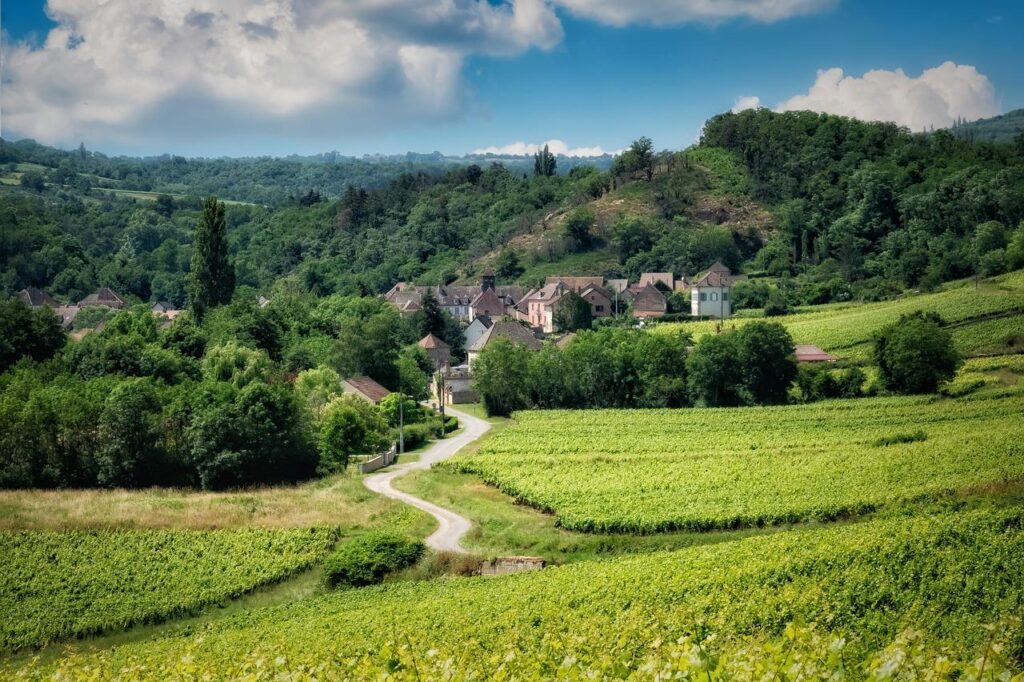
The Mâconnais is one of the smartest regions to know in Burgundy because it offers something many wine lovers want more of: serious Chardonnay, clear regional character, and far better value than the most famous northern villages. It sits in southern Burgundy and is often treated as a stepping stone into white Burgundy, but that undersells it. At its best, the Mâconnais is not just a budget alternative. It is a distinctive region with its own landscape, style, and identity.
This is Chardonnay country first and foremost. The wines can be fresh, citrusy, and mineral, or broader and riper with more texture and orchard fruit. Some are simple and made for easy drinking, but the best examples from places like Pouilly-Fuissé, Saint-Véran, Viré-Clessé, and Pouilly-Vinzelles can be layered, expressive, and genuinely impressive. If you only think of the Mâconnais as “entry-level Burgundy,” you are missing a large part of the picture.
That is what makes the region so useful. It helps explain Burgundy in a more approachable way. You still get the link between site, grape, and style, but usually without the same level of intimidation or price escalation that surrounds Côte d’Or. For many drinkers, this is where white Burgundy starts to make practical sense.
Key takeaways
- The Mâconnais is southern Burgundy’s Chardonnay stronghold and one of the best places to find value in white Burgundy.
- Pouilly-Fuissé, Saint-Véran, Viré-Clessé, Pouilly-Vinzelles, Pouilly-Loché, Mâcon, and Mâcon-Villages are the key names to know.
- The region’s warmer climate and varied limestone-rich soils help create whites that are often generous, expressive, and highly food-friendly.
Table of contents
- Why the Mâconnais matters
- Terroir and climate in the Mâconnais
- The main grapes of the Mâconnais
- The key appellations and villages to know
- What Mâconnais wines taste like
- Winemaking style and regional approach
- Food pairing and why these wines work so well at the table
- Wine travel in the Mâconnais
- Why the Mâconnais deserves more attention
Why the Mâconnais matters
The Mâconnais matters because it gives Burgundy a different voice. Compared with the stricter, more status-heavy image of the Côte d’Or, the Mâconnais often feels warmer, more open, and more immediately generous. The wines can still be precise and mineral, but they usually speak a little more directly. That makes the region easier to approach, especially for drinkers trying to understand Chardonnay in a Burgundian context without diving straight into Meursault or Puligny-Montrachet prices.
It also matters because it is one of the clearest places to see how Burgundy shifts as you move south. The landscape changes, the climate softens slightly, and the wines often pick up a little more ripeness and breadth. That does not mean they lose finesse. It means the balance tilts in a slightly different direction. In the best bottles, that can be extremely appealing.
For many wine drinkers, the Mâconnais is where white Burgundy becomes something you can actually buy, drink, compare, and learn from regularly. That practical side is part of the region’s strength, not a downgrade.
If you want the broader regional backdrop first, Burgundy Wine Region Guide: Pinot Noir, Chardonnay, Premier Cru, and Grand Cru Explained is the most useful companion read.
Terroir and climate in the Mâconnais
The Mâconnais sits in southern Burgundy, below the Côte Chalonnaise, and its geography is a big part of why the wines feel distinct. This is a region of rolling hills, limestone outcrops, clay-limestone slopes, and picturesque vineyard villages rather than one single grand escarpment. The landscape has more softness and breadth than the tighter prestige corridor of the Côte d’Or, but site still matters a great deal.
Limestone remains central to the region’s identity, especially in the best white wine zones, because it helps support freshness, drainage, and the kind of mineral tension that good Chardonnay can express so well. Clay-rich sections can add body and roundness, while local geological differences help explain why one village can produce a more linear, lifted wine and another something richer and more textured.
The climate is broadly continental, but the southern position gives the Mâconnais a slightly warmer profile than the more northern parts of Burgundy. That extra warmth helps Chardonnay ripen more easily and can lead to wines with a little more fruit generosity and early charm. Even so, the region is not free from vintage variation. Frost, rain, and heat swings still matter, and the best growers still rely on careful vineyard work and good harvest decisions.
This is one of the reasons The Exciting Impact of Terroir on Wine fits so naturally beside this article. The Mâconnais is a good reminder that even in a region known mainly for one grape, site still shapes style in meaningful ways.
The main grapes of the Mâconnais
Chardonnay dominates the Mâconnais so thoroughly that it is the first thing any reader should understand. If you want to know why the region matters, start there. The Mâconnais is one of the most important Chardonnay zones in France, and it produces a broad range of expressions, from simple and refreshing to layered and cellar-worthy.
At its best, Mâconnais Chardonnay can show citrus, apple, pear, white flowers, stone fruit, hazelnut, and mineral lift. Some wines stay tight and fresh. Others gain creamier texture and more rounded fruit, especially with oak or lees influence. This range is part of the region’s appeal. Chardonnay here is not just one style.
There is some Aligoté and some red and rosé production in the wider area, and Gamay and Pinot Noir do appear in parts of southern Burgundy more broadly. But if you are trying to understand the Mâconnais clearly, treat it as a white Burgundy region first. That is where its reputation sits and where its strongest identity lies.
For the grape itself, Chardonnay White Wine Grape: From Chablis to California is the most relevant internal article to follow from here.
The key appellations and villages to know
The Mâconnais becomes much easier to navigate once you know the key names. Some are broad and useful everyday categories. Others are more prestigious and site-specific.
Pouilly-Fuissé
Pouilly-Fuissé is the most famous name in the region and, for many drinkers, the benchmark for serious Mâconnais Chardonnay. The wines are often fuller, more layered, and more age-worthy than the broad regional styles, with ripe orchard fruit, citrus, mineral tension, and sometimes a subtle nutty or creamy depth depending on producer and élevage. This is often where the region’s ambition shows most clearly.
Saint-Véran
Saint-Véran is one of the most important appellations in the region and often offers some of the best value. The wines are usually fresh, clean, and fruit-driven, with enough structure to feel serious without becoming too heavy. In the right hands, Saint-Véran can be an excellent buy for drinkers who want white Burgundy character without chasing famous luxury names.
Viré-Clessé
Viré-Clessé is another key appellation that deserves more attention. The wines often have a little extra texture and aromatic complexity, sometimes with a slightly broader or more honeyed feel while still keeping Burgundy’s needed freshness. This is one of those names that rewards readers who want to go beyond the most obvious labels.
Pouilly-Vinzelles and Pouilly-Loché
These are smaller appellations and are less widely known internationally, but they can produce excellent Chardonnay with clarity, energy, and real terroir definition. For drinkers who like finding bottles that feel a little more insider than obvious, these names are worth remembering.
Mâcon and Mâcon-Villages
At the broader level, Mâcon and Mâcon-Villages are often the practical entry point into the region. These wines can be simple, clean, and very enjoyable, especially from good producers. They are not all interchangeable, though. Some village-specific bottlings inside the broader Mâcon umbrella can be much more distinctive than people expect.
Together, these appellations show that the Mâconnais is not one flat region. It has hierarchy, village identity, and a useful range of styles from everyday drinking to genuinely impressive white Burgundy.
What Mâconnais wines taste like
The easiest way to describe Mâconnais Chardonnay is that it often feels more open and generous than many northern Burgundy whites. That is not a flaw. It is a big part of why the region is so appealing. You can often get good fruit expression, real freshness, and enough texture to make the wines satisfying without waiting years or spending a fortune.
At the lighter end, the wines can be crisp, citrusy, and floral, with apple, lemon, white peach, and stony notes. In richer examples, especially from stronger sites and more ambitious producers, you can find riper orchard fruit, hazelnut, creamier texture, lees depth, and subtle oak spice. Good Mâconnais still tends to hold onto freshness, though. If it loses that, the wine usually feels less convincing.
This is why the region is so useful at the table. The wines often have enough body to handle real food, but not so much heaviness that they feel clumsy. They sit in a very drinkable middle ground that many people love once they discover it.
Winemaking style and regional approach
The Mâconnais shares Burgundy’s broader respect for vineyard expression and careful cellar work, but the style can be a little less rigid and ceremonial than in the most famous northern zones. Producers still care deeply about site, harvest timing, pressing, fermentation, lees work, and oak choice. The difference is often one of tone rather than seriousness.
Many producers use stainless steel to preserve freshness, while others rely partly or fully on barrel aging to add texture and complexity. Oak is common, but in the better wines it usually supports the fruit rather than dominating it. The strongest bottles tend to balance ripe Chardonnay fruit with enough acidity and restraint to keep the wine feeling alive rather than overworked.
Lees aging also matters in many wines, adding a little roundness and nutty depth. Again, the best producers keep this in proportion. The aim is not to turn every Mâconnais Chardonnay into a grand white Burgundy imitation. It is to let the region speak in its own register.
If you want the production background behind these choices, How White Wine Is Made: From Grapes to Glass is the strongest internal supporting read.
Food pairing and why these wines work so well at the table
Mâconnais wines are excellent food wines because they usually combine freshness, fruit, and enough texture to handle a wide range of dishes. That makes them far more versatile than people sometimes expect from Chardonnay.
Lighter examples work beautifully with seafood, shellfish, salads, simple chicken dishes, and goat cheese. Richer examples from Pouilly-Fuissé or stronger Saint-Véran producers can handle roast chicken, creamy sauces, mushrooms, pork dishes, and richer fish preparations. The wines often have enough acidity to refresh the palate and enough body to avoid feeling thin.
This is one reason the region deserves more attention from people who actually eat with wine rather than just tasting it on its own. Mâconnais Chardonnay is often more practical at the table than more heavily oaked or more austere white styles.
If you want to build that side out properly, Food and Wine Pairing Explained: The Rules That Actually Help and The Ultimate Guide to Wine Serving Temperatures are the most useful companion articles.
Wine travel in the Mâconnais
The Mâconnais is a very attractive region for wine travel because it combines strong wines, scenic vineyards, and a slightly more relaxed atmosphere than some of Burgundy’s better-known prestige areas. The rolling hills, old villages, rock formations, local restaurants, and vineyard routes make it easy to turn the region into a genuinely enjoyable wine trip rather than just a tasting checklist.
Pouilly-Fuissé and Saint-Véran are obvious names to explore, but the pleasure of the Mâconnais often comes from moving around slowly and noticing how each village feels a little different. It is also a region where food and wine tourism fit together naturally. Local cuisine, cheeses, countryside drives, and cellar visits all make sense here.
If you want to link this into a broader itinerary, Planning a Wine Trip to France is the right next step.
Why the Mâconnais deserves more attention
The Mâconnais deserves more attention because it gives wine drinkers something increasingly rare: authenticity, strong regional identity, and real value at the same time. It may not carry the same aura as the most expensive villages of Burgundy, but that is part of its strength. The wines often feel more accessible in every sense, financially, stylistically, and emotionally.
That does not mean the region lacks ambition. The best wines here are serious, site-driven, and capable of far more complexity than many people expect. But even the more modest bottles often deliver genuine pleasure and a clear sense of place. That combination is hard to dismiss.
So if you want to understand Chardonnay better, or Burgundy more broadly, the Mâconnais is one of the most rewarding places to look. It gives you a lot of what makes Burgundy compelling, but in a way that is easier to explore and easier to drink. That is not a consolation prize. It is a very good reason to pay attention.
Read next
- Chardonnay White Wine Grape: From Chablis to California
- Côte Chalonnaise Wine Region Guide: Mercurey, Rully, Givry, Montagny, and Bouzeron
- Planning a Wine Trip to France
Last updated:


