The history of winemaking is really the history of how people learned to preserve fruit, shape agriculture, build trade, and turn a local farming practice into one of the world’s most enduring cultural traditions. Wine did not become important simply because it tasted good. It mattered because it could travel, age, gather status, fit into religion, sit at the table, and reflect the land it came from in a way very few products can.
That is why the story of wine stretches far beyond vineyards and cellars. It runs through ancient rituals, imperial trade routes, monastic estates, scientific breakthroughs, agricultural disasters, and modern debates about sustainability. Every era left its mark on how wine is grown, made, stored, and understood.
So if you want the short version, the history of winemaking starts in the ancient world, expands through Mediterranean civilizations, is preserved and refined in medieval Europe, is reshaped by commerce and science in the modern era, and today continues to evolve through technology, climate pressure, and changing consumer taste. The longer version is much more interesting, and that is what this guide is about.
Key takeaways
- Winemaking began thousands of years ago in the ancient world and spread through trade, conquest, religion, and migration.
- Greek, Roman, and medieval monastic traditions were central to preserving and improving viticulture across Europe.
- Modern wine was shaped by science, global expansion, vineyard crises like phylloxera, and more recent advances in technology and sustainability.
Table of contents
- Ancient origins of winemaking
- Wine in Mesopotamia and Ancient Egypt
- How Greece and Rome shaped wine culture
- The Middle Ages and the role of monks
- The early modern wine trade and rising prestige regions
- Phylloxera, science, and the remaking of vineyards
- The New World wine boom
- Modern winemaking and technology
- Sustainability, authenticity, and the future of wine
- Why the history of winemaking still matters
Ancient origins of winemaking
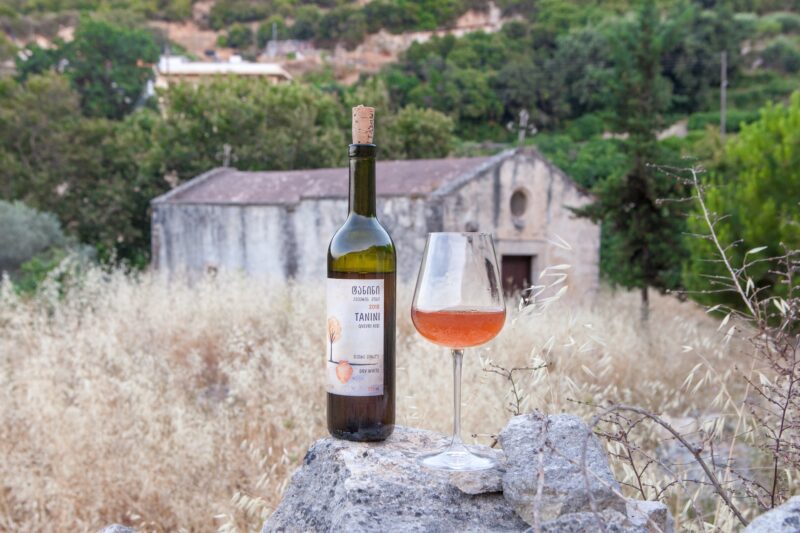
The earliest chapter in the history of winemaking almost certainly begins well before anyone thought of “wine regions” in the modern sense. Archaeological evidence points to very early grape fermentation in parts of the South Caucasus and surrounding areas thousands of years before the rise of the classical Mediterranean world. At some point, people stopped merely gathering wild grapes and started managing vines, fermenting juice intentionally, and preserving the result.
That step changed everything. Fermentation turned a fragile agricultural product into something more durable, more valuable, and more socially meaningful. Wine could be consumed fresh, but it could also be transported, stored, and used in ritual or trade. Once people understood that, viticulture stopped being an accident and became a craft.
These earliest wines would not have resembled today’s polished bottlings. They were likely unstable, rustic, and highly variable. But the principle was there: grapes could become wine, and wine could become part of culture. That insight laid the foundation for every later development, from amphora storage to barrel aging to stainless steel fermentation.
Even now, when you look at modern discussions of basic wine production steps, you are still seeing a much more advanced version of the same core process humans discovered millennia ago: harvest fruit, release juice, ferment sugars, and preserve what remains.
Wine in Mesopotamia and Ancient Egypt
Mesopotamia and Ancient Egypt helped transform early wine from a local fermented drink into something with symbolic, economic, and agricultural importance. In Mesopotamia, where organized agriculture and early urban civilization were already taking shape, vines were cultivated alongside other crops and wine became part of elite and religious life. It was not necessarily an everyday drink for everyone, but it had clear status.
Ancient Egypt took that symbolism even further. Tomb paintings, inscriptions, and burial goods show that wine was linked not just to pleasure and ceremony, but also to the afterlife. Wine jars were placed in tombs. Vineyards were carefully managed. The production and storage of wine became organized enough that people recorded origin and quality in surprisingly recognizable ways.
This is one of the first moments when wine starts to look not just agricultural, but cultural. It becomes tied to class, ritual, and identity. That pattern never really disappears. Even now, wine still occupies a space between food, agriculture, and symbolism in a way very few drinks do.
What is striking is how early people understood that vineyard location and handling mattered. They did not use modern language like terroir, but they clearly knew some wines were better, some vineyards more valued, and some sources more prestigious. In that sense, the roots of regional wine reputation go back much further than many people assume.
How Greece and Rome shaped wine culture
If the ancient Near East helped establish wine, Greece and Rome helped spread and define it. The Greeks turned wine into a central part of social, philosophical, and ceremonial life. It was tied to symposium culture, hospitality, mythology, and trade. Dionysus, the god of wine, was not a minor figure. Wine sat near the center of how the Greeks imagined pleasure, civilization, and ritual excess.
Greek colonies and trade networks helped move vine-growing knowledge across the Mediterranean. As the Greeks settled and traded, they carried grapes, techniques, and wine habits with them. They also wrote about wine, which matters more than it may sound. Once a culture starts recording agricultural practice, serving customs, and regional differences, a craft becomes more transferable and more likely to develop.
The Romans then scaled all of this up dramatically. They were not simply enthusiastic drinkers. They were system builders. Roman expansion helped push viticulture across large parts of Europe, especially into areas that would later become some of the continent’s most important wine zones. Roads, trade systems, agricultural estates, and administrative order made that possible.
Roman writers documented vineyard techniques, grape handling, storage vessels, pruning methods, and site selection. That written tradition, even when incomplete or uneven, gave later generations something to inherit. The Romans also grasped that climate, slope, and soil affected wine quality, even if their understanding was less scientific than what came later.
By the time the Roman world declined, wine had become embedded across much of Europe as more than just a drink. It was a crop, a trade good, a marker of civilization, and a part of daily and religious life. Without Greece and Rome, European wine history would look completely different.
The Middle Ages and the role of monks
When people talk about the Middle Ages, they often imagine decline and disorder. In wine history, that is only partly true. Political fragmentation did create disruption, but monasteries became one of the great stabilizing forces in European viticulture. Monks preserved knowledge, cultivated vineyards, improved agricultural practice, and treated wine as both sacrament and serious product.
This was not a minor contribution. In many regions, monastic communities kept wine culture alive through difficult centuries and helped refine it. They had land, literacy, discipline, and long time horizons. That combination is ideal for vineyard observation. Over time, monks learned which slopes performed best, which sites ripened more reliably, and which wines deserved special attention.
That legacy is especially important in places like Burgundy, where careful observation of vineyard differences eventually helped shape the region’s obsession with site. The medieval church did not invent terroir, but it helped preserve the habits of attention that later made terroir central to fine wine.
Monastic wine was not only for the altar. It was also sold, traded, and used to support estates and communities. So again, wine sits at the intersection of religion, economics, and agriculture. This is one reason the history of winemaking cannot be reduced to cellar technique alone. It is equally a story of land ownership, institutions, and the people who had the patience to observe vineyards over generations.
If you want to understand how vineyard site still shapes wine today, our guide to how terroir impacts wine grapes picks up where this medieval story eventually leads.
The early modern wine trade and rising prestige regions
As Europe moved into the early modern period, wine increasingly became a commercial product shaped by trade routes, packaging, and market reputation. This is when certain regions began to pull ahead in international status, not just because they made good wine, but because they were well placed to sell it.
Bordeaux is one of the clearest examples. Its access to maritime trade helped make it a major export region, especially for England and northern Europe. Over time, commercial success reinforced vineyard hierarchy, estate reputation, and the sense that some wines deserved much greater attention than others. This process would eventually feed into formal classification and prestige pricing.
Elsewhere, improvements in glass production and the use of cork helped transform storage and aging. Bottles became more reliable vessels. Wine could be kept longer and moved more securely. This made quality preservation and aging potential more commercially meaningful. Wine was not just something to be drunk young near the vineyard. Increasingly, it could be shipped and cellared with intent.
Champagne offers another major turning point. Sparkling wine as we know it did not emerge overnight, but the eventual refinement of bottle fermentation, stronger bottles, cork closures, and blending techniques changed wine history permanently. The region did not just invent a style. It created an entirely new idea of luxury wine.
The rise of prestige regions also changed how drinkers thought about wine. Origin began to matter more in the marketplace. Certain places built identities that lasted centuries. And once that happened, winemaking was no longer only about what happened in the cellar. It was also about branding, geography, reputation, and consistency.
Phylloxera, science, and the remaking of vineyards
The nineteenth century brought both scientific progress and one of the greatest crises in wine history: phylloxera. This tiny vine pest devastated European vineyards after arriving from North America and fundamentally reshaped the wine world. Entire regions were destroyed. Traditional vineyards vanished. Economies were hit hard. And winemakers had to confront the uncomfortable fact that centuries of accumulated vine culture could be wiped out by something they barely understood at first.
The eventual solution, grafting European vine material onto American rootstocks resistant to the pest, was both practical and transformative. It saved European viticulture, but it also changed it permanently. Much of the vineyard world had to be replanted. Choices about site, variety, and vine material were reconsidered. In many places, the modern vineyard is in some sense a post-phylloxera reconstruction.
At the same time, science began to play a much bigger role in winemaking. Better understanding of microbiology, hygiene, fermentation, and spoilage helped turn winemaking from a partly mysterious craft into a more controlled process. This did not remove artistry, but it gave winemakers new tools for reliability and precision.
That scientific turn matters enormously to modern wine. It is why we can talk sensibly about yeast strains, temperature control, sulfur management, and microbial stability. It is also why debates about intervention exist at all. You cannot choose to intervene less unless you first understand what intervention does.
The nineteenth century also saw classification and prestige become more formal. Bordeaux’s 1855 classification is the obvious example. It may no longer be perfect as a reflection of actual quality, but it shows how strongly reputation, trade, and hierarchy had become embedded in wine by that point.
The New World wine boom
For a long time, European wine culture set the terms of the conversation. But in the twentieth century, New World regions began to shift the balance. The United States, Australia, Chile, Argentina, South Africa, and later New Zealand all helped broaden the definition of serious wine.
This mattered for several reasons. First, New World producers often embraced science and technology more openly, which allowed for cleaner, more consistent wines in regions still defining their identities. Second, they challenged the assumption that prestige had to come from Europe. Third, they introduced many drinkers to grape-led labeling and a more accessible style of wine communication.
New World wine did not replace Old World wine. It complicated it. Suddenly the global market was more competitive, more experimental, and more diverse. Consumers could compare Cabernet Sauvignon from Napa with Bordeaux, Shiraz from Australia with Syrah from the Rhône, and Sauvignon Blanc from Marlborough with Loire examples. That broadened palate expectations and changed the entire wine conversation.
It also pushed European producers to think harder about quality, communication, and export appeal. In that sense, the New World did not just add more wine. It forced the old centers of wine to adapt.
Modern winemaking and technology
Modern winemaking is defined by a blend of inherited tradition and technical control. Stainless steel fermentation tanks, precise temperature management, optical sorting, vineyard mapping, and laboratory analysis have given producers a level of consistency earlier eras could barely imagine. This has raised the baseline quality of wine around the world.
Stainless steel in particular changed white wine and aromatic winemaking by allowing clean, cool fermentations that preserve freshness and varietal clarity. Better hygiene reduced faults. Better understanding of yeast and oxygen management improved reliability. Better transport and storage made global wine trade easier.
At the same time, not every modern improvement is about making wine more “technical.” Some of it is about understanding how to use technology without erasing character. Great winemakers today often combine the best of both worlds: precise farming and cellar knowledge, but with enough restraint to let site and vintage show through.
Oak use, vessel choice, extraction, lees work, and fermentation style all remain important areas of craft. If you want to explore one of those modern tools in more detail, our guide to wine barrels and aging vessels gives useful context on how maturation choices still shape wine in a major way.
And while technology has improved quality overall, it has also created a backlash of sorts. Some producers and drinkers now worry that too much control can make wine feel standardized or over-polished. That is one reason low-intervention wine has gained so much attention in recent years.
Sustainability, authenticity, and the future of wine
The current era of wine is shaped by three big forces: climate pressure, sustainability, and changing consumer values. Growers now face warmer seasons, unpredictable weather, drought, frost swings, and shifting ripening patterns. That alone is already changing where grapes can be grown and how vineyards are managed.
In response, many producers are adopting more sustainable farming methods, whether through organic, biodynamic, regenerative, or simply more careful conventional practice. The goal is not only moral positioning. It is long-term survival. Healthier soils, more resilient vineyards, and less dependence on aggressive inputs are increasingly practical concerns, not just ideological ones.
This has also shaped consumer taste. More drinkers want transparency. They want to know how the wine was farmed, what was added, and whether the bottle reflects the place it comes from in a meaningful way. That helps explain the rise of interest in innovation and sustainability in winemaking, as well as the growing conversation around minimal-intervention styles.
At the same time, premium wine is becoming more globally diverse. New regions continue to emerge, while classic regions adapt. Packaging is changing. Data analysis is improving vineyard management. Non-alcoholic and lower-alcohol categories are expanding. Yet through all of this, wine remains anchored to the same basic truth it always had: it begins in the vineyard.
Why the history of winemaking still matters
The history of winemaking matters because it explains why wine is still treated differently from most other drinks. Beer, spirits, cider, and cocktails all have their own rich stories, but wine’s connection to site, season, and deep historical continuity is unusually strong. When you open a bottle, you are not just tasting fermented grape juice. You are also tasting inherited agricultural knowledge, trade history, religious influence, scientific progress, and a long human effort to understand how land becomes flavor.
It also reminds us that wine has never been static. People sometimes talk about tradition in wine as if it means preserving one fixed ideal. But wine has always changed. Amphora became barrel. Barrel shared space with stainless steel. Local trade became global trade. Ancient fermentation accidents became carefully managed microbiology. Tradition in wine is not the absence of change. It is the memory of how change happened.
That is part of what makes wine so compelling. A bottle can feel timeless and contemporary at the same moment. It can be shaped by ideas thousands of years old and by technology barely a few decades old. Few products carry that kind of depth so naturally.
So the next time you pour a glass, it is worth remembering that the wine in front of you is part of a story far older than any one region or producer. It belongs to a long chain of growers, traders, monks, scientists, cellar masters, and drinkers who kept pushing the craft forward, one generation at a time.
Read next
Last updated: